Food safety guide
EHO Inspections: The Complete 2026 UK Guide for Food Businesses
Complete 2026 UK guide to EHO inspections: what Environmental Health Officers look for, how the 0-5 food hygiene rating is scored, and how to prepare. Covers England, Wales, NI and Scotland.
8 January 2024

An EHO visit is the single most consequential interaction most UK food businesses have with a regulator. Get it right and you keep your 5-star rating, your delivery-platform listings, and your reputation. Get it badly wrong and you can be closed inside 24 hours — and in 2024–2026, six-figure fines are no longer rare.
This guide covers everything a UK food business needs to know about Environmental Health Officer (EHO) inspections in 2026 — legal powers, the actual scoring mechanics, the full enforcement ladder, recent prosecutions, and how the rules differ across England, Wales, Northern Ireland and Scotland.
Not sure where you stand? Check how ready you are with our free EHO inspection readiness score — a two-minute self-check across the three areas an inspector scores.
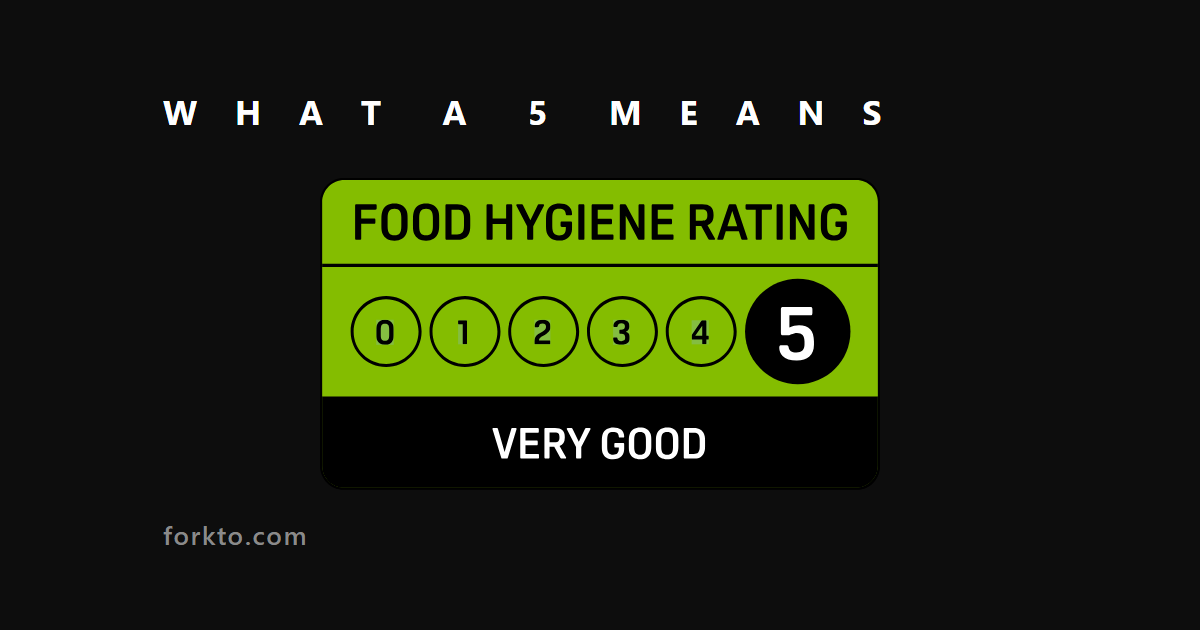
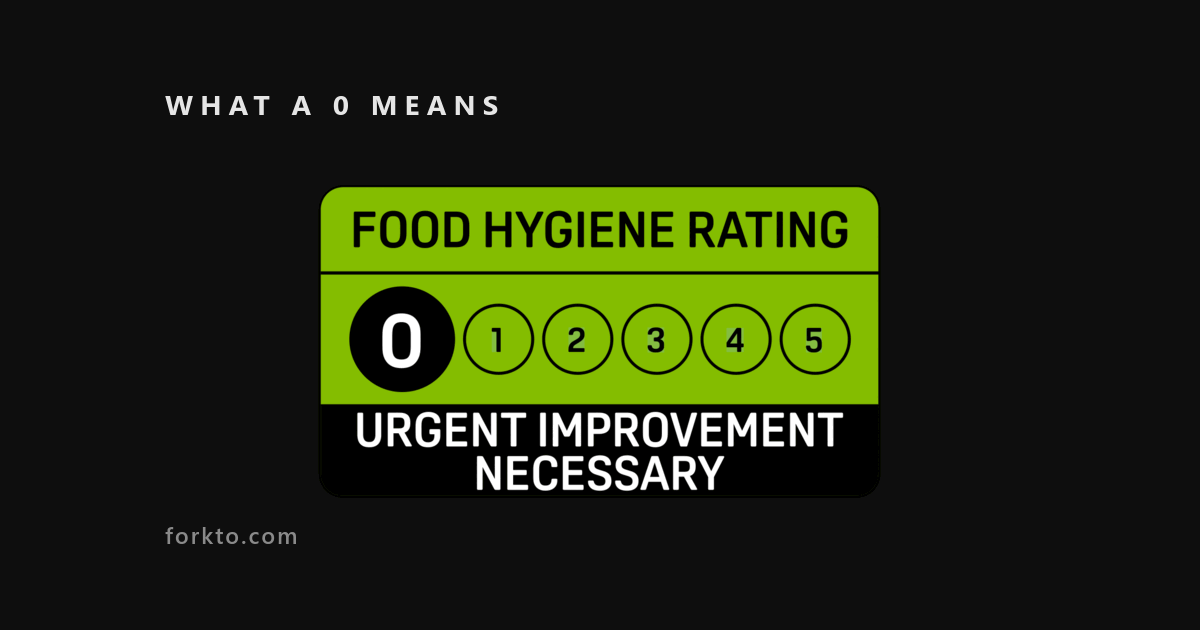
One thing to get straight before we start: the Food Hygiene Rating Scheme runs from 0 to 5, not 1 to 5. Most generic guides get this wrong. A rating of 0 means “urgent improvement necessary” — it’s a real outcome, and it’s public on ratings.food.gov.uk.
What is an EHO? (And what EHO actually stands for)
EHO stands for Environmental Health Officer. In current FSA terminology, the more common title is Environmental Health Practitioner (EHP). Either term is correct; statutes use “authorised officer” or “food safety officer”.
EHOs are employed by local authorities — not by the FSA or central government. District councils, borough councils, unitary authorities, London boroughs, Northern Ireland district councils, and Port Health Authorities all employ their own EHOs. Their remit covers food hygiene, food safety, public health, health and safety at work, housing standards, noise and environmental pollution.
When an EHO visits a restaurant, cafe, butcher, hotel or bakery, they’re doing it on behalf of the local council — enforcing law that ultimately comes from Parliament but is delivered locally.
EHO qualifications and registration
In England, Wales and Northern Ireland, qualifying as an EHP requires:
- An accredited BSc, BSc apprenticeship or MSc in Environmental Health from a CIEH-accredited university
- A workplace EHP Portfolio
- A Professional Discussion gateway aligned with the FSA Competency Framework
- Mandatory 60 hours of CPD over 3 years to maintain CIEH register entry
Successful candidates use the REnvH post-nominal (Registered Environmental Health Practitioner) — a status approved by the Privy Council in 2022 when the old Environmental Health Registration Board (EHRB) formally closed.
In Scotland, the awarding body is REHIS (Royal Environmental Health Institute of Scotland), and the qualification is the REHIS Diploma in Environmental Health. REHIS has a reciprocal agreement with CIEH.
Non-EHP officers can also carry out food inspections via the Higher Certificate in Food Premises Inspection (HCFPI) or Higher Certificate in Food Control (HCFC) — both CIEH-accredited routes.
Who employs EHOs — and what the FSA actually does
A point of frequent confusion: the Food Standards Agency (FSA) does not routinely inspect restaurants. The FSA is the Central Competent Authority for England, Wales and NI — it oversees official controls but delegates delivery to local authorities.
In the FSA’s own words, it has “a key role as the central competent authority in overseeing official food and feed controls undertaken by local authorities” (source).
Where the FSA does directly inspect:
- Slaughterhouses and cutting plants (via Meat Hygiene Inspectors and Official Veterinarians)
- Dairy hygiene
- Wine
- Shellfish classification
In Northern Ireland, DAERA delivers some of this on the FSA’s behalf. In Scotland, Food Standards Scotland (FSS) is the equivalent public body and oversees the FHIS scheme covering 54,000+ Scottish food businesses.
What legal powers does an EHO actually have?
An EHO’s authority comes from the Food Safety Act 1990 and the Food Safety and Hygiene (England) Regulations 2013 (and equivalent devolved regulations in Wales, Scotland and NI).
What EHOs can do
- Enter your premises unannounced at any reasonable hour (FSA 1990, s.32). They must present a warrant card or authenticated ID on arrival.
- Inspect and take records — paper or electronic, including till systems and CCTV
- Take photographs and samples (s.29)
- Seize food suspected of failing safety requirements (s.9)
- Serve enforcement notices — Hygiene Improvement Notices, Emergency Prohibition Notices, Remedial Action Notices
- Question staff and require reasonable assistance
What EHOs cannot do without a warrant
- Enter a private dwelling without consent or 24 hours’ notice (s.32(1) proviso)
- Force entry — if entry is refused, the officer must apply to a magistrate for a warrant. Reasonable force (with police) may then be authorised.
- Arrest you — EHOs have no power of arrest
Obstruction is a criminal offence
Under section 33 of the Food Safety Act 1990, it is a criminal offence to:
- Intentionally obstruct an authorised officer
- Fail without reasonable cause to give assistance or information
- Knowingly or recklessly provide false or misleading information
Refusing entry to a legitimate EHO at reasonable hours is itself prosecutable.
How often do EHOs visit? The A–E risk rating system
Inspection frequency is governed by the Food Law Code of Practice and depends on how your business scored at its last intervention. Officers assess four elements:
- Type of food and method of handling (hazard potential)
- Compliance with hygiene requirements
- Compliance with structural requirements
- Confidence in Management (CIM) and control procedures
A “consumers at risk” modifier applies for establishments serving vulnerable groups (hospitals, care homes, schools).
The total score places your business in one of five categories:
| Category | Minimum inspection frequency | Typical score threshold |
|---|---|---|
| A | Every 6 months | ≥ 92 points |
| B | Every 12 months | 72–91 |
| C | Every 18 months | 52–71 |
| D | Every 24 months | 32–51 |
| E | At least every 3 years (or Alternative Enforcement Strategy) | < 31 |
A business is classified as “broadly compliant” if it scores 10 or less under each of hygiene, structure and CIM — which unlocks alternating interventions at Category C and D.
Important: AES interventions (Category E self-assessment) do not produce an FHRS rating.
These frequencies are minimums. A local authority can inspect more often if intelligence, complaints, or a prior inspection outcome warrants it. And in 2024–2026 a major inspection backlog exists — more on that later.
What happens during an EHO inspection, step by step
A typical unannounced visit follows this sequence:
- Arrival. The officer arrives during your opening hours, presents their warrant card, and asks to speak to the person in charge.
- Opening discussion. Quick conversation about scope, key contacts, and any recent changes (new menu items, new staff, new equipment).
- Physical tour. Kitchen, prep areas, cold chain (fridges, freezers, walk-ins), dry storage, goods-in, hot-hold, toilets, handwash basins, staff facilities, waste areas, external yard.
- Temperature checks using a calibrated probe. Legal limits:
- Cold hold: ≤ 8°C (legal maximum; FSA recommends 5°C)
- Frozen: ≤ -18°C
- Hot hold: ≥ 63°C
- Cooking: 75°C core / 30 seconds (or equivalent — e.g. 70°C/2 min, 65°C/10 min, 80°C/6 sec)
- Scotland only: recommended reheat 82°C
- Sampling if relevant — food samples, surface swabs
- Documentation review. HACCP/SFBB/CookSafe pack, temperature logs, cleaning schedules, delivery records, pest reports, training records, allergen matrix, traceability records
- Staff Q&A. Spot-check on knowledge — particularly the 14 allergens
- Closing meeting. Verbal feedback, provisional FHRS score, what needs to change, timescales
- Written report, typically within 14 days, which notifies you of your FHRS rating and triggers the 21-day appeal window
How long does an EHO inspection take?
There is no statutory duration. In practice:
- Small independent restaurant, cafe or takeaway: 1–3 hours
- Larger operation or multi-unit complex setup: half-day to full-day
The duration tells you nothing about the outcome — a quick visit doesn’t mean a good score, and a long visit doesn’t mean a bad one.
What do EHOs look for? The three FHRS elements in detail
Every FHRS rating is built from three element scores. Understanding each is how you prepare.
Element 1 — Food hygiene and safety practices
- Personal hygiene. Handwashing protocols, PPE, jewellery policy, illness reporting (the 48-hour rule post-diarrhoea and vomiting), hair restraints.
- Temperature control at every stage — delivery, storage, preparation, cooking, hot hold, cooling, reheating, display
- Cross-contamination controls — colour-coded boards, raw-below-cooked storage, separate utensils, allergen segregation
- Cooking, cooling, reheating, defrosting. Cooling to 8°C within 90 minutes is the benchmark
- Stock rotation — FIFO, date labelling, use-by versus best-before discipline
Element 2 — Structural standards
- Cleanliness and condition of walls, floors, ceilings, coving, surfaces, seals
- Layout and workflow — dirty-to-clean progression, no cross-over of clean and dirty flows
- Ventilation and extract hoods; lighting
- Dedicated handwash basins with hot water, soap and single-use towels — separate from sinks used for food or washing up
- Pest-proofing — door sweeps, fly screens, sealed pipework, drainage
- Water supply and waste management
- Equipment condition — chipped, rusted, unsealed, or damaged items count against you
Element 3 — Confidence in management
- Documented HACCP-based Food Safety Management System (legally required under Article 5 of Regulation (EC) 852/2004, assimilated into UK law post-Brexit). For most small businesses this means the FSA’s Safer Food, Better Business (SFBB) pack, or CookSafe in Scotland, or Safe Catering in Northern Ireland
- Training records — Level 2 Food Safety for all handlers, Level 3 for supervisors, allergen training
- Allergen matrix accuracy and staff knowledge
- Traceability — one-up one-down supplier and customer records (Article 18 of Reg (EC) 178/2002, assimilated)
- Complaint handling, due diligence evidence, documented corrective actions
How the FHRS rating is actually scored
This is the part most guides skip. Neither of the current top-ranking competitor articles explains it. It matters because the rating is capped by the worst component score, not just the total.
The three component scores
Under the FHRS Brand Standard Revision 8 (June 2023), officers assign one score per element:
| Element | Possible scores |
|---|---|
| Compliance with food hygiene & safety procedures | 0 / 5 / 10 / 15 / 20 / 25 |
| Compliance with structural requirements | 0 / 5 / 10 / 15 / 20 / 25 |
| Confidence in Management | 0 / 5 / 10 / 20 / 30 |
Score meanings:
- 0 — excellent, full compliance
- 5 — minor non-compliance
- 10 — some non-compliance but not significant
- 15 — major non-compliance; formal action considered
- 20 — widespread failure
- 25 / 30 — imminent/serious risk; prohibition likely
How scores combine into your 0–5 rating
Both the total score and the highest individual score are applied. Whichever gives the lower rating is the one you get.
| Total score | No individual score greater than | Your rating | What it means |
|---|---|---|---|
| 0–15 | 5 | 5 | Very good |
| 20 | 10 | 4 | Good |
| 25–30 | 10 | 3 | Generally satisfactory |
| 35–40 | 15 | 2 | Improvement necessary |
| 45–50 | 20 | 1 | Major improvement necessary |
| > 50 | — | 0 | Urgent improvement necessary |
Worked examples
- Scores 5/5/5 → total 15, highest 5 → Rating 5 (Very good)
- Scores 0/5/10 → total 15, highest 10 → Rating 4 — total says 5, but the cap drops it to 4 because one component exceeded 5
- Scores 5/5/20 → total 30, highest 20 → Rating 1 — total says 3, but the cap drops it to 1 because one component exceeded 10
If you take one thing from this guide: you cannot compensate for a major weakness in one area with strength in the others. A kitchen that’s spotless but has zero HACCP documentation will not score 5.
Scotland’s different scheme
Scotland uses the Food Hygiene Information Scheme (FHIS) rather than FHRS. FHIS has no 0–5 scale. Instead:
- Pass — compliant
- Improvement Required — one or more breaches
- Exempt Premises
- Awaiting Inspection
An optional Eat Safe Award recognises premises that exceed requirements. Businesses in Scotland are not legally required to display their FHIS result.
The four-nation comparison
The rules diverge meaningfully across the UK. If you operate in more than one country, don’t assume what’s true in England applies in Wales or Scotland.
| England | Wales | Northern Ireland | Scotland | |
|---|---|---|---|---|
| Professional body | CIEH | CIEH | CIEH | REHIS |
| Regulator | FSA | FSA | FSA (some delivery via DAERA) | FSS |
| Scheme | FHRS 0–5 | FHRS 0–5 | FHRS 0–5 | FHIS Pass / Improvement Required |
| Display of rating | Voluntary | Mandatory since 28 Nov 2013 | Mandatory since Oct 2016 | No legal requirement to display |
| Primary regulations | FSHER 2013 (SI 2013/2996) | Food Hygiene (Wales) Regs 2006 | Food Hygiene Regs (NI) 2006 | Food Hygiene (Scotland) Regs 2006 + Food (Scotland) Act 2015 |
| HEPN magistrates window | 3 days | 3 days | 3 days | 5 days |
| Recommended reheat temp | 75°C core | 75°C core | 75°C core | 82°C |
| Small-business FSMS pack | SFBB | SFBB | Safe Catering (safefood NI) | CookSafe |
A notable resourcing divergence: in 2019/20, hygiene officer density was 2.9 per 1,000 establishments in England, 5.5 in Wales, and 4.3 in NI (CIEH source). FHRS sticker display rates in 2021 were 64% (England), 88% (Wales), 84% (NI) — mandatory display works.
What happens if you fail an EHO inspection? The full enforcement ladder
Failure isn’t binary. EHOs have a graduated set of tools and will typically escalate step by step, though they can jump to serious enforcement if health is at risk.
- Verbal advice for minor issues
- Written report or warning letter summarising observations
- Voluntary Closure Agreement — the operator agrees to close and rectify
- Hygiene Improvement Notice (HIN) — Regulation 6 of FSHER 2013. Minimum 14-day compliance period. Appealable to Magistrates’ Court within one month. Failure to comply is itself an offence
- Remedial Action Notice (RAN) — Regulation 9. A key devolved difference: in England, RANs apply only to establishments approved under Article 4(2) of Reg 853/2004 (cutting plants, dairies). In Wales, Scotland and NI, 2012 amendments extended RANs to any registered establishment
- Detention Notice — Reg 9(5), for sampling at approved establishments
- Hygiene Emergency Prohibition Notice (HEPN) — Section 12 of the Food Safety Act 1990. Immediate effect where a “health risk condition” exists (imminent risk of injury to health). Notice affixed conspicuously to the premises. The business must close immediately. Magistrates must confirm this via a Hygiene Emergency Prohibition Order within 3 days (England, Wales, NI) or 5 days (Scotland). If the authority fails to apply in time, the notice lapses
- Simple Caution — an alternative to prosecution for lower-level offences
- Prosecution — Magistrates’ Court (unlimited fine post-LASPO 2015 for food safety offences; up to 6 months custody) or Crown Court (unlimited fine; up to 2 years custody). Director disqualification is possible
Rights you have after an inspection
- Appeal the FHRS rating. Within 21 days of notification, you can appeal to the Lead Officer for Food — not the inspecting officer. The window was extended from 14 days in October 2016
- Right to Reply. Free, published alongside your rating on ratings.food.gov.uk
- Request a re-rating. Triggers an unannounced revisit. Your rating can go up, stay the same, or go down
- Re-rating fees vary. Wales £160 (statutory), NI £150 (statutory), England £100–£342 depending on the local authority. This inconsistency was flagged as “inconsistent and unfair” in the 2019 Barnes review
Can an EHO shut down a restaurant?
Yes. If an EHO identifies an imminent risk to health, they can serve a Hygiene Emergency Prohibition Notice (HEPN) under section 12 of the Food Safety Act 1990. The notice takes effect immediately; you must stop trading.
A HEPN is not the end of the story, though:
- The authority must apply to magistrates within 3 days (England/Wales/NI) or 5 days (Scotland) for a Hygiene Emergency Prohibition Order
- If they don’t apply in time, the notice lapses
- The officer must give you at least 1 day’s notice before applying for the order
- Once remediation is complete, the authority must issue a Certificate of Satisfaction within 3 days of being satisfied
- If a court ultimately finds the closure was wrong, you’re entitled to compensation
A HEPN is rare — local authorities reserve it for genuine public health emergencies (serious pest infestation with contamination, raw sewage exposure, imminent risk of serious food poisoning).
What the fines actually look like — real UK prosecutions
The Sentencing Council Definitive Guideline for food safety offences was updated on 1 April 2024, increasing penalty levels. Organisation fine ranges are £100 to £3 million, unlimited on indictment. For very large organisations (supermarkets), starting points can exceed the guideline range.
Recent named prosecutions:
- Tesco Stores Ltd (2021) — £7.56 million at Birmingham Magistrates’ Court for 22 out-of-date food offences across three Birmingham stores. The highest food safety fine to date.
- Asda, Barnsley (February 2026) — £500,000 (£507,767 including costs) at Barnsley Magistrates’ Court for five Food Safety Act offences. Items were up to two weeks past use-by. “£100,000 per offence.”
- CDS (Superstores International) Ltd / The Range, Kidderminster (December 2025) — £400,000 (£412,545 including costs). Rats, rodent droppings, gnawed Easter eggs. Prosecuted by Worcestershire Regulatory Services for Wyre Forest DC.
- JR Uxbridge Ltd t/a Javitri (April 2025) — £43,816 total (£35,000 fine + £5,000 victim surcharge + £3,816 costs). A customer was hospitalised; nuts were stored loose; allergen menus were inadequate despite recent FSA allergen training. An allergen-specific prosecution post-Natasha’s Law
- Bakery Quality First Ltd (Knowsley, February 2024) — three directors personally fined £500–£1,000 plus costs. Rat-infested factory supplying Polish shops
- Margaret Omo-Osagie (Wolverhampton, March 2024) — 4-month suspended sentence plus a 5-year food-business management ban for 10 breaches of FSHER 2013
- Stuart Perkins / SG Perkins Ltd (July 2024) — £50,000 fine for faking Salmonella certificates (National Food Crime Unit case)
The state of EHO enforcement in 2026
The FSA’s “Our Food 2024” report, published June 2025, paints a sobering picture of capacity:
- Around 95,000 overdue inspections in England, Wales and NI between April and September 2024 — including 871 high-risk (Category A/B) businesses
- Total overdue inspections exceeded 100,000 in April 2024 (versus ~46,000 in April 2020)
- 42,000–84,000 new registrations awaiting their first inspection
- Scotland: 17.2% of businesses (12,533 of 72,950) unrated at December 2024; 20% of food safety roles vacant. FSS has warned of “clear and present risk to public health, trade and economy”
- Workforce decline: long-term reduction of 15.4% in hygiene posts, 43.8% in food standards posts
- UK food sampling fell 4.5% in 2023/24 to 41,624 samples — well below pre-pandemic levels
- Allergen alerts issued by FSA/FSS rose 58% in 2024
The practical consequence: some businesses haven’t seen an EHO in 2-3 years. That doesn’t mean you can relax — when they do arrive, a long gap can work against you (more ground to cover, more paperwork gaps exposed).
Regulatory changes 2024–2026
- Achieving Business Compliance (ABC) programme has formally closed — successor is the Future of Food Regulation programme, launched post–November 2025 Budget
- Food Law Code of Practice updates in 2025 covering England, Wales and NI. Wales adopted the new Food Standards Delivery Model (FSDM), aligning with England and NI
- Sentencing Guideline uplift took effect 1 April 2024
- Windsor Framework “Not for EU” labelling is phased for NI (Phase 3 from 1 July 2025 covers composites, unprocessed produce, fish, eggs, honey, pet food)
- Not for EU labelling across GB was scrapped by the Labour Government on 30 September 2024; reserve power retained
Natasha’s Law, PPDS and the 2025 allergen guidance
EHOs (and Trading Standards) check allergen compliance at every inspection, and this area has moved fast since 2021. If you sell Prepacked for Direct Sale (PPDS) food — sandwiches made in-store, bakery items, grab-and-go items packed before sale — PPDS labelling rules apply: the name of the food plus a full ingredients list with the 14 regulated allergens emphasised.
In March 2025, the FSA published new Best Practice Industry Guidance on Allergen Information for Non-Prepacked Foods, covering England, Wales and NI (not Scotland). It sets the expectation — not yet law — that out-of-home businesses provide written allergen information alongside a verbal conversation. This is the Owen’s Law precursor, named after the Owen Carey case, and it’s widely expected to become statutory in the next 18–24 months.
For a full walkthrough of who Natasha’s Law applies to, what PPDS actually covers, real prosecution cases, and sector-specific labelling examples, see our detailed breakdown of the regulation.
EHO vs TSO — what’s the difference?
Trading Standards Officers (TSOs) and EHOs both enforce food law, but they cover different things.
| EHO | TSO (Trading Standards Officer) | |
|---|---|---|
| Remit | Food hygiene and safety — handling, temperature, cross-contamination, HACCP, premises condition | Food standards — composition, labelling, authenticity, weights & measures, allergen labelling, fair trading |
| Lead body | CIEH (REHIS in Scotland) | CTSI (Chartered Trading Standards Institute) |
| Main laws | FSHER 2013, FSA 1990 | FSA 1990, Food Information Regs 2014, Consumer Rights Act 2015, Weights & Measures Act |
In unitary authorities the two functions often sit in the same team. In two-tier areas (district + county councils) EHOs operate at district level and TSOs at county level. Natasha’s Law and PPDS compliance is a shared enforcement area — don’t be surprised if a TSO turns up to check your allergen labelling.
How to prepare: the inspection-ready checklist
Documentation
- Written HACCP-based food safety management system (SFBB / CookSafe / Safe Catering or a custom HACCP plan)
- Temperature logs — at least twice daily per fridge, freezer and hot-hold unit
- Probe calibration records — ice-point and boiling-water checks, documented
- Cleaning schedules — signed, dated, covering daily/weekly/deep clean
- Delivery records — date, supplier, temperature on arrival, condition
- Opening/closing daily diary (part of the SFBB pack)
- Waste disposal records — contracted carrier, transfer notes
- Pest control contract and reports
- Allergen matrix cross-referenced to recipes and supplier specs
- Traceability — one-up one-down records retained for 5 years (or shelf-life + 6 months for “best before”)
- Training records — Level 2 for all handlers, Level 3 for supervisors, allergen training
- PPDS labels on any in-store-packed items
Daily operational discipline
- Handwash basins clear of obstruction, with hot water, soap and single-use towels
- Colour-coded boards and clear raw/ready-to-eat separation
- Temperature controls in range — cold hold ≤ 8°C, frozen ≤ -18°C, hot hold ≥ 63°C
- No personal items on prep surfaces
- Pest-proofing intact — door sweeps, fly screens, sealed pipework
Staff readiness
- All food handlers hold current Level 2 Food Safety & Hygiene
- All staff can name the 14 allergens
- Manager on duty knows where the HACCP pack is and can walk through it
- Illness-reporting protocol understood — the 48-hour rule after D&V symptoms stop
Common red flags EHOs spot immediately
A seasoned EHO will notice these within the first 10 minutes on site:
- Gaps in temperature logs, or identical readings across units and times (the copy-paste tell)
- Back-filled or pre-filled records — uniform handwriting, no crossings-out, suspiciously neat
- Probe calibration overdue or missing altogether
- Cleaning schedule signed off but visible grease, mouldy fridge seals, dust on high shelves
- Out-of-date or missing allergen matrix
- Staff who cannot name the 14 allergens when asked
- No PPDS labels on in-store-packed sandwiches, bakery items, or ready meals
- Lapsed pest control contract
- Expired food in use — FIFO failure
- Raw meat stored above ready-to-eat in fridges with no colour coding
- Shared or absent handwash basin — no hot water, no soap, no single-use towels
- Personal items (coats, phones, drinks) on prep surfaces
- Tipp-Ex or obvious corrections on due-diligence paperwork — instant suspicion flag
Frequently asked questions
What does EHO stand for?
EHO stands for Environmental Health Officer. The current FSA-preferred term is Environmental Health Practitioner (EHP). Both terms are correct and interchangeable.
What is an EHO?
An EHO is a qualified local-authority officer who enforces food hygiene, food safety, public health, and health and safety law. They are employed by councils, not by the FSA, and are registered through CIEH (or REHIS in Scotland).
How often do EHOs visit?
Depending on your risk category: Category A every 6 months, B every 12 months, C every 18 months, D every 24 months, E at least every 3 years. These are minimum frequencies — inspections can be more frequent if intelligence or complaints warrant it.
What do EHOs look for?
Three strands: food hygiene and safety practices (handling, temperature, cross-contamination), structural standards (cleanliness, layout, pest control), and confidence in management (documentation, training, HACCP, traceability).
What happens if you fail an EHO inspection?
The enforcement ladder goes from verbal advice → written warning → voluntary closure agreement → Hygiene Improvement Notice → Remedial Action Notice → Hygiene Emergency Prohibition Notice → simple caution → prosecution. A low FHRS rating (0–2) is published on ratings.food.gov.uk within a few weeks.
Can an EHO close my restaurant?
Yes, via a Hygiene Emergency Prohibition Notice under section 12 of the Food Safety Act 1990, but only where there’s an imminent risk to health. The closure must be confirmed by magistrates within 3 days (England/Wales/NI) or 5 days (Scotland).
How long does an EHO inspection take?
Between 1 and 3 hours for a small independent; half a day to a full day for larger or more complex operations. Duration doesn’t predict outcome.
Can I refuse entry to an EHO?
No, not for business premises at reasonable hours. Refusing entry or obstructing an officer is a criminal offence under section 33 of the Food Safety Act 1990. You can, however, ask to see the officer’s warrant card. Private dwellings are different — those require consent or 24 hours’ notice.
What’s the difference between an EHO and a TSO?
EHOs enforce food hygiene and safety (how food is handled, stored, prepared). TSOs enforce food standards (composition, labelling, authenticity, weights and measures). Natasha’s Law sits in both remits.
What is the food hygiene rating scale?
The Food Hygiene Rating Scheme runs from 0 to 5. Not 1 to 5, as commonly misstated. 0 means “urgent improvement necessary”, 5 means “very good”. The rating is published on ratings.food.gov.uk.
How long does it take to get your FHRS rating after an inspection?
Typically within 14 days of the inspection, in writing. The notification triggers your 21-day appeal window if you disagree with the rating.
Can I appeal an FHRS rating?
Yes, within 21 days of notification, to the Lead Officer for Food at your local authority — not the inspecting officer. You can also request a re-rating (with a fee) after you’ve made improvements, and you have a free Right to Reply published alongside your rating.
How much does an FHRS re-rating cost?
Wales £160 (statutory), Northern Ireland £150 (statutory). England is inconsistent — fees range from £100 to £342 depending on the local authority.
Is displaying the food hygiene rating mandatory?
Yes in Wales (since 28 November 2013) and Northern Ireland (since October 2016). Voluntary in England. Scotland uses FHIS rather than FHRS and has no display requirement.
What is Scotland’s equivalent to FHRS?
The Food Hygiene Information Scheme (FHIS). It has no 0–5 scale. Results are Pass, Improvement Required, Exempt Premises, or Awaiting Inspection. An optional Eat Safe Award exists for premises that exceed requirements.
Do I need Level 2 Food Safety training by law?
The law requires food handlers to be “supervised and instructed and/or trained in food hygiene matters commensurate with their work activity” — Regulation 852/2004, Annex II, Chapter XII. A Level 2 Food Safety & Hygiene qualification is the standard way to meet this, but it’s not the only way. There is no statutory renewal period; every 3 years is industry best practice.
Can I lose my Deliveroo or Uber Eats listing over a low FHRS rating?
Yes. Deliveroo, Uber Eats and Just Eat all require a minimum FHRS 2. Just Eat requires FHRS 3 for new non-standard (delivery-only / dark kitchen) partners. Losing platform access is often more commercially damaging than the fine itself.
Getting ready for your next EHO inspection
EHO inspections aren’t something to survive — they’re a diagnostic that tells you how your food safety operation is actually running when nobody’s looking.
The businesses that score consistently well aren’t the ones who rush to tidy up when the officer walks in. They’re the ones whose records are filled in at the point of action (not back-filled), whose staff can answer allergen questions without pausing, and whose HACCP documentation reflects what the kitchen actually does — not what someone wrote on a template three years ago.
That’s the operational gap digital food safety tools close. Forkto replaces the clipboard with a phone in the hand of the team member doing the task — at the moment they’re doing it. Temperature checks, cleaning sign-offs, allergen checks, opening and closing routines. Every entry time-stamped, every gap visible to the manager in real time, every record there when an EHO asks for it. No Tipp-Ex required.
If you’d like to see how Forkto helps UK hospitality teams stay EHO-ready day in and day out, start a free trial or browse our free downloadable checklists — no email required.
Last updated: 18 April 2026. This guide reflects the Food Law Code of Practice (2025 update), FHRS Brand Standard Revision 8, and regulatory changes under the Future of Food Regulation programme following the November 2025 Budget.
Related Forkto software
Frequently asked questions
What does EHO stand for?
EHO stands for Environmental Health Officer. The current FSA-preferred term is Environmental Health Practitioner (EHP). Both terms are correct and interchangeable in UK food safety enforcement.
What is an EHO?
An EHO is a qualified local-authority officer who enforces food hygiene, food safety, public health and health and safety law. They are employed by councils, not by the FSA, and are registered through CIEH (or REHIS in Scotland).
How often do EHOs visit?
It depends on your risk category. Category A businesses are inspected every 6 months, B every 12 months, C every 18 months, D every 24 months, and E at least every 3 years. These are minimum frequencies — inspections can be more frequent if intelligence or complaints warrant it.
What do EHOs look for during an inspection?
Three strands: food hygiene and safety practices (handling, temperature, cross-contamination), structural standards (cleanliness, layout, pest control), and confidence in management (documentation, training, HACCP, traceability). Your FHRS rating is built from a score in each of these three areas.
What happens if you fail an EHO inspection?
The enforcement ladder goes from verbal advice to written warning, voluntary closure agreement, Hygiene Improvement Notice, Remedial Action Notice, Hygiene Emergency Prohibition Notice, simple caution and prosecution. A low FHRS rating of 0 to 2 is published on ratings.food.gov.uk within a few weeks.
Can an EHO close my restaurant?
Yes, via a Hygiene Emergency Prohibition Notice under section 12 of the Food Safety Act 1990, but only where there is an imminent risk to health. The closure must be confirmed by magistrates within 3 days in England, Wales and Northern Ireland, or 5 days in Scotland.
How long does an EHO inspection take?
Between 1 and 3 hours for a small independent restaurant or cafe; half a day to a full day for larger or more complex operations. Duration varies with business size and complexity, and does not predict the outcome.
Can I refuse entry to an EHO?
No, not for business premises at reasonable hours. Refusing entry or obstructing an officer is a criminal offence under section 33 of the Food Safety Act 1990. You can, however, ask to see the officer's warrant card. Private dwellings are different — those require consent or 24 hours' notice.
What is the difference between an EHO and a TSO?
EHOs enforce food hygiene and safety — how food is handled, stored and prepared. TSOs (Trading Standards Officers) enforce food standards — composition, labelling, authenticity, weights and measures. Natasha's Law and PPDS compliance sit in both remits.
What is the food hygiene rating scale?
The Food Hygiene Rating Scheme runs from 0 to 5. Not 1 to 5, as commonly misstated. A rating of 0 means urgent improvement necessary; 5 means very good. The rating is published on ratings.food.gov.uk.
How long does it take to get your FHRS rating after an inspection?
Typically within 14 days of the inspection, in writing. The notification triggers your 21-day appeal window if you disagree with the rating.
Can I appeal an FHRS rating?
Yes, within 21 days of notification, to the Lead Officer for Food at your local authority — not the inspecting officer. You can also request a re-rating (with a fee) after you have made improvements, and you have a free Right to Reply published alongside your rating.
How much does an FHRS re-rating cost?
In Wales it is £160 (statutory) and in Northern Ireland it is £150 (statutory). In England the fee is inconsistent, ranging from £100 to £342 depending on the local authority.
Is displaying the food hygiene rating mandatory?
Yes in Wales (since 28 November 2013) and Northern Ireland (since October 2016). It is voluntary in England. Scotland uses the Food Hygiene Information Scheme (FHIS) rather than FHRS and has no display requirement.
What is Scotland's equivalent to FHRS?
The Food Hygiene Information Scheme (FHIS). It has no 0 to 5 scale. Results are Pass, Improvement Required, Exempt Premises or Awaiting Inspection. An optional Eat Safe Award exists for premises that exceed requirements.
Do I need Level 2 Food Safety training by law?
The law requires food handlers to be supervised and instructed or trained in food hygiene matters commensurate with their work activity — Regulation 852/2004, Annex II, Chapter XII. A Level 2 Food Safety and Hygiene qualification is the standard way to meet this, but not the only way. There is no statutory renewal period; every 3 years is industry best practice.
Can I lose my Deliveroo or Uber Eats listing over a low FHRS rating?
Yes. Deliveroo, Uber Eats and Just Eat all require a minimum FHRS 2. Just Eat requires FHRS 3 for new non-standard partners such as delivery-only or dark kitchens. Losing platform access is often more commercially damaging than the fine itself.
Safe hands, clear records
Stop running food safety on paper
Forkto turns daily checks, temperature logs, HACCP and audits into a few taps on a phone. Your team stays consistent and you're always ready for the EHO.
14-day free trial · No card required