Food safety guide
Hazard Analysis 101: Identifying Risks in Your Kitchen
A practical guide to hazard analysis for UK food businesses. Learn how to identify biological, chemical, physical, and allergenic hazards, assess risks, and document your findings for HACCP compliance.
1 February 2026
Every food safety incident begins with a hazard that someone failed to identify. Whether it is Campylobacter in undercooked chicken or an undeclared allergen in a sandwich filling, the consequences for customers and businesses alike can be severe. The Food Standards Agency regularly reports thousands of food safety incidents across the UK each year, many of which are preventable through proper hazard analysis.
Hazard analysis is not just paperwork. It is the systematic process of looking at every step of your food operation, asking “what could go wrong here?”, and putting controls in place before something does. If you run a kitchen, manage a food production line, or oversee food safety in any UK food business, this guide will walk you through how to do it properly.
What Is a Hazard Analysis?
A hazard analysis is the structured process of identifying, evaluating, and controlling dangers that could make food unsafe to eat. In formal terms, it is Principle 1 of the seven HACCP principles and the foundation upon which every other element of your food safety management system is built.
Under EC Regulation 852/2004 (retained in UK law post-Brexit), all food business operators are required to implement procedures based on HACCP principles. The Food Safety Act 1990 further places a legal duty on businesses to ensure food is safe for consumption. Hazard analysis is how you meet these obligations in practice.
The process involves three core questions at every stage of your operation:
- What hazards are present or could be introduced at this step?
- How likely is it that the hazard will occur, and how severe would the consequences be?
- What measures can you put in place to prevent, eliminate, or reduce the hazard to an acceptable level?
Without a thorough hazard analysis, the rest of your HACCP plan has no foundation. You cannot set meaningful critical control points, establish monitoring procedures, or define corrective actions if you have not first identified what you are trying to control. For a broader overview of how hazard analysis fits within the full HACCP framework, see our complete guide to HACCP.
The 4 Types of Food Safety Hazards
Food safety hazards fall into four categories. Your hazard analysis must consider all four at every stage of your process.
Biological Hazards
Biological hazards are the most common cause of foodborne illness in the UK. These include bacteria, viruses, parasites, and moulds. The key organisms to be aware of in a UK kitchen context are:
- Campylobacter – the most common cause of food poisoning in the UK, responsible for an estimated 300,000 cases annually. It is primarily associated with raw poultry and can survive on surfaces and equipment if cleaning is inadequate.
- Salmonella – commonly linked to poultry, eggs, and raw meat. The UK saw a notable outbreak linked to imported eggs in 2022, reinforcing the importance of supplier controls.
- Listeria monocytogenes – particularly dangerous for pregnant women, the elderly, and immunocompromised individuals. It can grow at refrigeration temperatures, making it a persistent risk in chilled ready-to-eat foods.
- E. coli O157 – associated with raw and undercooked minced beef, unpasteurised dairy, and contaminated salad vegetables. Even small numbers of bacteria can cause serious illness.
- Norovirus – the leading cause of viral gastroenteritis in the UK, typically spread by infected food handlers rather than contaminated ingredients.
FSA data consistently shows that Campylobacter alone accounts for more hospitalisations than any other foodborne pathogen in the UK, making poultry handling a critical focus for any kitchen hazard analysis.
Chemical Hazards
Chemical hazards include any substance that could contaminate food and cause harm. In a kitchen environment, the most common sources are:
- Cleaning agents and sanitisers used near food preparation areas
- Pest control chemicals, including rodenticides and insecticides
- Residues from packaging materials
- Naturally occurring toxins such as histamine in fish or solanine in green potatoes
- Allergens (though these are increasingly treated as a separate category)
- Additives or preservatives used incorrectly or in excessive quantities
Chemical contamination often results from poor storage practices, such as keeping cleaning products in the same area as food ingredients, or from failure to rinse surfaces properly after cleaning.
Physical Hazards
Physical hazards are foreign objects that could cause injury if consumed. Common examples in UK kitchens include:
- Glass fragments from broken containers or light fittings
- Metal pieces from worn equipment, staples, or wire wool
- Bone fragments in meat and fish products
- Plasters or personal items from staff (this is why blue detectable plasters are standard in food businesses)
- Plastic pieces from packaging
- Stones or grit in raw vegetables
- Pests or pest droppings
Physical hazards are often the most visible to customers and can cause immediate harm, from broken teeth to choking. A robust hazard analysis should include inspection procedures at goods-in and preparation stages to catch physical contaminants early.
Allergenic Hazards
Since the introduction of Natasha’s Law (the UK Food Information Amendment) in October 2021, allergenic hazards have taken on even greater regulatory significance. The law requires all food businesses selling prepacked for direct sale (PPDS) foods to include full ingredient labelling with the 14 major allergens emphasised.
The 14 allergens that must be declared under UK law are:
- Celery
- Cereals containing gluten (wheat, rye, barley, oats)
- Crustaceans
- Eggs
- Fish
- Lupin
- Milk
- Molluscs
- Mustard
- Tree nuts (almonds, hazelnuts, walnuts, cashews, pecans, brazils, pistachios, macadamias)
- Peanuts
- Sesame
- Soybeans
- Sulphur dioxide and sulphites (at concentrations above 10mg/kg or 10mg/litre)
Allergenic hazards are not limited to the ingredients themselves. Cross-contact during storage, preparation, and service is a significant risk. Your hazard analysis must consider how allergens could inadvertently transfer between products through shared equipment, surfaces, utensils, or even airborne particles such as flour dust.
How to Conduct a Hazard Analysis Step by Step
A hazard analysis is a methodical process. Rushing it or skipping steps will leave gaps that could have real consequences. Follow these six steps.
1. Map Your Process Flow
Before you can identify hazards, you need a clear picture of every step in your operation. Create a process flow diagram that covers the full journey of food through your business, from the moment ingredients arrive to the point food reaches the customer.
A typical kitchen flow might include: receiving deliveries, dry storage, chilled storage, frozen storage, preparation, cooking, cooling, reheating, hot holding, cold holding, and service or display.
Be specific. If your operation includes sous vide cooking, vacuum packing, blast chilling, or any other specialist process, include it. The diagram does not need to be complex, but it must be complete.
2. Identify Hazards at Each Step
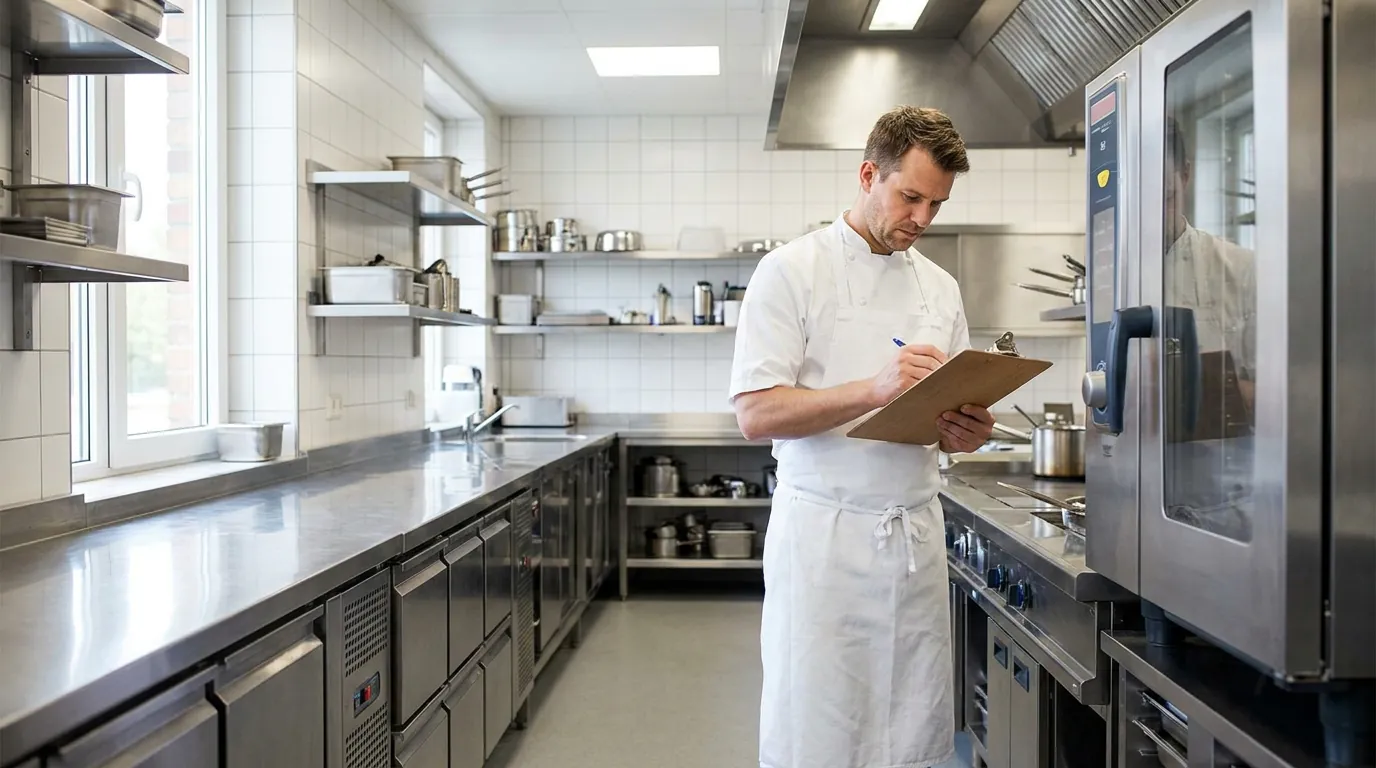
Work through your flow diagram step by step. At each stage, consider all four hazard categories: biological, chemical, physical, and allergenic. Ask your team to contribute – the people doing the work daily often have the best insight into what could go wrong.
For each hazard you identify, note the specific danger (not just “contamination” but “Salmonella from raw chicken juices dripping onto ready-to-eat salad items in the fridge”).
3. Assess Likelihood and Severity
Not all hazards carry the same level of risk. For each hazard, evaluate two factors:
- Likelihood: How probable is it that this hazard will occur, given your current practices and controls?
- Severity: If it does occur, how serious would the consequences be for the consumer?
We will cover the risk matrix approach in more detail below, but the key point is that this assessment determines how much resource and attention each hazard warrants.
4. Determine Control Measures
For every significant hazard, identify what control measures you can put in place. These might include:
- Temperature controls (cooking, chilling, hot holding)
- Separation procedures (raw and ready-to-eat)
- Cleaning and sanitisation schedules
- Supplier specifications and checks
- Staff training and personal hygiene rules
- Allergen management procedures
Some hazards will be managed through prerequisite programmes (general good hygiene practices), while others will require specific critical control points with defined limits and monitoring.
5. Identify Critical Control Points
A critical control point (CCP) is a step where control can be applied and is essential to prevent, eliminate, or reduce a hazard to an acceptable level. Not every control measure is a CCP. The distinction matters because CCPs require defined critical limits, continuous monitoring, and documented corrective actions.
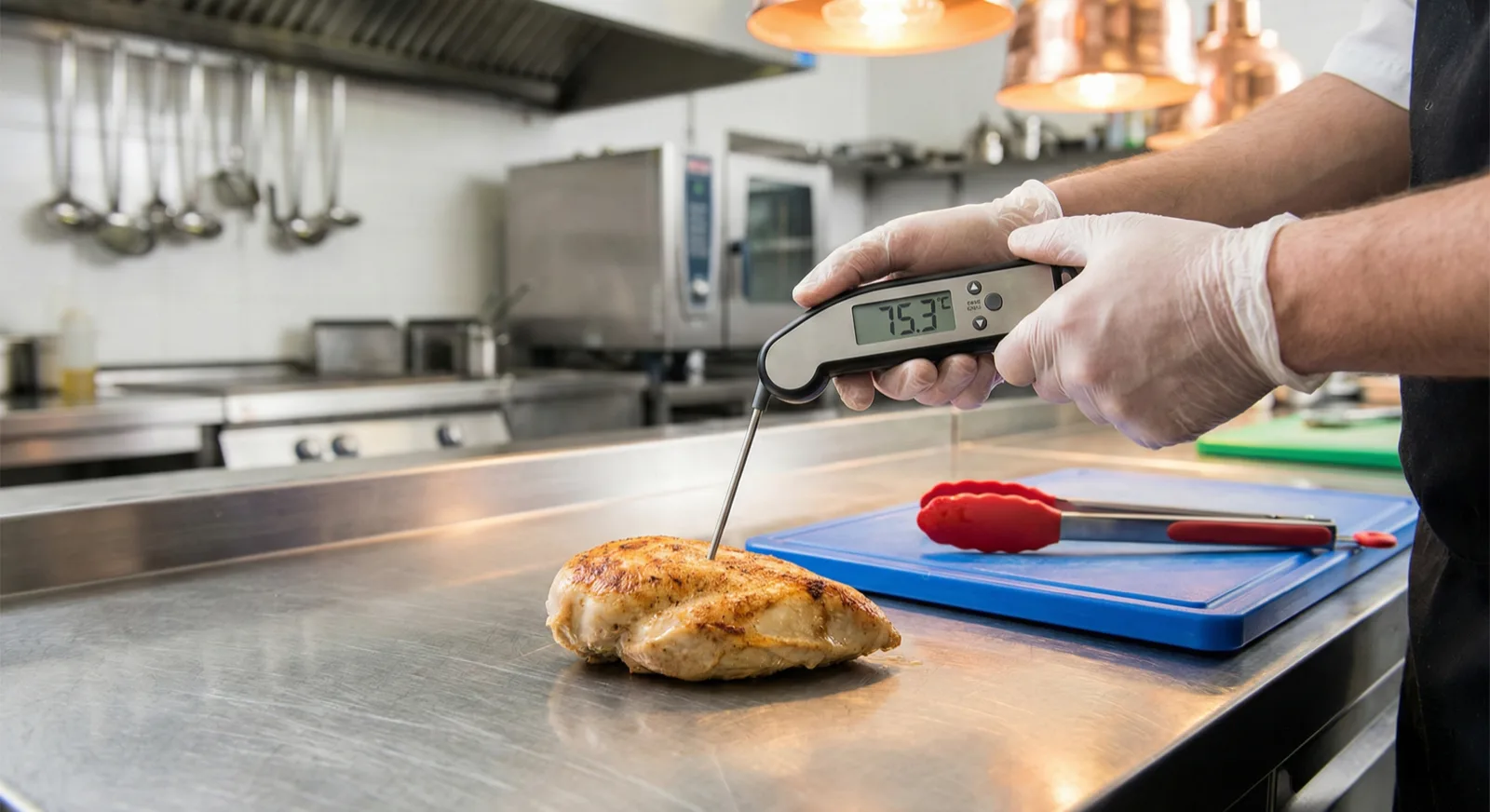
Common CCPs in a kitchen include cooking temperatures (e.g., core temperature of 75 degrees Celsius for poultry), chilling times, and hot holding temperatures. Your hazard analysis feeds directly into CCP identification.
6. Document Everything
Your hazard analysis must be recorded. This is not optional – it is a legal requirement and it is what Environmental Health Officers (EHOs) will ask to see during inspections. We will cover documentation requirements in detail later in this article.
Practical Kitchen Examples
Theory is useful, but hazard analysis only works when applied to real situations. Here is a walk-through of common hazards at each stage of a typical kitchen operation.
Receiving deliveries. Check temperatures of chilled and frozen goods on arrival. A delivery of fresh chicken arriving at 8 degrees Celsius rather than below 5 degrees Celsius presents a biological hazard – bacterial growth will have accelerated during transit. Physical hazards include damaged packaging that could introduce contaminants. Check for pest evidence in dry goods.
Dry and cold storage. Store raw meat below ready-to-eat foods in the fridge to prevent drip contamination. Ensure allergen-containing ingredients are clearly labelled and, where practical, stored separately. Monitor fridge and freezer temperatures at least twice daily. Chemical hazards arise if cleaning products are stored alongside food items.
Preparation. This is where cross-contamination risk is highest. Use separate chopping boards and utensils for raw meat, cooked meat, vegetables, and allergen-free items. Staff handling raw poultry must wash hands thoroughly before touching any other food. Allergen cross-contact is a particular risk when the same surfaces or equipment are used for different products.
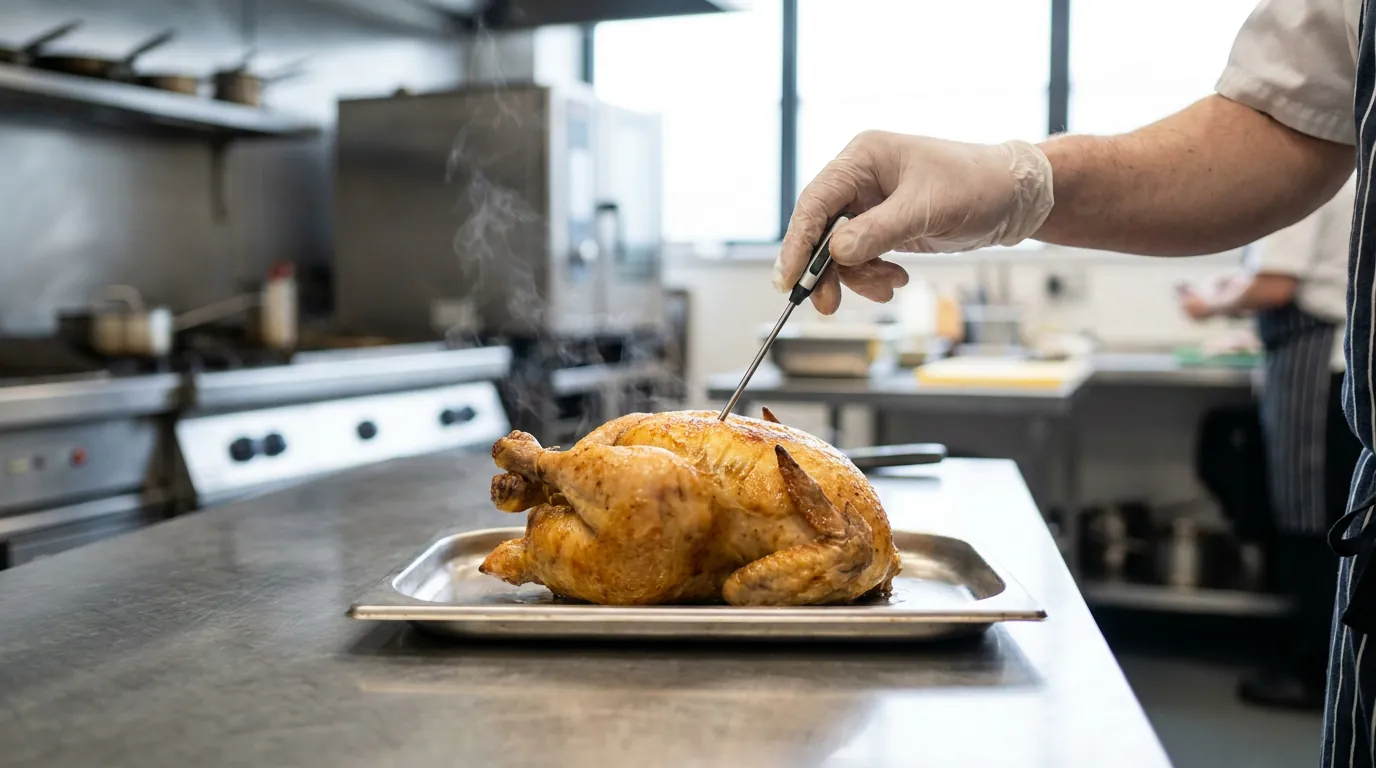
Cooking. The primary biological control point. Ensure foods reach safe core temperatures: 75 degrees Celsius as a general standard, though specific products may have different requirements. Use calibrated probe thermometers and record readings. Verify that cooking equipment is functioning correctly.
Cooling. Cool cooked food from 63 degrees Celsius to below 8 degrees Celsius within 90 minutes (FSA guidance). Food left in the temperature danger zone (8-63 degrees Celsius) for extended periods allows rapid bacterial multiplication. Use shallow containers, blast chillers where available, and never place hot food directly into a fridge full of other products.
Reheating. In England, Wales, and Northern Ireland, reheated food should reach a core temperature of 75 degrees Celsius. In Scotland, the requirement is 82 degrees Celsius. Food should only be reheated once. This is a critical step that is frequently done poorly in busy kitchens.
Service and display. Hot food on display must be held at 63 degrees Celsius or above. Cold food should remain below 8 degrees Celsius, though the FSA allows a four-hour window at ambient temperature if managed correctly. Allergen information must be available to customers at the point of sale, whether on labels, menus, or through trained staff.
Common Hazards That Get Overlooked
Even experienced kitchen managers miss certain hazards. These are the ones that EHOs frequently flag during inspections.
- Cross-contamination from cloths and sponges. A single cloth used across multiple surfaces can spread bacteria throughout the kitchen. Use colour-coded, disposable cloths or launder reusable cloths at high temperatures daily.
- Allergen cross-contact during busy service. When the kitchen is under pressure, the discipline around allergen separation often slips. Shared fryer oil, reused utensils, and splashing between preparation areas are common culprits.
- Temperature abuse during preparation. Food taken out of the fridge for preparation should not sit at room temperature for extended periods. In a busy kitchen, ingredients can easily be left out for hours.
- Inadequate staff illness policies. Staff who are vomiting or have diarrhoea should not handle food, and should not return to food handling duties until at least 48 hours after symptoms cease. Many businesses lack clear policies, or staff feel pressured to come in despite being unwell.
- Supplier changes. When you change a supplier or a supplier changes their product formulation, the hazard profile of your ingredients may change. A new bread supplier might use sesame seeds, introducing an allergen not previously present in your operation.
Risk Assessment: Likelihood vs Severity
Not every hazard requires a critical control point. The risk assessment stage of your hazard analysis helps you prioritise by scoring each hazard on two axes.
Likelihood can be scored on a simple scale:
- Rare – unlikely to occur
- Possible – could occur occasionally
- Likely – expected to occur regularly without controls
Severity follows a similar scale:
- Low – minor discomfort, no lasting harm
- Medium – illness requiring medical attention
- High – serious illness, hospitalisation, or death
Multiply the two scores to get a risk rating. Hazards scoring 6-9 almost certainly need a CCP with defined critical limits and monitoring. Hazards scoring 3-4 may be managed through prerequisite programmes such as cleaning schedules and staff training. Hazards scoring 1-2 should still be documented but may require only basic controls.
For example, the risk of Campylobacter in raw chicken is high likelihood (3) and high severity (3), giving a score of 9. This clearly warrants a CCP at the cooking stage. Conversely, the risk of a stone in pre-washed salad might be low likelihood (1) and medium severity (2), scoring 2 – manageable through visual inspection during preparation.
This scoring approach is not an exact science, but it provides a rational, defensible basis for your decisions. It also helps when communicating with your team about why certain controls are in place and why some hazards receive more attention than others.
Documenting Your Hazard Analysis
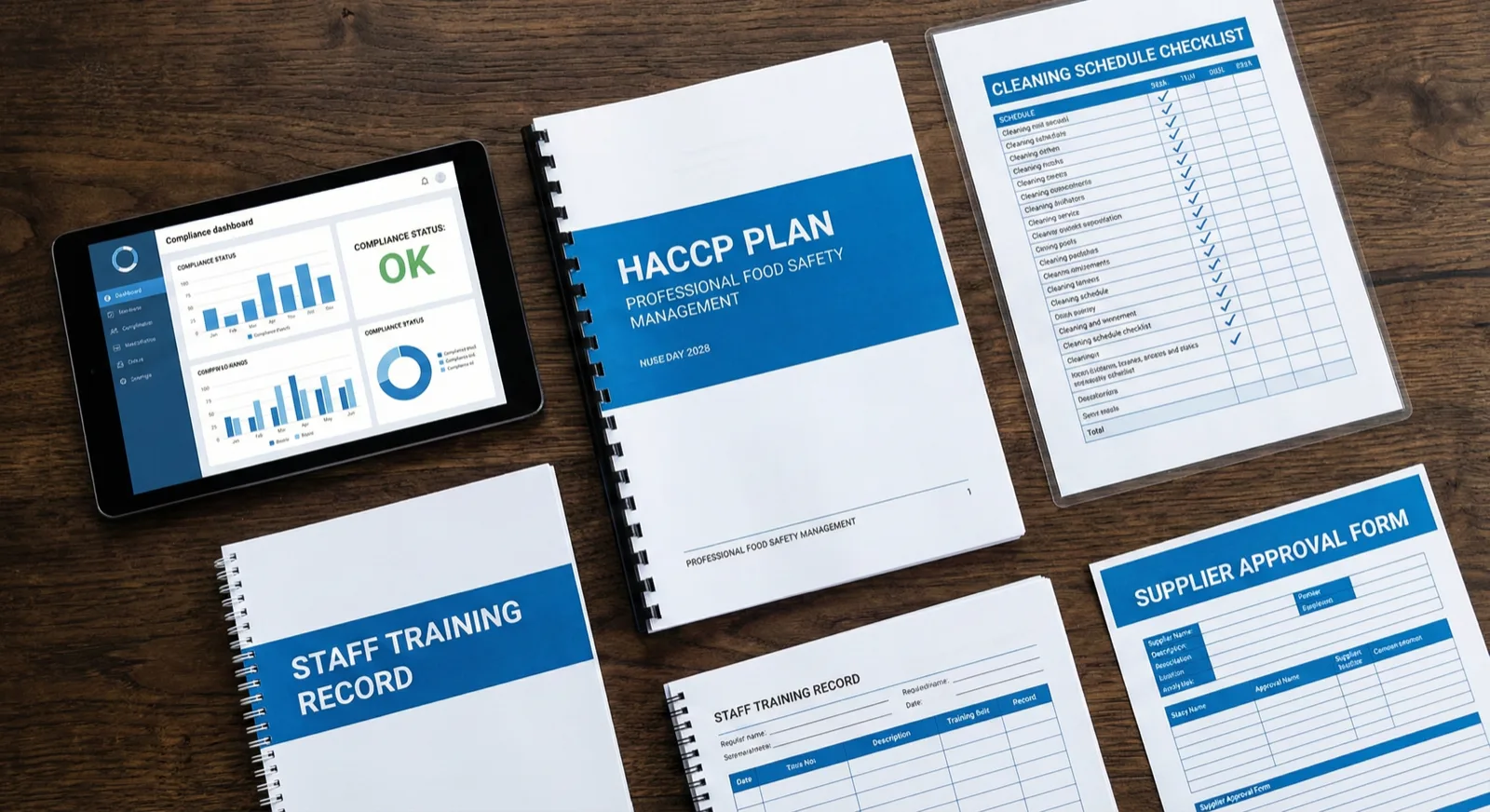
Your hazard analysis documentation serves two purposes: it demonstrates compliance to regulators, and it acts as a working reference for your team. EHOs conducting inspections under the Food Hygiene Rating Scheme (FHRS) will expect to see evidence that you have conducted a thorough hazard analysis and that it underpins your day-to-day food safety management.
A well-structured hazard analysis document typically includes a table with the following columns:
- Process step (e.g., “Receiving deliveries”, “Cold storage”, “Cooking”)
- Hazard identified (specific and descriptive)
- Hazard type (biological, chemical, physical, allergenic)
- Likelihood score (1-3)
- Severity score (1-3)
- Risk rating (likelihood x severity)
- Control measure (what you do to manage the hazard)
- Is this a CCP? (yes/no)
- Monitoring procedure (if CCP, how and how often you check)
- Corrective action (what to do if the control measure fails)
Keep the language clear and specific. “Check fridge temperature” is less useful than “Record fridge temperature on the daily monitoring sheet at 08:00 and 14:00; if above 5 degrees Celsius, investigate and report to manager immediately.”
If your business follows the Safer Food, Better Business (SFBB) pack, your hazard analysis will be integrated into the safe methods and diary sections. Larger or more complex operations may need a standalone HACCP plan with a separate hazard analysis document.
Managing all of this on paper becomes unwieldy, particularly when you need to update records, track changes, or prepare for inspections. Tools like Forkto can centralise your daily monitoring records, temperature logs, and check completions, making it straightforward to keep everything accessible and audit-ready when an EHO visits.
Keeping Your Hazard Analysis Current
A hazard analysis is not a one-off exercise. Food businesses are dynamic – menus change, staff turnover occurs, suppliers come and go, and new regulations are introduced. An out-of-date hazard analysis is almost as risky as not having one at all.
You should review your hazard analysis in the following circumstances:
- New menu items or recipes. Any new dish could introduce new ingredients, new preparation methods, and new hazards. A shift from pre-cooked ingredients to raw preparation, for example, fundamentally changes your risk profile.
- New suppliers or ingredient changes. As noted earlier, a supplier change can introduce new allergens or alter the biological hazard profile of your ingredients. Always request updated specifications from new suppliers.
- After a food safety incident. If a customer complaint, illness report, or near-miss occurs, your hazard analysis should be reviewed to determine whether the hazard was identified and whether controls were adequate.
- Staff changes. New team members may not be aware of existing controls, and a change in kitchen manager may bring different practices. Ensure your hazard analysis is part of induction training.
- Regulatory changes. When the FSA issues new guidance or regulations change (as with Natasha’s Law in 2021), your hazard analysis must be updated to reflect new requirements.
- At least annually. Even if none of the above triggers apply, conduct a full review at least once a year. This ensures nothing has drifted and gives you an opportunity to incorporate improvements.
Each review should be dated and signed, with a record of what was changed and why. This creates an audit trail that demonstrates ongoing diligence – something EHOs value highly when assessing your food safety management system.
Forkto makes this review process considerably less painful by keeping all your food safety records digital and audit-ready, so your team can easily track what has been completed and when.
Moving From Analysis to Action
Hazard analysis is where food safety begins, but it only delivers value if your findings translate into daily practice. The controls you identify must be implemented consistently, monitored reliably, and updated as your business evolves. Understanding why food safety systems fail can help you avoid the most common pitfalls.
If you have not conducted a formal hazard analysis, or if the one gathering dust in your office has not been reviewed in years, now is the time to start. Work through the steps outlined in this guide, involve your team, and build a hazard analysis that genuinely reflects your operation. Your customers, your staff, your FHRS rating, and your business all depend on it.
If you would like to see how a digital food safety platform can simplify ongoing HACCP monitoring and compliance for your team, get in touch with Forkto to learn more.
Related Forkto software
Safe hands, clear records
Stop running food safety on paper
Forkto turns daily checks, temperature logs, HACCP and audits into a few taps on a phone. Your team stays consistent and you're always ready for the EHO.
14-day free trial · No card required