Food safety guide
Opening and Closing Checks: What UK Food Businesses Should Be Doing Every Shift
Opening and closing checks are one of the most practical food safety tools a kitchen can have — and one of the most inconsistently done. This guide covers exactly what to include, why each item matters, and how to make them stick.
14 February 2026
Every commercial kitchen has a version of opening and closing checks. In some, it is a laminated sheet on the wall. In others, it is an informal walkthrough that the head chef does from memory. In many, it is whatever the senior person on shift can remember to do before the rush hits.
The gap between what opening and closing checks could be and what they usually are is one of the most consistent findings in EHO inspections. Not because businesses are negligent — but because without a clear, documented process, these checks drift. They become habit-based rather than system-based, which means they are only as reliable as the person doing them on any given day.
This guide covers what opening and closing checks should include, why each element matters from a food safety and compliance perspective, and how to build a process that holds up whether it is the head chef or a new supervisor doing the rounds.
Why Opening and Closing Checks Matter
Opening and closing checks serve two functions that are easy to conflate but important to keep distinct.
As a food safety control, they catch problems that develop outside service hours — a fridge that has warmed overnight, a delivery that has been incorrectly stored, pest activity, cleaning that was not completed properly. Catching these things at the start of the day, before food preparation begins, prevents contaminated or unsafe food from entering your process.
As a compliance record, they demonstrate to an EHO that your food safety management is active and consistent — not just documented in a folder but practised daily. A complete opening and closing check record, maintained over months, is evidence of a functioning food safety culture. An EHO who can see daily records going back weeks has a very different impression of your business than one who finds a half-completed sheet from three days ago.
The Confidence in Management component of the Food Hygiene Rating Scheme specifically assesses the evidence that your safety procedures are being followed in practice. Opening and closing check records are direct evidence of that.
Opening Checks: What to Include
1. Fridge and freezer temperatures
This is the non-negotiable first check. All refrigeration units should be checked and temperatures recorded before any food preparation begins. Safe operating ranges are:
- Fridges: 0°C to 8°C (aim for 5°C or below in practice)
- Freezers: -18°C or below
Record the actual temperature, not just a tick to confirm it is “okay.” Actual readings allow you to spot trends — a fridge that consistently reads 6°C is worth investigating even if it is technically within range.
If any unit is outside the safe range, your corrective action procedure should kick in immediately: transfer vulnerable products, do not use food that may have been in the danger zone for more than two hours, investigate the cause, and record what happened and what you did.
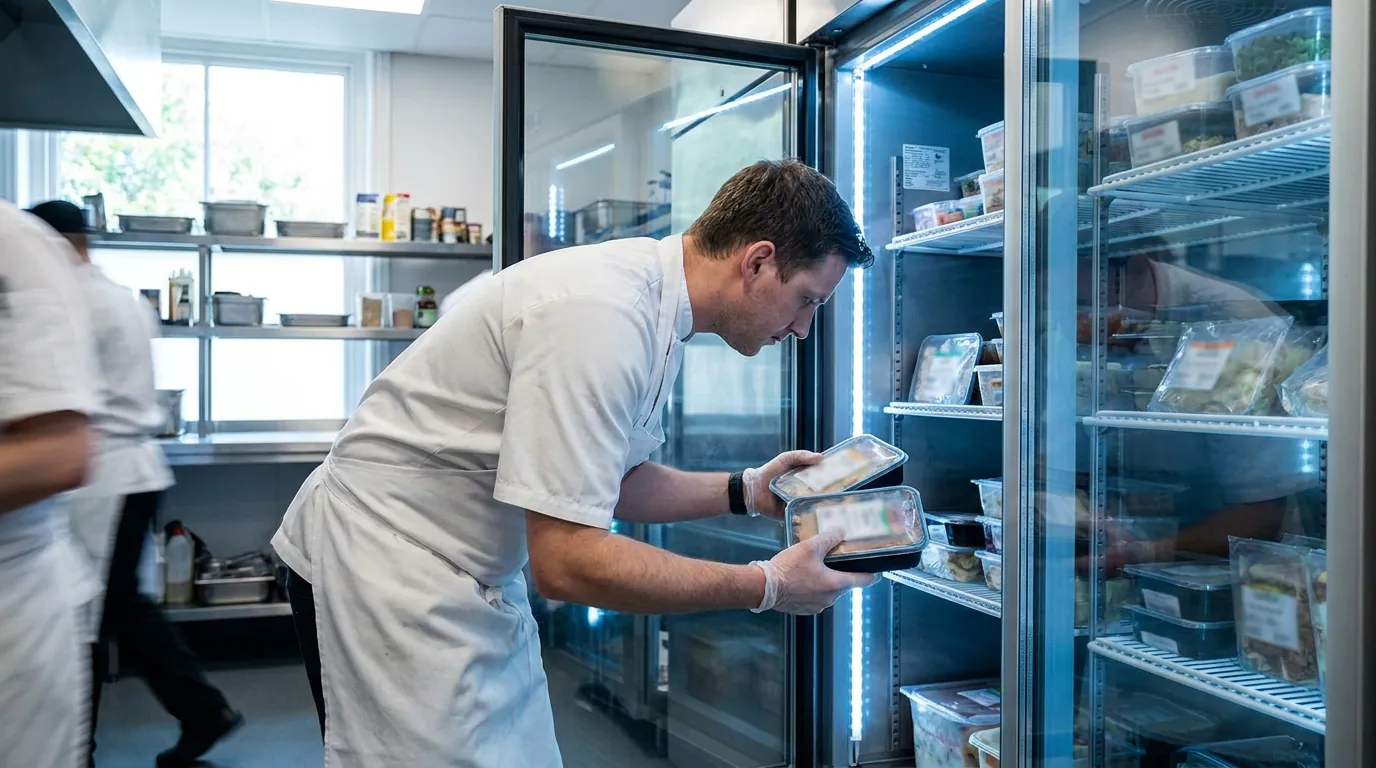
2. Date labelling and stock rotation
Check that all chilled food in storage is correctly date-labelled and within its use-by or use-within date. This includes:
- Raw ingredients received from suppliers (use supplier date labels and apply your own “use within” labels once opened)
- Prepped items made the previous day (should be labelled with the preparation date and a use-by date based on your HACCP plan)
- Cooked items held over from service (check your procedures — most cooked food should be used within two to three days when refrigerated, or discarded)
Remove and dispose of anything that is expired or incorrectly labelled. Record disposals.
This check is where stock rotation (FIFO — first in, first out) gets reinforced in practice. New deliveries should go behind existing stock. Opening checks are the moment to catch rotation failures before they become safety problems.
3. Cleanliness of surfaces, equipment, and storage areas
Confirm that the kitchen was left clean after the previous shift. Check:
- Food preparation surfaces — clean, sanitised, no residue
- Cooking equipment — clean and in working order
- Utensils and small equipment — properly washed and stored
- Storage areas — tidy, no spillages, correct food storage practices (raw below cooked, covered containers)
- Floors and drains — no standing water, no debris
This check catches closing failures before they affect the opening service. If surfaces were not properly cleaned the night before, it needs to be addressed before food preparation begins — not discovered mid-service.
4. Pest check
A quick visual check for signs of pest activity: droppings, gnaw marks, damage to packaging, unexplained spillages. Check high-risk areas — behind equipment, under shelving units, around entry points, in dry goods storage.
Pest activity found at opening is much easier to act on than pest activity discovered during an EHO visit. If you find evidence, document it, isolate any potentially affected food, and contact your pest control contractor.
5. Deliveries
If deliveries are scheduled before or during opening, they need to be checked on arrival — not unpacked and stored first. (For the full goods-in process, see our guide to delivery checks for food safety.) Check:
- Temperature of chilled and frozen deliveries (use a probe thermometer, record the reading)
- Condition of packaging — damaged packaging, blown tins, evidence of pest damage
- Date labels — any product already close to or past its use-by date
- Quantity and specification against the delivery note
Reject anything that does not meet your standards and record the rejection. Accepting a borderline delivery and hoping for the best is a food safety and financial risk.
6. Equipment and utilities
Quick checks that equipment is working before you need it mid-service:
- Hot holding equipment reaching and maintaining temperature
- Probe thermometer calibrated and available (check and record calibration)
- Handwashing facilities stocked — soap, paper towels, hot water
- Any time-sensitive equipment (blast chillers, hot cabinets, temperature loggers) functioning
Closing Checks: What to Include
1. Food storage and date labelling
At the end of service, everything that is going back into storage needs to be correctly handled:
- Cooked food to be stored must be cooled rapidly (within 90 minutes to below 8°C) before refrigeration — do not put hot food into a fridge
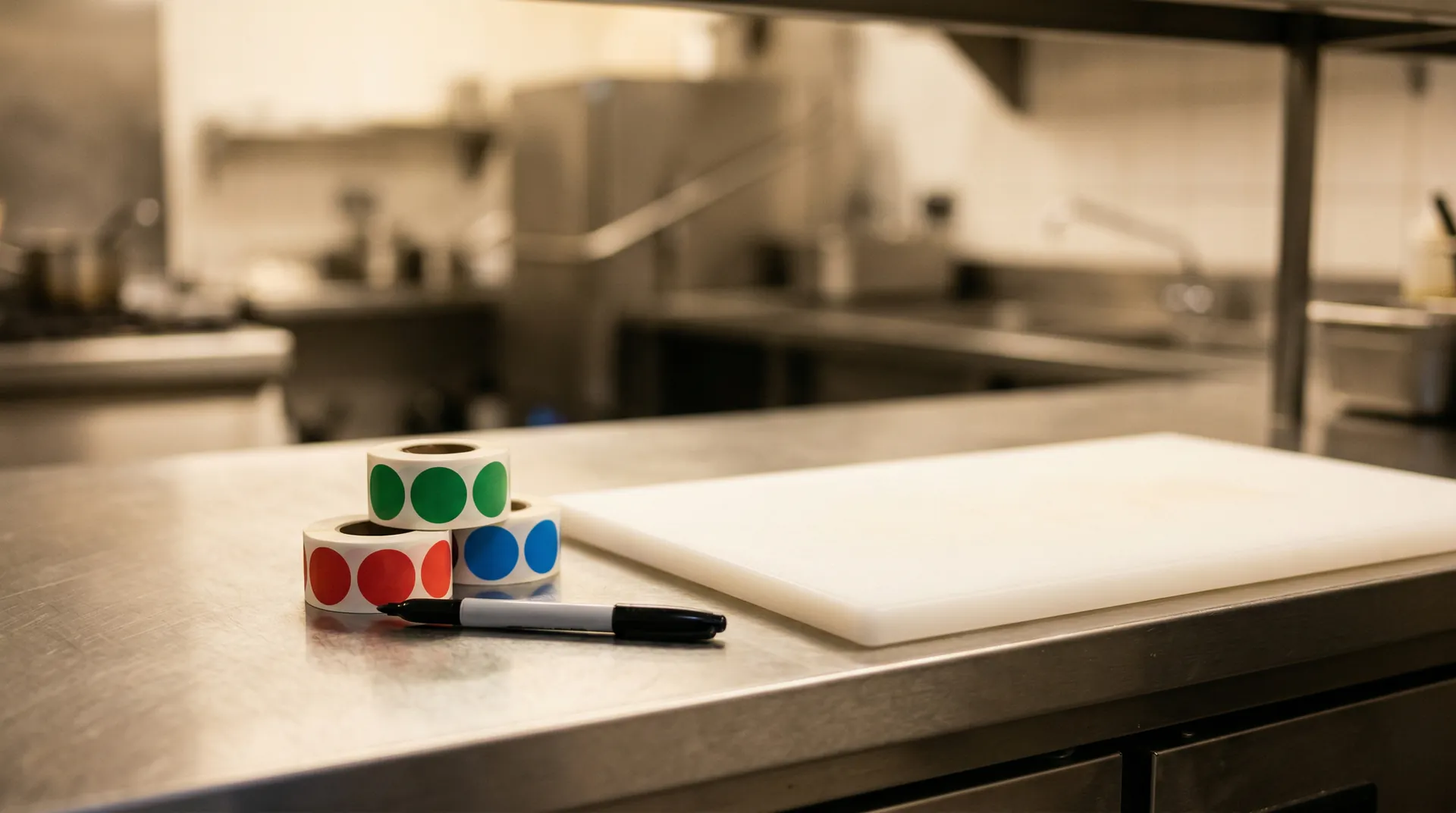
- All stored items must be covered and date-labelled with the preparation or cooking date and a use-by date
- Check that cooked and raw foods are correctly segregated — cooked above raw in the fridge
- Dispose of anything that has been out of temperature control for more than the safe window or that has reached the end of its usable life
2. Cleaning
Closing is when the majority of deep cleaning happens. (If you need to build or refine your cleaning schedule, see our guide to FOH and BOH cleaning schedules.) Your closing checks should confirm that the cleaning schedule has been completed — not just that people have been cleaning, but that specific tasks have been signed off:
- Food contact surfaces cleaned and sanitised
- Cooking equipment cleaned (grills, fryers, ovens — according to your schedule)
- Non-food contact surfaces cleaned (walls, floors, equipment exteriors)
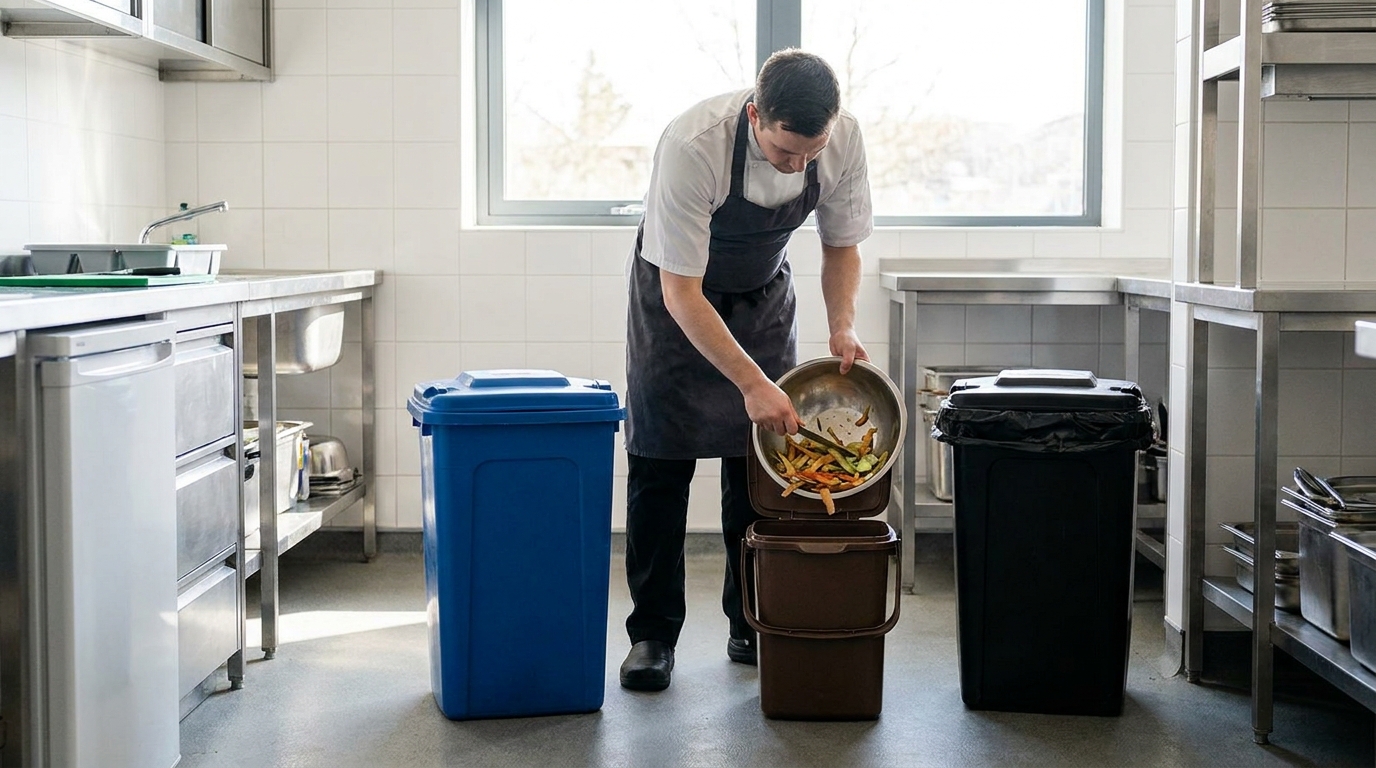
- Waste removed — bins emptied, waste stored securely away from the kitchen
- Dishwasher or glasswasher cleaned and left with the door open
Your closing check is also the moment to assign and record any cleaning tasks that are weekly or monthly rather than daily, so the schedule stays on track.
3. Temperature logs closed
Ensure that all temperature monitoring records for the shift have been completed — fridge and freezer readings, cooking temperature probes, hot holding records. Any gaps in the record should be identified and, if possible, completed from contemporaneous notes before the shift ends.
4. Pest check
A brief check at closing — particularly in waste areas, around deliveries that came in during the day, and anywhere food debris may have accumulated. Secure waste areas and ensure external access points (doors, windows) are closed and sealed.
5. Security and utilities
Confirm the kitchen is secure: gas off or isolated, appropriate equipment turned off or set to standby, refrigeration units running and doors sealed, alarms set. This is partly safety and partly food safety — a fridge door left slightly open overnight is a refrigeration failure by morning.
Making Opening and Closing Checks Actually Happen
The most common failure mode is not a bad checklist — it is a checklist that nobody follows consistently. A few things that make the difference:
Build it into the handover, not around it. Opening checks should be the first thing on shift, before prep begins. Closing checks should be the last thing, not squeezed between service ending and staff leaving. If the check happens at the end of the night when everyone wants to go home, it will be rushed and incomplete.
Assign responsibility clearly. One person is responsible for completing and signing the opening check. One person is responsible for closing. It should not be assumed or rotated informally — it should be a known part of each shift’s role structure.
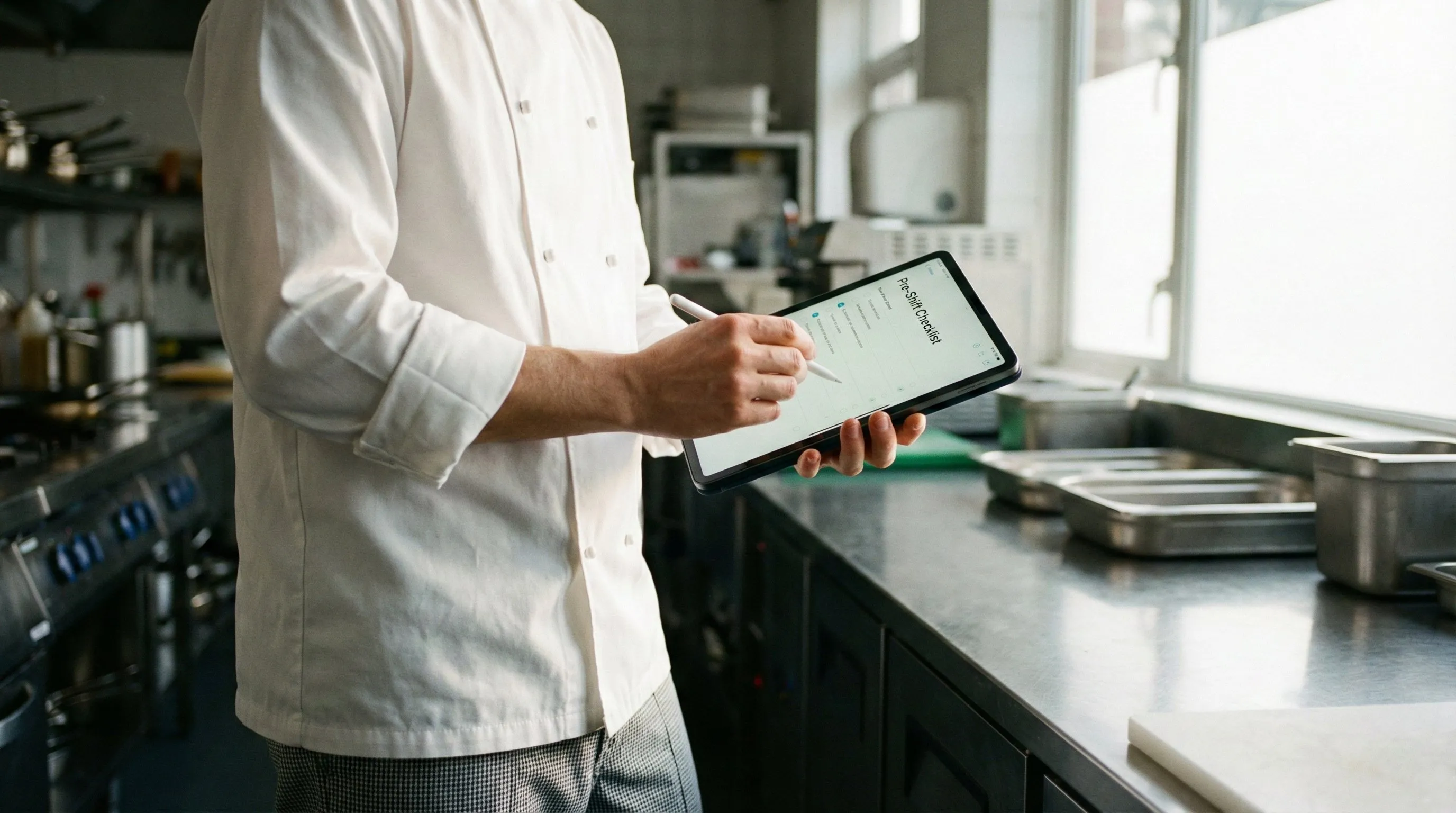
Make it easy to record. A check that requires hunting for a clipboard, finding the right form, and locating a pen will be done inconsistently. A check that can be completed on a phone or tablet in the kitchen, with each item ticked as it is done, will be done more reliably.
Review the records. Opening and closing check records should be reviewed by a manager at least weekly — not to catch people out, but to spot patterns. If the same temperature is consistently borderline, or the same closing task is consistently incomplete, that is information worth acting on.
Do not treat them as a box-ticking exercise. If staff understand why each check matters — what they are looking for and what to do if they find it — they are far more likely to do it properly. A check completed because “we have to” is less effective than a check completed because “this is how we catch problems before they affect our customers.”
Using Forkto for Opening and Closing Checks
Forkto’s check form builder lets you create custom opening and closing checklists tailored to your specific kitchen — your equipment, your schedule, your corrective action procedures. Checks are completed on any device, timestamped, and stored automatically.
Because each completed check is a dated, signed record in the system, your opening and closing check history is always available — useful for internal review, and immediately accessible if an EHO asks to see your daily compliance records.
Build your opening and closing check templates in Forkto
A Quick Reference: Opening and Closing Check Items
Opening:
- All fridge temperatures recorded (with actual readings)
- All freezer temperatures recorded
- Date labels checked, expired items removed and recorded
- Stock rotation checked (FIFO)
- Surfaces and equipment checked — clean from previous shift
- Pest check completed
- Deliveries checked (temperature, condition, date labels)
- Equipment operational — hot holding, probe thermometer calibrated
- Handwashing facilities stocked
Closing:
- Cooked food cooled and correctly stored with date labels
- Raw/cooked segregation confirmed
- Items for disposal identified and removed
- Cleaning schedule tasks completed and signed off
- All temperature logs for the shift completed
- Waste removed and waste areas secured
- Pest check completed
- Equipment off or on standby, fridges sealed
- Kitchen secured
Related Forkto software
Safe hands, clear records
Stop running food safety on paper
Forkto turns daily checks, temperature logs, HACCP and audits into a few taps on a phone. Your team stays consistent and you're always ready for the EHO.
14-day free trial · No card required