Food safety guide
Personal Hygiene for Food Handlers: What UK Law Requires
Complete guide to personal hygiene rules for food handlers in UK food businesses. Covers handwashing, fitness to work, the Big 6, protective clothing, and more.
14 April 2026
Personal hygiene is the food safety control that relies entirely on people. Your fridge thermostat doesn’t decide to skip a step because it’s busy. Your cleaning chemicals don’t get complacent. But your team can — and in every kitchen, on every shift, the standard of personal hygiene among food handlers is the single biggest variable in whether food reaches customers safely.
The legal framework is clear. Regulation (EC) No 852/2004, Annex II, Chapter VIII sets out requirements for personal hygiene of food handlers, and the Food Safety and Hygiene (England) Regulations 2013 implement these domestically. But the regulations themselves are brief. It’s the practical interpretation — what an EHO actually expects to see when they walk into your kitchen and watch your team work — that determines whether you’re compliant.
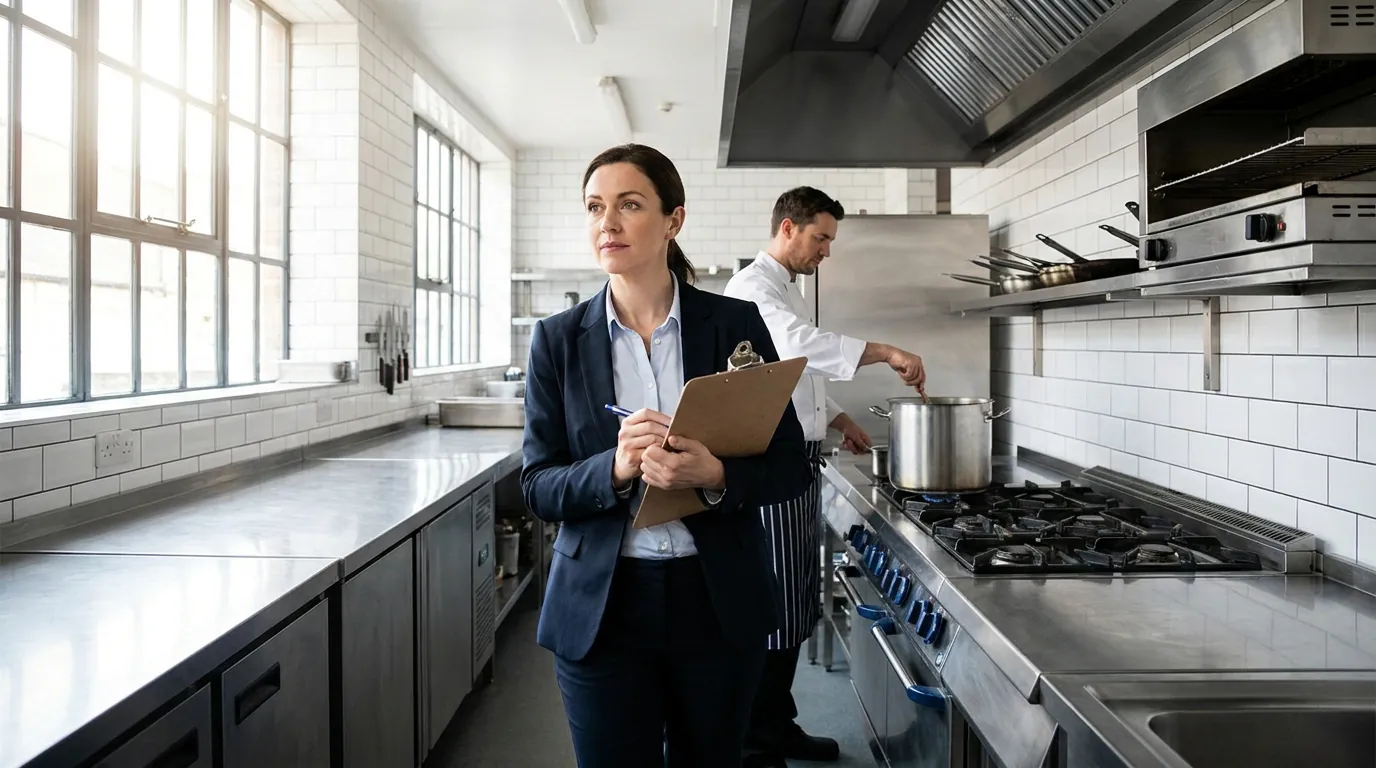
This is also the area where EHOs form their strongest impressions. They can read your HACCP plan later. They can review your temperature records in the office. But within the first five minutes of an inspection, they’ve already observed whether your team washes their hands, wears appropriate clothing, and handles food in a way that suggests they understand — and care about — the basics.
Handwashing: The Foundation of Food Hygiene
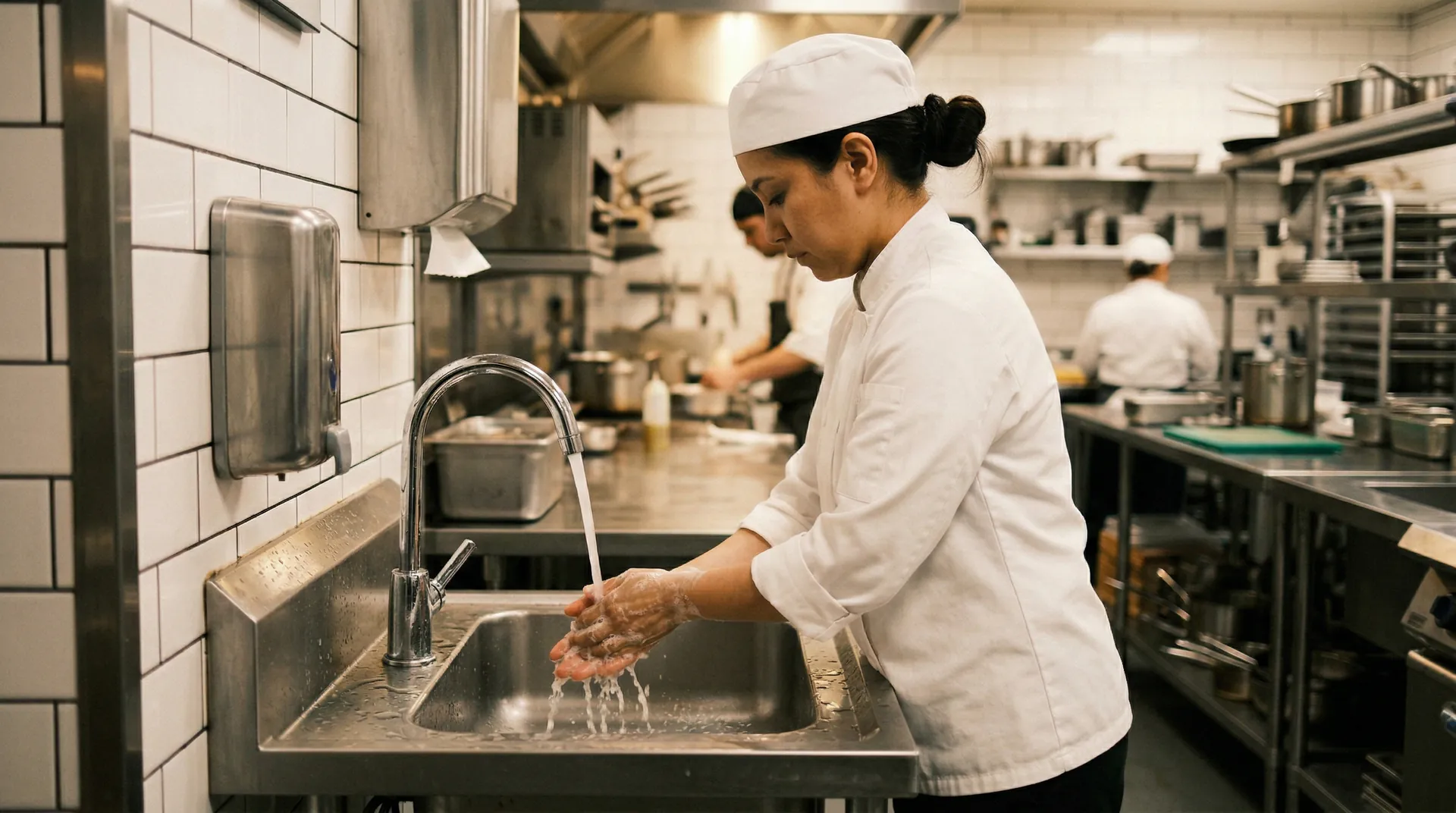
It sounds basic because it is basic. And it’s still the most frequently cited issue in food hygiene inspections. Not because businesses don’t have handwash basins — but because staff don’t use them properly, consistently, or at the right times.
When to wash hands
Food handlers must wash their hands:
- Before handling food — every time, without exception
- After handling raw meat, poultry, fish, shellfish, or eggs — before touching anything else
- After using the toilet — this is so fundamental it shouldn’t need saying, but EHOs still observe failures
- After handling waste or touching bins
- After cleaning or handling cleaning chemicals
- After touching their face, hair, nose, or mouth
- After smoking, vaping, eating, or drinking
- After handling money
- After blowing their nose, coughing, or sneezing
- After touching phones, tablets, or other personal devices
- After handling packaging, deliveries, or cardboard boxes
- When moving between raw food preparation and ready-to-eat food tasks — a critical step in preventing cross-contamination
That’s a long list, and it’s not exhaustive. The principle is: wash your hands whenever there’s a risk that they’ve become contaminated, and whenever you’re about to do something where contaminated hands would be dangerous.
How to wash hands
The FSA and NHS guidance specifies:
- Wet hands with warm running water
- Apply soap — liquid soap from a dispenser, not a bar of soap
- Rub hands together for at least 20 seconds, covering all surfaces: palms, backs of hands, between fingers, under nails, thumbs, wrists
- Rinse thoroughly under running water
- Dry with single-use paper towels or a hand dryer — not a shared cloth towel, not your apron
The 20-second standard isn’t arbitrary. Studies consistently show that shorter washing doesn’t adequately remove transient bacteria. Singing “Happy Birthday” twice is the often-cited timing method, though your kitchen staff may prefer to count silently.
Handwash facilities
Your kitchen must have a dedicated handwash basin that is:
- Separate from food preparation sinks and equipment washing sinks
- Supplied with hot and cold running water (or appropriately mixed)
- Stocked with liquid soap and paper towels (or a working hand dryer) at all times
- Accessible — not blocked by equipment, boxes, or stored items
- Used only for handwashing — not for washing lettuce, filling pans, or rinsing cloths
EHOs will check that the handwash basin is accessible and stocked. They’ll also observe whether staff actually use it. A basin with a dry soap dispenser or an empty paper towel holder tells its own story.
Hand sanitiser is not a substitute
Alcohol-based hand sanitiser can be used as an additional measure, but it does not replace handwashing. Sanitiser is less effective on visibly dirty hands and doesn’t remove all types of contamination. Wash first, sanitise second if required.
Gloves are also not a substitute for handwashing. Hands must be washed before putting on gloves and when changing gloves. Gloves that are worn continuously and never changed are no better than unwashed hands — arguably worse, because they give a false sense of protection.
Fitness to Work: The Big 6 and the 48-Hour Rule
Food handlers who are ill with certain infections must not handle food. This is both a legal requirement and a critical control for preventing outbreaks.
The Big 6 reportable illnesses
The FSA identifies six pathogens as particularly high-risk for transmission through food handling:
- Salmonella — the most common bacterial cause of food poisoning in the UK
- E. coli O157 (and other STEC) — can cause severe illness including haemolytic uraemic syndrome
- Campylobacter — the most common cause of bacterial gastroenteritis in the UK
- Shigella (bacillary dysentery) — highly infectious, very low infective dose
- Cryptosporidium — a parasite that causes watery diarrhoea
- Hepatitis A — a viral infection affecting the liver, transmissible through food
If a food handler is diagnosed with or suspected of having any of these, they must be excluded from food handling immediately. The local authority Environmental Health team should be notified, and the food handler should not return to work until cleared — which may require negative stool samples, depending on the pathogen.
The 48-hour rule
For general symptoms of gastrointestinal illness — vomiting and/or diarrhoea — the rule is straightforward:
A food handler must not return to work until at least 48 hours after their symptoms have ceased.
Not 48 hours after they start feeling better. Not 48 hours after the vomiting stops but while diarrhoea continues. 48 hours after all symptoms — vomiting, diarrhoea, nausea, abdominal cramps — have completely stopped.
For certain infections (E. coli O157, Shigella, hepatitis A), exclusion may be longer and may require microbiological clearance. Your food safety management system should reference FSA guidance on fitness to work, and staff should know who to report symptoms to.
Creating a reporting culture
The 48-hour rule only works if staff actually report their symptoms. In many food businesses — particularly those with tight staffing, zero-hours contracts, or no sick pay — the incentive to come in while ill is strong. This is a management problem, not a staff problem.
You need:
- A clear, written fitness-to-work policy that all staff understand
- A reporting procedure — who to contact, and confirmation that there will be no penalty for reporting honestly
- Records of fitness-to-work assessments — when staff reported symptoms, when they were excluded, when they returned
- Return-to-work checks after illness, documented
EHOs will ask about your fitness-to-work procedures. They may ask individual staff members directly: “What would you do if you had diarrhoea before a shift?” The answer they want is “I’d phone in and not come to work.” If the answer is a shrug or a hesitation, that’s a red flag.
Protective Clothing
Food handlers must wear suitable, clean protective clothing. The specific requirements depend on the nature of the work, but the principles are consistent.
What’s required
- Clean clothing — dedicated work clothing or a clean uniform, changed daily or more frequently if contaminated
- Apron — particularly when handling raw meat, fish, or poultry. Ideally colour-coded to match your raw/cooked separation system
- Hair covering — hair nets, caps, or other effective hair restraints that cover all hair. Beards should also be covered with a snood or beard net if there’s a risk of contamination
- Appropriate footwear — closed-toe, non-slip shoes. Dedicated kitchen footwear is best practice
What’s generally expected
- Outdoor clothing should not be worn in food handling areas. Staff should change into work clothing on arrival.
- Protective clothing should not be worn outside the kitchen — popping out for a break in your apron and then returning to handle food defeats the purpose.
- Disposable gloves should be changed frequently and between tasks, particularly when switching between raw and ready-to-eat food. As noted above, hands must be washed before and after glove use.
Jewellery Policy
The standard position in UK food safety is that food handlers should not wear jewellery — including watches, bracelets, rings (except a plain wedding band), earrings, necklaces, or piercings — in food handling areas.
The reasons:
- Jewellery can harbour bacteria in crevices that are difficult to clean
- Items can fall into food, creating a physical contamination risk
- Jewellery makes effective handwashing more difficult (bacteria under rings, watch straps, etc.)
- Stone settings can become loose and fall into food
A plain wedding band is generally the only exception accepted in practice, and even this is a concession rather than a right. Some businesses (and some audit standards) require all jewellery to be removed without exception.
Your policy should be written, communicated to all staff, and enforced consistently. EHOs will notice if staff are wearing watches, rings, or bracelets during food preparation.
Cuts, Wounds, and Skin Conditions
Any cut, graze, burn, boil, or septic wound on a food handler’s hands or arms must be covered with a waterproof, detectable dressing — the blue plasters that are standard in food service.
Why blue? Because blue doesn’t occur naturally in food, making a dressing that falls off immediately visible. Most blue food-service plasters also contain a metal strip, making them detectable by metal detectors in manufacturing settings.
If a wound is infected or weeping, the food handler should not handle open food — even with a dressing. Infected wounds harbour high levels of Staphylococcus aureus and other bacteria that can contaminate food.
Staff with skin conditions affecting their hands (eczema, dermatitis, psoriasis) should discuss the situation with their manager. Depending on severity, glove use or temporary reassignment to non-food-handling duties may be appropriate.
Smoking, Vaping, Eating, and Drinking
Smoking and vaping are not permitted in enclosed food handling areas (this is also a legal requirement under the Health Act 2006 for enclosed workplaces generally). But the food safety concern goes beyond where staff smoke — it’s about what happens when they come back.
After smoking or vaping, food handlers must wash their hands before handling food. Hands that have held a cigarette or vape device are contaminated. This includes the often-overlooked step of not touching food preparation surfaces or equipment on the way back to the handwash basin.
Eating and drinking should not take place in food handling areas. Staff breaks should be taken in a separate area. Drinks in the kitchen (where permitted) should be in covered containers kept away from food prep areas.
Personal Belongings
Mobile phones, bags, keys, and other personal items should not be brought into food handling areas. They’re contamination vectors — phones in particular carry significant bacterial loads.
Designate a secure storage area for personal belongings outside the kitchen. If staff need to access their phone (for personal emergencies, not social media), they should leave the food handling area and wash their hands before returning.
What EHOs Observe About Staff Hygiene
Personal hygiene is assessed through observation, not just documentation. During an inspection, an EHO will:
- Watch handwashing practice — do staff wash their hands at appropriate times? Is the technique adequate? Is the basin being used?
- Check handwash facilities — soap, paper towels, hot water, accessibility
- Observe clothing — is it clean? Are hair coverings worn? Are aprons appropriate for the task?
- Look for jewellery — watches, rings, bracelets on food handlers
- Check for blue plasters on staff with visible cuts or wounds
- Ask questions about fitness-to-work procedures, the 48-hour rule, and what staff would do if they were ill
- Review training records — when was personal hygiene training last delivered? Is it documented?
- Assess the overall culture — does hygiene appear to be a priority, or is it an afterthought?
First impressions count. A kitchen where every member of staff is in clean whites, wearing hair nets, and using the handwash basin without being watched sends a very different message to an EHO than one where the chef is wearing a wristwatch and the kitchen porter has no hair covering.
How Forkto Helps
Forkto’s digital checklists can incorporate personal hygiene checks into opening routines and shift handovers — verifying that handwash stations are stocked, staff are in appropriate clothing, and fitness-to-work declarations have been completed. Training records for hygiene topics are stored alongside your other compliance documentation, giving you a complete picture when an EHO asks to see evidence that your team is trained and your procedures are followed.
For businesses managing multiple sites or rotating staff, having a centralised digital record of hygiene training, fitness-to-work assessments, and daily compliance checks ensures consistency across the operation. See how Forkto supports staff hygiene compliance →
Quick Reference: Personal Hygiene for Food Handlers
- Is there a dedicated, accessible handwash basin stocked with soap and paper towels?
- Do all staff wash hands for 20 seconds at all required times (before handling food, after raw meat, after toilet, etc.)?
- Is there a written fitness-to-work policy covering the Big 6 and the 48-hour rule?
- Can staff explain what to do if they have symptoms of vomiting or diarrhoea?
- Are fitness-to-work exclusions and return-to-work decisions documented?
- Do food handlers wear clean protective clothing, hair coverings, and appropriate footwear?
- Is there a jewellery policy that is communicated and enforced?
- Are cuts and wounds covered with blue waterproof detectable dressings?
- Is smoking/vaping prohibited in food handling areas, with handwashing enforced after breaks?
- Are personal belongings (phones, bags, keys) stored outside food handling areas?
- Is personal hygiene included in induction training and refresher training, with records kept?
- Does the kitchen culture support reporting illness without fear of consequences?
Related Forkto software
Safe hands, clear records
Stop running food safety on paper
Forkto turns daily checks, temperature logs, HACCP and audits into a few taps on a phone. Your team stays consistent and you're always ready for the EHO.
14-day free trial · No card required