Food safety guide
The Real Cost of Food Safety Non-Compliance
What non-compliance really costs UK food businesses: fines up to £3m, prosecution, closure, lost customers and insurance problems — with real cases.
6 March 2026
Most food business owners know that ignoring food safety is risky. But when the day-to-day pressure of running a kitchen takes over, compliance slips down the priority list. The thinking is usually something like: “We’ve been fine so far” or “We’ll sort it before the next inspection.”
The problem is that the cost of non-compliance goes far beyond a fine from your local authority. It hits your revenue, your reputation, your insurance, your ability to hire — and in serious cases, your freedom. Here’s what it actually costs when things go wrong.
Fines and Prosecution: The Obvious Cost
Under the Food Safety and Hygiene (England) Regulations 2013 and the Food Safety Act 1990, local authorities can prosecute food businesses for hygiene offences. The penalties are significant:
- Magistrates’ Court: Unlimited fines, up to six months’ imprisonment, or both.
- Crown Court: Unlimited fines, up to two years’ imprisonment, or both.
For most SMEs, fines typically land between £1,000 and £30,000 — but that range is deceptive. A single prosecution often involves multiple charges. In 2023, a takeaway in Lancashire was fined £18,000 plus costs after environmental health officers found mouse droppings, mouldy food, and no cleaning schedule. The total bill including legal costs exceeded £30,000.
And fines aren’t the only enforcement tool. Local authorities can issue:
- Hygiene Improvement Notices — requiring you to fix specific problems within a set timeframe. Failure to comply is a criminal offence.
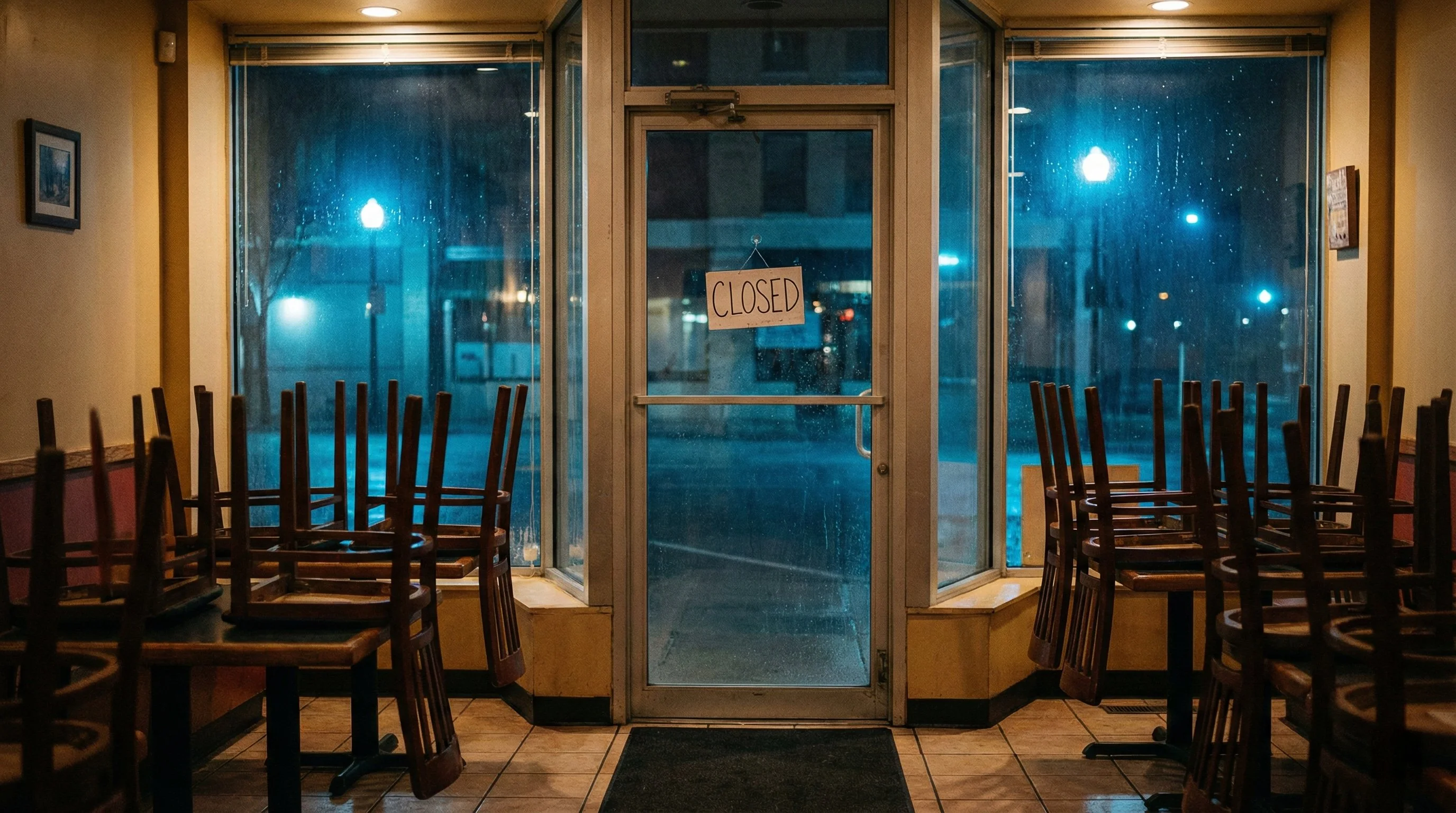
- Emergency Prohibition Notices — shutting your business down immediately if there’s an imminent risk to health. You stay closed until a court is satisfied the risk is removed.
- Remedial Action Notices — used for approved establishments, requiring specific corrective actions.
An emergency closure doesn’t just cost you the fine. It costs you every day of lost trade while you scramble to fix the problems, deep clean, and satisfy inspectors. For a busy restaurant turning over £3,000–£5,000 a day, even a week’s closure is devastating.
Your Hygiene Rating Is a Public Verdict
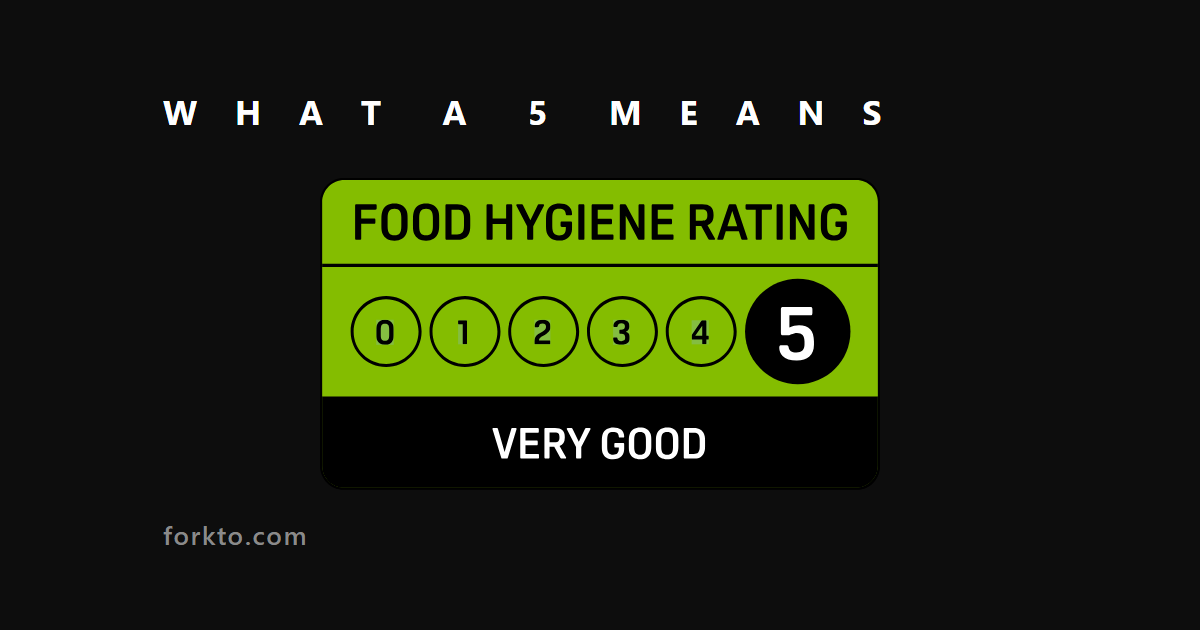
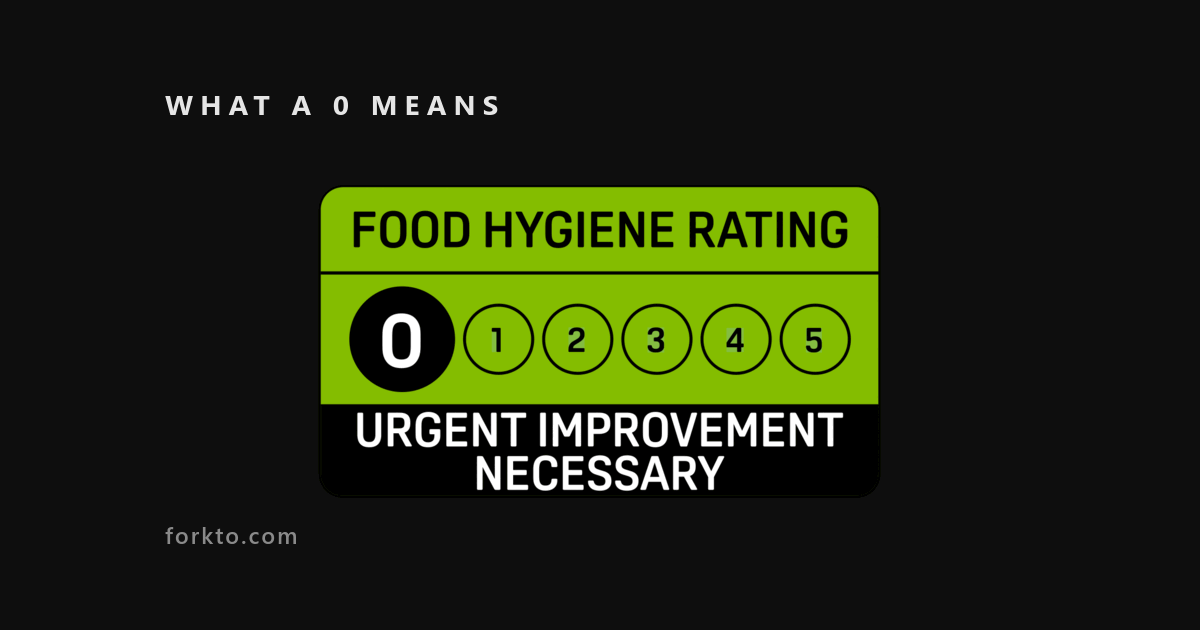
The Food Hygiene Rating Scheme (FHRS) scores businesses from 0 (urgent improvement necessary) to 5 (very good). In Wales and Northern Ireland, displaying your rating is mandatory. In England it’s voluntary — but customers check regardless.
In the FSA’s latest Food and You 2 survey, 55% of adults had checked a food hygiene rating in the past year, and 66% of those who know the scheme said a 4 or a 5 is the lowest rating they would usually accept (FSA, Food and You 2: FHRS report wave 11). Only 3% said they would accept a 2 or below. Our breakdown of what customers think of food hygiene ratings covers the full results.
A score of 1 or 2 is commercially catastrophic for most food businesses — and the reasons businesses fail inspections are often more mundane than you’d expect. Here’s why a low score hurts:
- Delivery platforms care. Just Eat, Deliveroo, and Uber Eats all require minimum hygiene ratings. Just Eat requires a rating of 3 or above, and Deliveroo and Uber Eats require at least a 2 — drop below the threshold and you’re removed from the platform. For businesses where delivery is 30–50% of revenue, that’s an existential threat.
- Google shows your rating. Search for almost any restaurant and the FHRS score appears in the knowledge panel. A rating of 1 sits right next to your opening hours and phone number.
- Word of mouth amplifies it. A low score gets shared on local Facebook groups, Nextdoor, and review sites. The reputational damage outlasts the rating itself.
Getting from a 1 back to a 5 isn’t instant, either. You need to fix every issue, request a re-inspection, and wait for the local authority to schedule one — which can take weeks or months depending on their resources. Some councils offer paid re-rating visits (typically £150–£180), but even then you’re looking at a minimum turnaround of several weeks.
During that time, you’re trading with a visible black mark against your name.
Insurance: The Hidden Tripwire
This is the cost most business owners don’t see coming. Many commercial insurance policies for food businesses include clauses related to food hygiene compliance. If you receive a low hygiene rating or an enforcement notice, your insurer may:
- Increase your premiums significantly at renewal.
- Add exclusions to your policy — for example, excluding claims related to food contamination.
- Refuse to renew your cover entirely.
If you’re uninsured or underinsured and a customer makes a food poisoning claim against you, the legal and compensation costs come directly out of your pocket. Food poisoning claims in the UK typically settle between £1,000 and £50,000 depending on severity, with serious cases (hospitalisation, long-term illness) reaching six figures.
Public liability insurance is effectively non-negotiable for food businesses. Losing it — or seeing it become prohibitively expensive — can make a business unviable even if it’s still legally allowed to trade.
The Revenue You Never See
Beyond the dramatic scenarios of closure and prosecution, non-compliance creates a slow bleed of revenue that’s harder to quantify but no less real:
- Fewer repeat customers. A dirty kitchen, inconsistent food temperatures, or visible pest issues don’t always trigger formal complaints. Customers just don’t come back.
- Lower average spend. Research consistently shows that perceived cleanliness correlates with willingness to spend. If your premises look poorly maintained, customers order less.
- Missed catering and contract opportunities. Corporate clients, event organisers, and local authorities increasingly require a minimum FHRS score of 4 or 5 before awarding contracts.
- Reduced staff productivity. Kitchens without proper systems — clear checklists, temperature logs, defined procedures — are chaotic. Staff waste time on confusion and rework.
These costs don’t appear on a single invoice. They show up as a business that should be growing but isn’t.
Staff Turnover: Good People Leave Bad Kitchens
The hospitality sector already has one of the highest staff turnover rates in the UK — estimates range from 30% to over 50% annually depending on the sub-sector, according to industry bodies. Non-compliance makes it worse.
Experienced chefs and kitchen managers know what a well-run kitchen looks like. They’ve seen the difference between a kitchen with proper HACCP documentation, clear procedures, and working equipment versus one held together by shortcuts and luck. When given the choice, they leave.
The cost of replacing a single kitchen employee — recruitment, training, lost productivity during the transition — is estimated at £3,000–£5,000 for a line cook and significantly more for supervisory roles. If your non-compliance is driving a revolving door, you’re paying that cost repeatedly.
There’s also the management distraction. Every enforcement notice, every failed inspection, every complaint pulls you away from running your business and into firefighting mode. That time has a cost too.
Legal Liability: Beyond Fines
If a customer becomes seriously ill due to food from your business, criminal prosecution is only one dimension. Civil claims for personal injury can follow, and these are entirely separate from any fine imposed by the courts.
In cases involving E. coli, salmonella, or listeria, claimants can pursue compensation for:
- Medical expenses and lost earnings
- Pain and suffering
- Long-term health consequences (reactive arthritis from salmonella, for example, can persist for years)
Businesses also face potential claims under the Consumer Protection Act 1987 for defective products, which operates on strict liability — meaning the claimant doesn’t need to prove negligence, only that the food was defective and caused harm.
The legal costs alone for defending a food poisoning claim — even one you successfully defend — can run to £10,000–£50,000 in solicitor and barrister fees.
Prevention vs. Remediation: The Numbers
Here’s where the business case becomes stark.
The cost of getting it wrong:
| Consequence | Typical Cost |
|---|---|
| Fine (magistrates’ court) | £1,000–£30,000+ (unlimited since 2015) |
| Legal representation | £5,000–£15,000 |
| Emergency closure (per week) | £3,000–£5,000+ lost revenue |
| Re-inspection and remediation | £2,000–£10,000 |
| Insurance premium increase | 20–50% uplift |
| Food poisoning claim | £1,000–£50,000+ |
| Staff replacement (per person) | £3,000–£5,000 |
| Reputational recovery | Months to years |
A single serious incident can easily cost an SME £30,000–£100,000 when you add up fines, legal fees, lost trade, remediation, and reputational damage.
The cost of getting it right:
A digital compliance system — covering temperature monitoring, daily checklists, HACCP documentation, staff training records, and audit preparation — typically costs a food business £100–£300 per month. That’s £1,200–£3,600 per year.
For context, that’s roughly the cost of a single day’s lost trade for most restaurants.
Platforms like Forkto are built specifically for this — giving UK food businesses the tools to stay compliant without adding hours of paperwork. Automated temperature monitoring, digital checklists, and audit-ready records mean you’re not scrambling before an inspection. You’re already prepared.
The Business Case Is Simple
Food safety compliance isn’t a cost centre. It’s risk management. It’s revenue protection. It’s the difference between a business that grows confidently and one that’s always one inspection away from crisis.
The businesses that treat compliance as an investment — in systems, in training, in proper documentation — don’t just avoid fines. They get better hygiene ratings, attract better staff, win more contracts, and sleep better at night.
The ones that don’t are playing a game of probability. And the odds aren’t in their favour. There are roughly 300 food safety prosecutions per year in England and Wales, thousands of Hygiene Improvement Notices issued, and an FSA that’s increasingly using data and intelligence-led targeting to focus on high-risk businesses.
The question isn’t whether you can afford to invest in food safety compliance. It’s whether you can afford not to.
Further reading
- UK Food Recalls & Fines 2026 Report — the full 2024-2026 prosecution list with £ figures and case details
- The Due Diligence Defence (s.21 Food Safety Act 1990) — the legal shield honest operators can use and how to build the evidence for it
- Food Safety Trends 2026 — where UK regulation and enforcement are heading next
Ready to see what proper compliance looks like? Explore Forkto’s features and find out how easy it is to protect your business.
Related Forkto software
Safe hands, clear records
Stop running food safety on paper
Forkto turns daily checks, temperature logs, HACCP and audits into a few taps on a phone. Your team stays consistent and you're always ready for the EHO.
14-day free trial · No card required