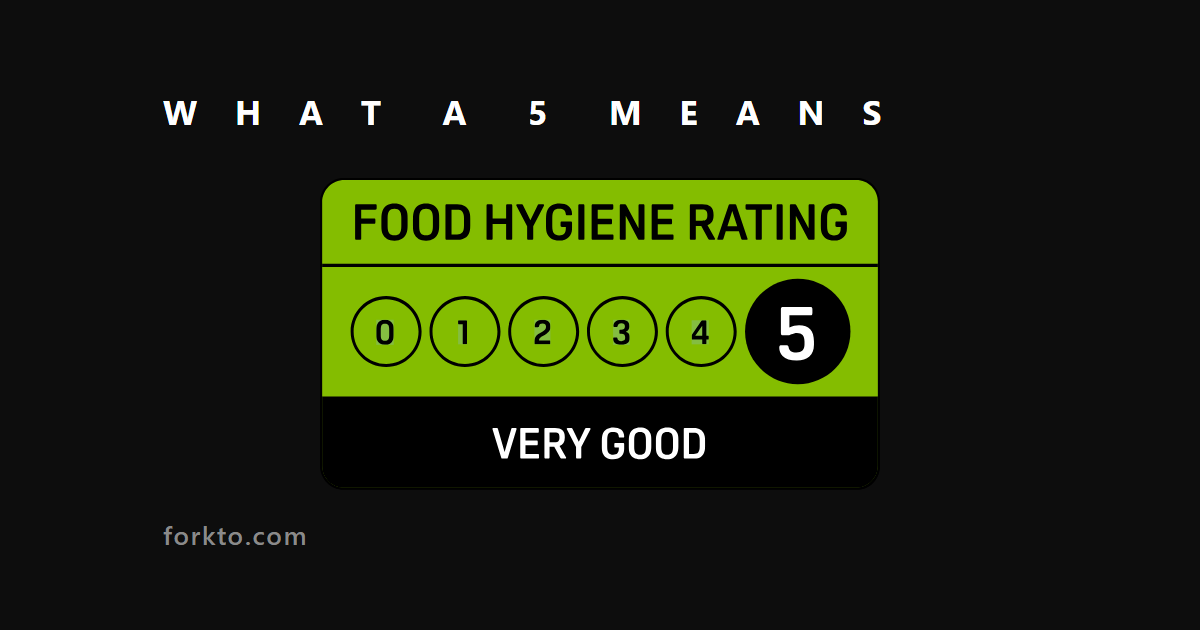
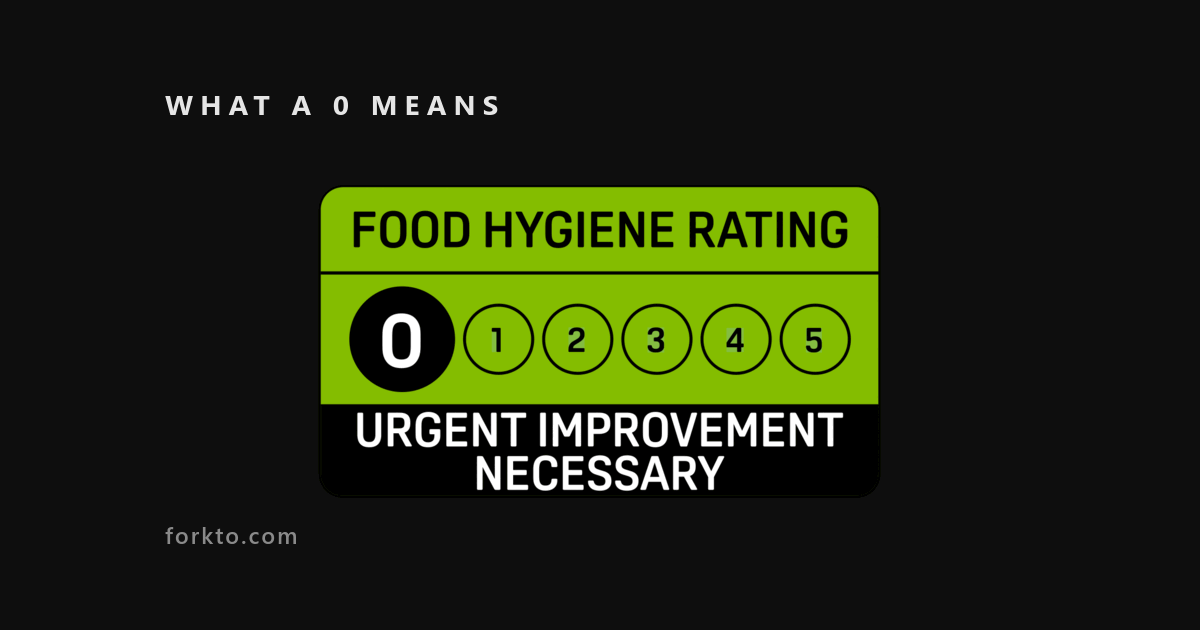
Food safety guide
Food Hygiene Rating Requirements for UK Delivery Platforms (2026)
The exact food hygiene rating each UK delivery platform requires: Just Eat 3, Deliveroo 2, Uber Eats 2. Scotland, NI and dark-kitchen rules, plus a step-by-step recovery plan if your rating drops.
12 April 2026
Your food hygiene rating is the single most important number for any UK restaurant, cafe, takeaway or dark kitchen that relies on delivery platforms for revenue. If it drops below the platform threshold, you are removed — usually within days, sometimes within hours. For independents where Just Eat, Deliveroo or Uber Eats accounts for more than half of turnover, a delisting is not a setback. It’s existential.
This guide is the definitive April 2026 answer on what each UK delivery platform actually requires, how Scotland’s FHIS maps to the FHRS, what dark kitchens need to know, and — if your rating has dropped — the exact recovery pathway including realistic timelines.
The quick answer — the 2026 threshold matrix
| Platform | New partners | Existing partners | Scotland FHIS | Dark kitchens | Charter signatory |
|---|---|---|---|---|---|
| Just Eat | FHRS 3 or Pass or awaiting inspection | FHRS 3 / Pass | Pass (explicit) | Pre-inspection FHRS 3 required | Yes |
| Deliveroo | FHRS 2 or awaiting inspection | FHRS 2 (Exception path for 1-rated) | Pass (implicit) | Same FHRS 2 rule | Yes |
| Uber Eats UK | FHRS 2 or in process | FHRS 2 | Not explicit (assume Pass) | No separate rule | Yes |
| Wolt UK | Not published | Not published | Not published | Not published | No |
| Foodhub | Not published | Not published | Not published | Not published | No |
| Slerp | N/A (white-label) | N/A | N/A | N/A | N/A |
Last verified: April 2026. Each platform’s numeric threshold has been confirmed against its own published T&Cs or partner policy page. Where a platform does not publish explicit wording, we flag it as a gap rather than paper over it.
Each major platform’s policy in detail
Deliveroo — FHRS 2 minimum, direct FSA feed
Deliveroo’s public merchant policy page is the cleanest documented in the UK market. Verbatim, it states:
“You need an FSA hygiene rating of at least 2 to list on the Deliveroo platform, unless you fall within an Exception.”
And on continuous monitoring:
“Deliveroo displays partners’ food hygiene ratings in the ‘Restaurant Notes’ section on the platform… We source and maintain this information directly from the UK Food Standards Agency, and partners falling below a Rating of 2 will therefore be removed from the platform except where an Exception applies.”
Source: merchants.deliveroo.com/legal/policies
The “Exception” pathway is a remediation route for existing partners whose rating falls below 2: Deliveroo offers an onsite inspection by an independent food safety auditor. This is the one pathway back without a formal local authority re-rating.
Appeals and grace period: None on the platform side. Deliveroo defers to the local authority process — you have the 21-day appeal window and the right to request a re-visit inspection, but your listing drops the moment the FSA feed updates.
Dark kitchens: Same FHRS 2 rule. Each virtual brand must hold its own local authority FBO registration.
Just Eat — FHRS 3 minimum, pre-inspection rule for dark kitchens
Just Eat is the strictest of the three majors. Verbatim from its partner hub:
“Each new Partner is required to provide their unique FSA ID upon signing — a minimum of 3* or Pass in Scotland is required to sign-up and remain trading on Just Eat.”
“As long as you meet the minimum requirements of a 3* or Pass or are listed as ‘Awaiting Inspection’ on the FSA website, you can continue to trade with Just Eat.”
Source: partner.just-eat.co.uk/knowledge-centre/who-what-are-the-fsa-fss
Scotland is uniquely explicit. Just Eat is the only major UK platform that publishes a clean FHIS-to-FHRS equivalence: “In Scotland, you are rated Pass or Improvement Required. A ‘Pass’ indicates that the business broadly met the legal requirements.” Scottish operators on Just Eat have policy certainty the other two don’t offer.
Dark kitchens and delivery-only sites get separate treatment. A Just Eat spokesperson told Food Safety News:
“non-standard restaurants such as delivery only or a residential kitchen need to have had an inspection with a minimum rating of 3 before they are put on the platform… in some cases, we will allow registered non-standard restaurants that are awaiting inspection to join the platform if they have had a physical pre-inspection by NSF on our behalf.”
This rule is on record as a spokesperson statement rather than verbatim on the current partner page — confirm in writing during onboarding.
Training support. Just Eat still runs the £1m NSF-delivered food hygiene training programme originally launched during its 2019 cleanup.
Uber Eats UK — FHRS 2 minimum, “or in process of obtaining”
Uber Eats’ UK position is the hardest to pin down to a current-dated page. The operative public statement remains a 2021 spokesperson quote in Food Safety News:
“Uber Eats requires all restaurant partners to hold, or be in the process of obtaining, a food hygiene rating of 2 or above… Existing restaurants that fall below this requirement will lose access to the Uber Eats app until their food hygiene rating meets our minimum requirement.”
Uber’s published Merchant T&Cs add broader discretion: “Uber UK, at its sole discretion, reserves the right to remove from the Uber Eats App any Item for sale by Merchant deemed unsuitable for sale on the Uber Eats App.”
Data source: Uber Eats says at sign-up it “attempt[s] to match your business name and address with licensing information available on government databases.” Whether it runs a continuous FSA feed for existing partners, like Deliveroo, is not published — operators should assume it does and that a rating drop will be detected quickly.
Scotland and dark kitchens: Neither explicitly covered in Uber’s public UK-facing merchant materials. Treat a Scottish Pass as eligible but get it confirmed at onboarding; dark-kitchen operators should assume the standard FHRS 2 applies.
Myth alert: some UK competitor content incorrectly states Uber Eats UK requires a minimum of FHRS 3. It doesn’t — the current rule is 2. Don’t be misled into unnecessary remediation work.
Smaller UK platforms — no published numeric threshold
The three majors signed the FSA Food Safety Charter in October 2022, covering roughly 170,000 UK food businesses. Smaller platforms didn’t.
Wolt UK (DoorDash-owned since 2022) — partner guidelines require operators to “hold all necessary licenses and permits required to conduct business, and meet all applicable food safety and quality requirements as required by laws and regulations”. No numeric FHRS minimum is published.
Foodhub — UK commission-free takeaway aggregator. Partner onboarding pages set no published FHRS threshold. Treated by the FSA’s 2024 FHRS Display Audit as a separate non-charter aggregator.
Slerp (now within the Comtrade group) — white-label e-commerce for merchants’ own branded sites. Not a consumer marketplace, so no FHRS threshold applies at platform level; the merchant’s own FSA registration governs.
Other aggregators (Hungrrr, Flipdish direct-order, regional players) mostly operate as technology providers rather than aggregators — hygiene thresholds aren’t the relevant control.
For operators: if you list on a non-Charter platform, you should still behave as if FHRS 3 is the commercially safe floor. The FSA has been clear it would welcome wider adoption of the Charter’s standards, and CIEH has campaigned specifically for a level playing field.
Scotland, Wales and Northern Ireland specifics
Scotland — FHIS Pass required
Scotland uses the Food Hygiene Information Scheme (FHIS), not FHRS. Per Food Standards Scotland:
“Following routine food law inspections, businesses will be awarded an FHIS ‘Pass’ or ‘Improvement Required’ certificate to display to customers.”
- Pass = met legal requirements
- Improvement Required = failed to meet requirements, must improve
- Awaiting Inspection = not yet inspected
- Eat Safe Award = optional, for exceeding requirements
Only Just Eat publishes the FHIS-to-FHRS equivalence in its policy. Deliveroo and Uber Eats accept Pass in practice but do not document it — Scottish operators should request written confirmation at onboarding.
Wales — mandatory display plus a fixed penalty
Wales has required FHRS display since 28 November 2013 under the Food Hygiene Rating (Wales) Act 2013. Non-display is a fixed-penalty offence: £200, reduced to £150 if paid within 14 days.
Re-rating fees historically sat at £160 statutory but have drifted upward at some LAs — Gwynedd £219, Carmarthenshire £255 are current 2024-26 examples.
Northern Ireland — mandatory display, £150 re-rating fee
NI has required FHRS display since 7 October 2016 under the Food Hygiene Rating Act (Northern Ireland) 2016. The re-rating fee is the statutory £150.
Watching brief: the 2023 FSA consultation on the Food Hygiene Rating (Online Display) Regulations (NI) 2023 would extend mandatory display to online platforms for NI businesses. Implementation timetable not confirmed at April 2026, but operators listed through delivery platforms should assume tighter display rules are coming.
England — voluntary display (for now) and wildly varying fees
England is still voluntary-display territory, though the FSA’s Future of Food Regulation programme includes mandatory display in England among its five workstreams — see our 2026 food safety trends post for the direction of travel.
Re-rating fees in England are notoriously inconsistent:
| Council | Re-rating fee |
|---|---|
| Westminster | £350 |
| Hackney | £342 |
| Worcestershire Regulatory Services | £198 (VAT-exempt) |
| Many councils | No flat fee published |
The 2019 Barnes review called this inconsistency “unfair”. Nothing has changed materially since.
The recovery playbook if your rating drops
The recovery path runs through your local authority, not the platform. The FSA’s “Safeguards for Businesses” page is the operative primary source.
Step 1 — Days 0 to 21: the standstill period
FSA verbatim: “You must make your appeal in writing within 21 days of being notified about your food hygiene rating. This period includes weekends and public holidays. If you do not appeal within this time, your local authority will publish your food hygiene rating online at food.gov.uk/ratings website.”
The appeal is reviewed by the local authority’s Lead Food Officer (not the inspecting officer) and is decided within 21 days. If you appeal, your rating shows as “awaiting publication” on the FSA website during the review.
What this means for the platform: your existing rating remains live on the FSA site during the standstill if you appeal. Once the new rating publishes, platforms update within days.
Step 2 — Write a Right to Reply
The Right to Reply is free and gets published alongside your rating on ratings.food.gov.uk. FSA verbatim: “The right to reply allows you to tell customers how your business has improved its hygiene standards or if there were unusual circumstances at the time of inspection.”
Local authorities can remove offensive or defamatory content but must publish what remains. This matters because consumers and delivery apps read it.
Step 3 — Remediate (typically days 1 to 21 run in parallel)
This is the binding constraint in most recoveries. The priorities, based on what EHOs actually score:
Food hygiene and safety procedures:
- Dated temperature logs (fridges ≤5°C, hot-hold ≥63°C, core cooking ≥75°C, or 82°C reheat in Scotland)
- Enforced raw/ready-to-eat separation (colour-coded boards, separate equipment)
- Correct cooling (63°C → 8°C within 90 minutes), reheating and date labelling
- Stocked handwash stations with hot water, soap and single-use towels
- Up-to-date 14-allergen matrix verified against supplier specifications (see our allergen matrix guide)
Structural compliance:
- Cleanable, repaired fabric — no cracked tiles in prep areas
- Working lighting, ventilation and extraction
- A dedicated handwash basin separate from sinks used for food or washing up
- Documented pest-proofing (mesh, bait stations, contractor log)
- Working, clean equipment with calibrated probes
Confidence in management:
- A completed HACCP-based FSMS — SFBB or equivalent — with a daily diary that is actually being filled in at the point of task, not back-filled the morning of inspection
- Written allergen policy and current Level 2/3 training certificates
- Supplier due diligence and traceability records
- Visible competent supervisor at inspection who can explain every procedure
See our EHO inspection guide for the deeper breakdown of what inspectors score on each element, and our guide to getting a 5-star food hygiene rating for the FHRS-specific action plan.
Step 4 — Submit a written re-rating request
Once remediation is genuinely complete. The re-rating is unannounced. FSA verbatim: “You can request a re-rating inspection only if you have accepted the rating and once you have made all the necessary hygiene improvements.”
Critical risk: the re-rating can go up, stay the same, or go down. Don’t request it until you’re confident.
Statutory cap: in Wales and Northern Ireland the re-rating must happen within 3 months of a valid request. In England the same 3-month cap applies where a fee is charged.
Step 5 — Wait for publication (14 to 28 days)
After the re-inspection, the new rating is notified to you within 14 days. You then have another 21 days to appeal. Once the appeal window closes, the LA publishes on ratings.food.gov.uk — most LAs update at least every 28 days.
Step 6 — Platforms refresh
Deliveroo is fastest because of the direct FSA feed. Just Eat and Uber Eats pull through soon after.
Realistic end-to-end timeline: 8 to 20 weeks. Remediation speed and local authority re-visit backlog are the binding constraints. Current UK inspection backlog (95,000+ overdue per Our Food 2024) means the 3-month statutory cap is routinely hit rather than beaten.
Named UK operators who have been through this
Chickos Fried Chicken, Preston — zero-rated October 2024 after Preston City Council found an active rat infestation. Voluntarily closed. Blog Preston explicitly noted Just Eat’s 3-star minimum and Deliveroo/Uber Eats’ 2-star minimum meant the outlet would stay blocked until re-inspection.
China House, Grimsby — zero-rated November 2021 after a filthy kitchen and mouldy containers were found. Re-inspected January 2022, improved to a 3 — the exact minimum needed for a Just Eat relisting.
The Times / BBC (May 2022) survey found Just Eat hosted 259 one-star and 3 zero-star takeaways; Deliveroo hosted 251 one-star and 18 zero-star; Uber Eats hosted 30 outlets rated 0 or 1 despite its own 2-star minimum — showing enforcement is tight in policy but imperfect in practice.
Tong Feng House (Greater Manchester), Mama Mia Pizza (Birmingham) and Karo’s Pizza (Liverpool) — all zero-rated, all promoted as Just Eat “Local Legends” before being exposed by BBC Panorama in January 2019. The resulting scandal is the direct reason Just Eat moved to FHRS 3.
Why this matters — the commercial stakes
- UK food delivery market: £14.3 billion in 2025, growing 3.1% year on year (Lumina Intelligence)
- UK online food-ordering platform segment: £3.9 billion in 2025-26 (IBISWorld)
- Market share of delivery occasions (Lumina, 2024): Uber Eats 27.2%, company-owned 26.4%, Just Eat 25.2%, Deliveroo 16.2%
- Independents: Just Eat, Deliveroo or Uber Eats can account for more than 50% of turnover
- FSA data: 26% of consumers who check hygiene ratings do so via a delivery app, up from 20% in 2023 — see what customers think of food hygiene ratings
A rating drop is not just a listing problem. It’s visible to the consumer at the moment of ordering decision. On Deliveroo and Just Eat, the FHRS sticker shows in the restaurant notes. On Uber Eats, the policy explicitly includes allowing consumers to filter by rating.
The myths worth correcting
Myth: Uber Eats UK requires a minimum of FHRS 3. Wrong — it’s FHRS 2. Some UK competitor content still repeats the wrong number.
Myth: Scotland’s “Pass” isn’t good enough for delivery platforms. It is — on Just Eat explicitly, on Deliveroo and Uber Eats in practice. Get it confirmed in writing at onboarding.
Myth: there’s a grace period when your rating drops. There isn’t, on any major platform. Offboarding follows the FSA feed.
Myth: dark kitchens are regulated the same as bricks-and-mortar restaurants. Not on Just Eat — delivery-only and residential sites need a pre-inspection FHRS 3 before listing. Deliveroo and Uber Eats don’t publish a separate rule but each virtual brand still needs its own local authority FBO registration.
Myth: a re-rating can only go up. It can go down. Don’t request it until remediation is complete.
Where Forkto fits
The platforms that matter most to your revenue are watching your FHRS in real time. Deliveroo pulls it on a direct feed. Just Eat monitors continuously. Uber Eats matches against government data. A rating drop is detected and acted on within days.
The operators who hold their ratings don’t do it by getting lucky at inspections. They do it by running daily food safety records that actually get filled in at the point of task — temperature checks, cleaning sign-offs, allergen checks, opening and closing routines — not back-filled the morning an EHO arrives. Every record time-stamped. Every gap visible to the manager in real time. An audit trail that holds up in the Confidence in Management component that caps the whole FHRS rating.
That’s what Forkto provides. UK hospitality operators on the platform stay ready for inspection every day, not just the week of a visit. If you want to see how it works in a real kitchen, start a free trial or browse our free downloadable checklists — no email required.
Last verified: 18 April 2026. Every platform-specific threshold in this guide was checked against the platform’s published merchant policy or partner hub on or before this date. We update this post whenever any major UK delivery platform changes its published threshold — subscribe or bookmark to catch future changes.
Related Forkto software
Frequently asked questions
What food hygiene rating do I need to be on Deliveroo, Just Eat and Uber Eats?
As of April 2026: Just Eat requires a minimum FHRS of 3 (or Pass in Scotland). Deliveroo requires FHRS 2. Uber Eats UK requires FHRS 2. These apply to both new and existing partners. Just Eat additionally requires a pre-inspection FHRS 3 for delivery-only or residential non-standard kitchens. All three platforms are signatories to the FSA's 2022 Food Safety Charter.
Can I stay on delivery platforms with a 1-star or 2-star food hygiene rating?
A 2-star is acceptable on Deliveroo and Uber Eats but below Just Eat's threshold. A 1-star is below every major platform's minimum and triggers removal, although Deliveroo offers an Exception pathway for existing partners who accept an onsite audit from SureFoot Solutions. No major UK platform allows 0-rated businesses to remain listed.
How long does it take to get back on delivery platforms after losing access?
Realistically 8 to 20 weeks. The FSA's standstill period is 21 days from the rating notification. After remediation, you submit a written re-rating request to your local authority, which is statutorily required within 3 months. The new rating is then published on ratings.food.gov.uk, typically within 28 days, and platforms refresh within days of the FSA feed updating.
Do delivery platforms check food hygiene ratings automatically?
Deliveroo does, via a direct feed from the FSA website — so a rating drop triggers near-immediate offboarding. Just Eat verifies FSA ID at sign-up and monitors on an ongoing basis. Uber Eats UK matches against government databases at onboarding but does not publish whether it polls continuously. Operators should assume all three will detect a rating change quickly.
What FHRS do dark kitchens and cloud kitchens need?
On Just Eat, delivery-only and residential kitchens need a pre-inspection FHRS 3 before listing, or a physical pre-inspection by NSF on Just Eat's behalf if awaiting inspection. Deliveroo and Uber Eats do not publish a separate dark-kitchen policy — the standard FHRS 2 applies. Each virtual brand must be separately registered as a Food Business Operator with the local authority.
Does Scotland's FHIS Pass count for UK delivery platforms?
Yes, in practice. Just Eat explicitly accepts a Scottish Pass as equivalent to its FHRS 3 minimum. Deliveroo and Uber Eats accept Pass but do not publish the equivalence in their policies. Scottish operators should get the equivalence confirmed in writing at onboarding. FHIS Improvement Required is below every platform's threshold.
What do smaller UK delivery platforms require — Wolt, Foodhub, Slerp?
None of these platforms publish a numeric FHRS minimum. They rely on generic compliance language such as 'meet all applicable food safety and quality requirements as required by laws and regulations'. They are not signatories to the FSA Food Safety Charter. Operators should assume case-by-case decisions rather than a clear threshold.
Can my food hygiene rating go down at a re-rating?
Yes. A re-rating is an unannounced inspection, and the outcome can go up, stay the same, or go down. This is a risk operators frequently overlook. Only request a re-rating once you are genuinely confident you have addressed every finding from the previous inspection.
How much does an FHRS re-rating cost in the UK?
In Wales the statutory fee is £160 (though some Welsh local authorities now charge more — Gwynedd £219, Carmarthenshire £255). In Northern Ireland the statutory fee is £150. In England fees vary widely — Westminster charges £350, Hackney £342, Worcestershire £198, while many councils charge nothing at all. Scotland has no equivalent FHIS re-rating fee structure.
Why is Just Eat's minimum higher than Deliveroo and Uber Eats?
Just Eat moved first and hardest. After BBC News coverage in October 2018 and BBC Panorama's Takeaway Secrets in January 2019 exposed zero-rated takeaways on the platform, Just Eat announced a £1 million compliance programme on 20 February 2019 and set its FHRS 3 minimum. Uber Eats and Deliveroo settled on FHRS 2 in the same period under separate media pressure (Channel 4's Joe Lycett sting on Uber Eats in April 2019).
Safe hands, clear records
Stop running food safety on paper
Forkto turns daily checks, temperature logs, HACCP and audits into a few taps on a phone. Your team stays consistent and you're always ready for the EHO.
14-day free trial · No card required