Food safety guide
How to Get a 5-Star Food Hygiene Rating: The Complete 2026 UK Guide
How the UK Food Hygiene Rating Scheme (FHRS) is scored, why confidence in management caps your rating, and a practical checklist for getting a 5.
23 January 2024
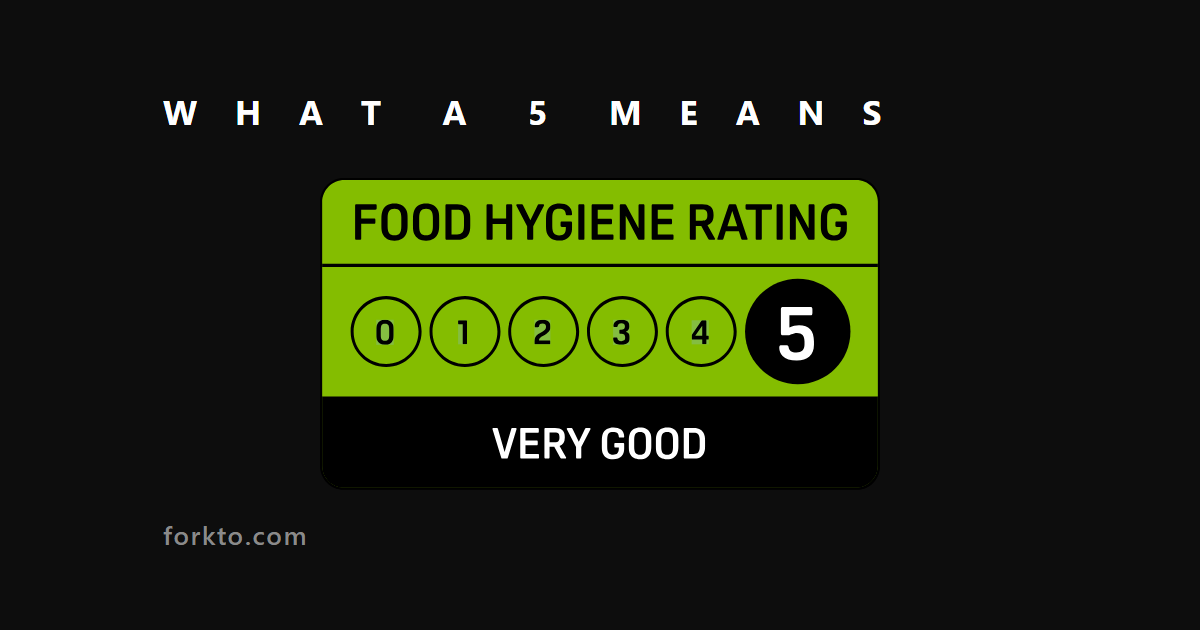
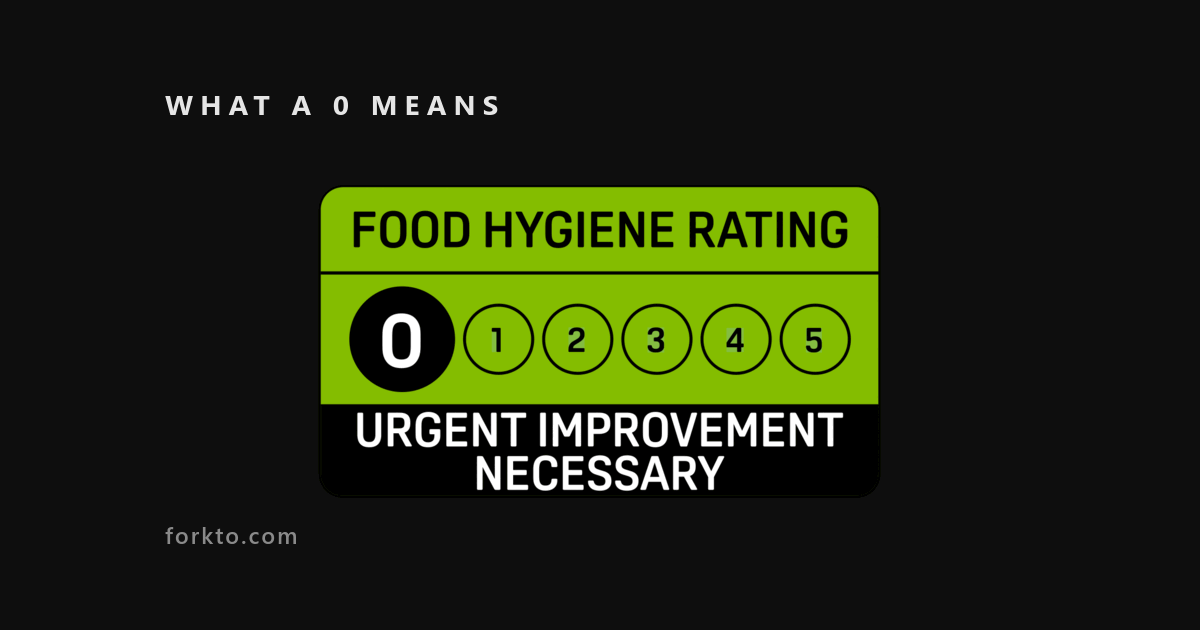
The Food Hygiene Rating Scheme (FHRS) gives every food business in England, Wales and Northern Ireland a rating from 0 to 5 based on hygiene standards found during an inspection. A 5 means hygiene standards are “very good”. A 0 means “urgent improvement is required” — and it gets published on ratings.food.gov.uk for every prospective customer, every delivery platform and every corporate client to see.
In 2026 the FHRS covers more than 430,000 UK food businesses, 78% of them at 5, around 469 businesses sitting at 0. Your rating drives consumer choice, delivery platform access, insurance premiums and B2B contract eligibility. The scheme is 15 years old in November 2025 and its scoring mechanics are more important than ever.
This guide explains exactly how the scoring works, the Brand Standard quirks most simplified guides miss, how Scotland’s FHIS differs, the display rules that now carry fixed penalty notices, the appeals process, and the specific framework for getting a 5-star rating.
The FHRS at a glance — current UK distribution
The scheme was formally launched in November 2010 by the Food Standards Agency, replacing a patchwork of voluntary “Scores on the Doors” schemes. By 2012 around 90% of local authorities had adopted it. Today:
- More than 430,000 food businesses rated across England, Wales and Northern Ireland (FSA, 15-year anniversary release, November 2025)
- 78% of rated businesses sit at 5 (up from ~72% in March 2020)
- 97% at 3 or above (FSA Board precise figure: 96.9%)
- Around 2% rated 0 or 1 combined — approximately 469 businesses rated 0 across restaurants, takeaways, pubs and hotels (High Speed Training 2025 Report)
- 89% of UK consumers have heard of FHRS, 91% recognise the sticker
London and the West Midlands have the weakest average ratings (4.38 and 4.45); the South West, North East and Northern Ireland lead (4.67 and 4.64).
The 0-5 scale — what each rating actually means
The current FSA consumer-page descriptors (last updated 30 September 2025):
| Rating | FSA descriptor |
|---|---|
| 5 | hygiene standards are very good |
| 4 | hygiene standards are good |
| 3 | hygiene standards are generally satisfactory |
| 2 | some improvement is necessary |
| 1 | major improvement is necessary |
| 0 | urgent improvement is required |
Most food businesses hold a rating of 4 or 5 — see our live UK food hygiene rating statistics for the current national breakdown. A 3 means “generally satisfactory” — legally compliant but below average — and if you’re below a 3, you’re in the bottom tier and may face enforcement action. A rating of 0, 1 or 2 triggers automatic loss of access on major delivery platforms — see the commercial implications section below.
How the rating is actually calculated — the Brand Standard quirks most guides miss
Your food hygiene rating comes from the FHRS Brand Standard Revision 8 (issued June 2023, PDF re-uploaded March 2026). The scoring structure is the single most misunderstood part of the scheme.
The three element scores
| Element | Possible scores | What it measures |
|---|---|---|
| Hygiene Practices | 0, 5, 10, 15, 20, 25 | Current compliance with food hygiene and safety procedures — handling, temperature control, cross-contamination, personal hygiene, allergens |
| Structural Requirements | 0, 5, 10, 15, 20, 25 | Cleanliness, layout, structure condition, lighting, ventilation, drainage, pest-proofing, facilities |
| Confidence in Management | 0, 5, 10, 20, 30 | Forward-looking judgement on likelihood of future compliance — track record, HACCP or SFBB, training, traceability, attitude |
The CIM anomaly. Confidence in Management has five possible scores, not six. There is no 15 and no 25 for CIM — valid values are 0, 5, 10, 20, 30. This creates a consequential jump from 10 to 20. See our Confidence in Management score guide for the deeper CIM-specific breakdown.
Brand Standard descriptors — what each score means
Hygiene Practices and Structural Requirements share identical descriptor wording (0-25):
| Score | Descriptor |
|---|---|
| 0 | High standard of compliance with statutory obligations and industry codes; conforms to accepted good practices |
| 5 | Good standard of compliance with only minor contraventions |
| 10 | Some non-compliance not considered significant in terms of risk (but may become significant if not addressed) |
| 15 | Some major non-compliance with statutory obligations — more work required |
| 20 | General failure to satisfy statutory obligations — standards generally low |
| 25 | Almost total non-compliance with statutory obligations |
Confidence in Management:
| Score | Descriptor |
|---|---|
| 0 | Excellent record of compliance; FBO knowledgeable; effective self-checks with satisfactory documented FSMS; may have external audit |
| 5 | Good record of compliance; effective management control of hazards; audit confirms general compliance |
| 10 | Satisfactory record of compliance; understanding of significant hazards; satisfactory FSMS or making satisfactory progress |
| 20 | Significantly varying record; insufficient food safety knowledge; no FSMS or unsatisfactory progress |
| 30 | Poor track record; little or no food-safety knowledge; no FSMS; does not recognise the need for controls |
The combined rating table
From Brand Standard Table 3:
| Total score | 0-15 | 20 | 25-30 | 35-40 | 45-50 | >50 |
|---|---|---|---|---|---|---|
| Maximum individual score permitted | 5 | 10 | 10 | 15 | 20 | — |
| Final rating | 5 | 4 | 3 | 2 | 1 | 0 |
The “cap by worst component” rule
Brand Standard paragraphs 4.4-4.5:
“Where an individual intervention rating score exceeds the additional scoring factor, the food hygiene rating of the establishment will drop down the scale to the rating where it no longer exceeds the additional scoring factor.”
Plain English: add the three scores to get a total → look up the provisional rating → if the highest individual score exceeds the cap for that band, drop one band at a time until it fits.
A single weak element pulls the whole rating down. A rating of 5 requires all three scores to be ≤5. You cannot compensate for one weak area by excelling in the other two.
Worked examples
| H / S / CIM | Total | Highest | Band by total | Cap check | Final rating |
|---|---|---|---|---|---|
| 5 / 5 / 5 | 15 | 5 | 0-15 → 5 | 5 ≤ 5 ✓ | 5 |
| 0 / 5 / 10 | 15 | 10 | 0-15 → 5 (fails) → drop to 4 (cap 10) | 10 ≤ 10 ✓ | 4 (capped) |
| 5 / 5 / 20 | 30 | 20 | 25-30 → 3 (fails) → 2 (fails) → 1 (cap 20) | 1 (capped) | |
| 0 / 0 / 10 | 10 | 10 | 0-15 → 5 (fails) → drop to 4 | 10 ≤ 10 ✓ | 4 (edge case) |
| 10 / 10 / 10 | 30 | 10 | 25-30 → 3 | 10 ≤ 10 ✓ | 3 |
| 10 / 10 / 20 | 40 | 20 | 35-40 → 2 (fails) → 1 (cap 20) | 1 (capped by CIM) | |
| 25 / 25 / 30 | 80 | 30 | >50 → 0 | no cap | 0 |
The edge case most operators miss: two zeros still cannot deliver a 5 if the third element scores 10. The cap rule is absolute.
What inspectors look for at each element
Hygiene Practices (what’s happening on inspection day)
- Food handling, preparation, cooking, reheating, cooling and storage
- Temperature control — fridges ≤ 8°C for high-risk food (FSA recommends ≤ 5°C), hot hold ≥ 63°C, cooking core 75°C / 30 seconds (or equivalent)
- Cross-contamination including allergen cross-contact (Brand Standard para 3.10 explicitly requires officers to consider allergen contamination)
- Staff personal hygiene — handwashing, wound management, fit-to-work
- Clean-as-you-go behaviour
- Pest control behaviours
- SFBB or Guides to Good Hygiene Practice compliance
See our Fridge & Freezer Temperature Log, Probe Thermometer Calibration Guide and Allergen Matrix Guide.
Structural Requirements (the fabric of the premises)
- Layout and flow preventing cross-contamination
- Condition and cleanliness of structure and equipment — damaged work surfaces, engrained dirt, cracked tiles all score against you
- Facilities — wash-hand basins, sinks, hot water, soap, drying
- Ventilation, lighting, drainage
- Structural pest-proofing (door sweeps, fly screens, sealed pipework)
- Waste disposal provision
Use our BOH Daily Cleaning Schedule, Weekly Deep Clean Checklist and Pest Control Inspection Checklist.
Confidence in Management — the hidden multiplier
- Company track record and responsiveness to prior advice
- HACCP-based FSMS commensurate with business complexity — Article 5 of Regulation (EC) 852/2004. SFBB may suffice for small, low-hazard businesses. See our HACCP guide and SFBB guide.
- Documented procedures — opening/closing checks, temperature logs, cooking/cooling records, cleaning schedules, probe calibration, supplier specifications and delivery checks
- Training records and induction
- External audit or Primary Authority arrangements (Brand Standard 3.11 — where a PA Inspection Plan exists, the inspecting LA must follow it)
- Attitude to enforcement
Critical mechanic from Brand Standard 3.8: food hygiene and structural failures that reflect non-adherence to HACCP additionally pull down the CIM score. One failing can damage two elements simultaneously.
This is why CIM is the hidden multiplier. An operator with excellent hygiene and structure on the day can still drop to a 4 on paperwork alone — and a CIM of 20 caps the whole rating at 1 regardless of how clean the kitchen looks.
Scotland — FHIS, not FHRS
Scotland uses the Food Hygiene Information Scheme, run by Food Standards Scotland (established 1 April 2015 under the Food (Scotland) Act 2015) in partnership with all 32 Scottish councils. It covers over 54,000 food outlets directly serving consumers.
Four categories (no 0-5 scale)
- Pass — meets legal food hygiene requirements
- Improvement Required — did not meet legal requirements
- Exempt Premises — inspected, meets pass criteria, but outside scheme scope (newsagents, pharmacies, visitor centres selling shelf-stable pre-wrapped food)
- Awaiting Inspection — temporary status for new businesses or after a change of ownership
Eat Safe Award
A voluntary excellence badge awarded by local EHOs during the standard inspection to businesses that exceed legal requirements. Confers a certificate, window sticker and listing in the FSS Eat Safe database. There’s no national count published.
Display is voluntary in Scotland. As of December 2024, 17.2% of Scottish food businesses (12,533) were unrated (FSS Our Food 2024, published June 2025). Scotland’s pass rate runs at approximately 92.2% across FHIS-filtered outlets (High Speed Training 2025).
FHRS vs FHIS at a glance
| Dimension | FHRS | FHIS |
|---|---|---|
| Scale | 0-5 numeric | Pass / Improvement Required / Exempt / Awaiting Inspection |
| Regulator | FSA | Food Standards Scotland |
| Mandatory display | Wales, NI | Nowhere |
| Component scores public | Yes (ratings.food.gov.uk and API) | No |
| Excellence recognition | Max 5 | Separate Eat Safe Award |
| Appeal window | 21 days | 14 days |
| Re-rating fee | £100-£342 England; £160 Wales; £150 NI | Free (one revisit between inspections) |
A Scottish “Pass” is roughly equivalent to FHRS 3+. There’s no direct Scottish equivalent of a “5” for marketing — cross-border chains need the Eat Safe Award for comparable reputational leverage.
Display requirements by nation — updated 2024 audit
| Item | England | Wales | Northern Ireland | Scotland |
|---|---|---|---|---|
| Mandatory display? | No (voluntary) | Yes (since 28 Nov 2013) | Yes (since 7 Oct 2016) | No |
| Legal basis | Brand Standard only | Food Hygiene Rating (Wales) Act 2013 | Food Hygiene Rating Act (NI) 2016 | None |
| 2024 display rate (covert audit) | 72% (up from 69% in 2023) | 94% | 90% | Not audited |
| Fixed Penalty Notice for non-display | N/A | £200 (£150 if paid ≤14 days) | £200 (£150 if paid ≤14 days) | N/A |
The FSA’s Future of Food Regulation programme, launched after the November 2025 Budget, explicitly includes a proposal to make FHRS display mandatory in England. A detailed work plan is due June 2026.
Recent Welsh display prosecutions (2024-2026)
Display isn’t optional in Wales or NI — and local authorities prosecute:
- Jalsa Restaurant / Mez Enterprises Ltd, Conwy — Llandudno Magistrates, 27 January 2026. Fined £1,000 + £400 surcharge (plus personal fines on director and manager) for failing to display a Rating 1
- The Ferry Inn, Pembroke Dock — Haverfordwest Magistrates, December 2025. Operator fined for displaying an invalid sticker
- Argosy Fish and Chips, Saundersfoot — 2026. £200 fine + £1,000 costs for non-display
- Buddha Buddha, Tenby — September 2024. £200 fine + £500 costs for displaying 5 when actual rating was 1
- USA Fried Chicken, Pembrokeshire — £1,000 fine + £400 costs + £400 surcharge (convicted in absence) after inspection found rating 1 while 3 was displayed
- Dragon Grill House, Troedyrhiw — Mahmut Kinili fined £590 for displaying an old 5-star sticker when current rating was 1
Online and delivery-platform display
The 2024 FSA audit found only 10% of English, 5% of NI and 8% of Welsh businesses display their rating on their own website or social media. There’s no UK statutory requirement for Deliveroo, Just Eat or Uber Eats to display FHRS ratings on their listings, though the three aggregators signed the FSA’s Aggregator Food Safety Charter (2022) committing to registration verification and minimum ratings.
The draft Online Display Regulations (NI) 2023 — which would have required in-app icon display for NI businesses — were consulted on but not yet made law (stalled by Assembly suspension).
Appealing and improving a low rating
Three safeguards apply under FSA guidance:
1. Appeal — 21 days (14 in Scotland)
Must be made in writing to the Lead Officer for Food at your local authority — not the inspecting officer (who cannot consider their own appeal). Your published rating is withheld (“awaiting publication”) pending the outcome.
2. Right to Reply
Free. Published alongside the rating on ratings.food.gov.uk. Let’s you tell customers how you’ve improved or explain unusual circumstances at the time of inspection. The LA can remove offensive, defamatory, clearly inaccurate or irrelevant remarks, but must publish what remains.
3. Re-rating request
You can request a re-rating inspection only if you’ve accepted the rating and made all the improvements the officer recommended. The re-rating is unannounced and the outcome can go up, stay the same, or go down. Don’t request one until remediation is genuinely complete.
Re-rating fees by nation:
| Nation | Fee |
|---|---|
| Wales | £160 statutory (some councils now quote £180) |
| Northern Ireland | £150 statutory |
| England | Inconsistent — Hackney £342, Redbridge £315, Worcestershire £198, many councils £0 |
| Scotland | No national fee |
Re-rating timeline: Wales and Northern Ireland must complete the re-rating within 3 months of a valid request. England has the same 3-month cap where a fee is charged.
The commercial stakes — why your rating matters beyond the sticker
Delivery platform access
| Platform | Minimum FHRS | Dark kitchens |
|---|---|---|
| Just Eat | 3 (or Pass in Scotland) | Pre-inspection FHRS 3 required |
| Deliveroo | 2 — auto-removes below | Same FHRS 2 rule |
| Uber Eats | 2 | No separate published rule |
A rating drop below these thresholds triggers removal, not a grace period. For many independent takeaways these platforms represent more than 50% of turnover. See our full delivery platform FHRS requirements guide for each platform’s recovery pathway and the 8-20 week timeline from rating drop to relist.
B2B contracts and consumer behaviour
- 55% of adults checked a food hygiene rating in the past year, and 66% of those who know the scheme say a 4 or a 5 is the lowest rating they would usually accept (FSA, Food and You 2: FHRS report wave 11)
- 28% have decided against a business in the past year because it did not display its sticker
- Corporate clients, event organisers and local authorities routinely require a minimum FHRS 4 or 5 in contract tenders
- Google’s knowledge panel shows the FHRS score directly beside opening hours and phone number for many UK food businesses
Insurance implications
Many commercial insurance policies for food businesses include clauses related to hygiene compliance. Low ratings or enforcement notices can trigger premium increases (typical 20-50% uplift), new policy exclusions (particularly food contamination), or refusal to renew. See our real cost of food safety non-compliance guide for the wider commercial impact picture.
How to get — and keep — a 5-star rating
1. Get your records in order (this is where most businesses lose marks)
- Daily temperature logs with no gaps — our Fridge & Freezer Temperature Log
- Cleaning schedules completed and signed off — BOH and FOH
- Opening and closing checks — Kitchen Opening & Closing Checklist
- Training records — certificates for all food handlers, dated and filed
- An up-to-date HACCP or SFBB system that reflects what you actually do — full HACCP guide, SFBB guide
- Probe calibration records — see our probe thermometer calibration guide
- Allergen matrix cross-referenced to supplier specs — full allergen matrix guide
2. Nail the basics every day
The issues EHOs find most often:
- Fridges running above 5°C — check and log daily
- Raw meat stored above ready-to-eat food — raw always on the bottom shelf
- No soap or paper towels at handwash basins — restock every opening shift
- Expired food in the fridge — check dates daily, FIFO discipline
- Dirty cloths reused — single-use or colour-coded, changed regularly
See our guides on goods-in delivery checks, cross-contamination prevention, and personal hygiene for food handlers.
3. Run a self-audit before the inspector does
Our EHO Inspection Prep Checklist covers all 56 items across the three scored areas — the same criteria the inspector uses. Run through it monthly and fix anything marked “No” before it becomes an inspection issue.
4. Train your team — and test competence, not just attendance
Every food handler needs Level 2 food hygiene training at minimum. At least one supervisor should hold Level 3. New starters need food safety induction before they handle food, not after their first week.
Make sure staff can answer basic questions: What temperature should the fridge be? What are the 14 allergens? What would you do if a customer told you they had a nut allergy? The Hannah Jacobs inquest (Costa Coffee, 2024) established that a training certificate proves attendance, not competence — UK courts now expect both.
5. Keep your premises in good repair
Fix problems promptly. A cracked tile, a broken door seal, a flickering light might seem minor, but they all cost you points. The inspector is looking for evidence that you maintain your premises, not just clean them.
What EHOs don’t score
Your rating is not about:
- Food quality or taste
- Customer service
- Menu variety or pricing
- Decor or ambiance
- How busy you are
It’s purely about food safety and hygiene. A roadside van with a perfect system can score 5. A Michelin-starred restaurant with sloppy records can score 2.
What inspectors see through — the red flags
From FSA Chapter 4.2 auditing guidance and CIEH commentary, the issues that catch CIM scores:
- Back-filled or pre-written records — diaries completed in one sitting before inspection
- Copy-paste temperature logs — identical readings across weeks
- No probe calibration evidence against ice-point or boiling-point
- Procedures that don’t match kitchen reality — SFBB says cook to 75°C but the chef sous-vides at 60°C
- No review since opening or menu change
- No allergen matrix — a post-Natasha’s Law red flag
- Staff who can’t explain “their” CCPs or critical limits
- Tipp-Ex or obvious corrections on due-diligence paperwork
See our EHO inspection guide for the full inspection process and why businesses fail food hygiene inspections data analysis for the 475k-ratings breakdown of what actually causes inspections to go wrong.
Free checklists to help you prepare
- EHO Inspection Prep Checklist — 56-item self-audit across all three scored areas
- Fridge & Freezer Temperature Log — monthly daily temperature recording
- Kitchen Opening & Closing Checklist — daily BOH and FOH shift tasks
- BOH Daily Cleaning Schedule — kitchen cleaning with weekly sign-off
- FOH Daily Cleaning Schedule — front-of-house cleaning
- Pest Control Inspection Checklist — pest activity and prevention
- Staff Uniform Checklist — uniform compliance
- Weekly Deep Clean Checklist — 4-week rotating deep clean cycle
- Thermometer Calibration Log — probe calibration records
How Forkto helps
Paper checklists work — until they don’t. The records that win a 5-star rating are the ones created at the point of task: captured when the temperature is checked, the fridge is cleaned, the allergen is verified. Not back-filled the morning of an inspection.
Forkto’s food safety software replaces clipboards with phones. Every temperature log, cleaning sign-off, allergen check, opening and closing routine gets captured digitally — time-stamped, user-attributed, audit-ready. The Confidence in Management evidence EHOs want to see is already there when they walk in, rather than being assembled the night before.
If you want to see how it works in a UK hospitality kitchen, start a free trial or browse our free downloadable checklists — no email required.
Last updated 18 April 2026. This guide reflects the FHRS Brand Standard Revision 8 (issued June 2023, PDF re-uploaded March 2026), the Food Law Code of Practice (October 2025 update for England, Wales and NI), the 2024 FSA FHRS Audit of Display and Business Survey (published June 2025), and the FSA’s 15-year anniversary statistical release (November 2025). Scottish FHIS data is drawn from Food Standards Scotland’s Our Food 2024 report.
Related Forkto software
Frequently asked questions
What is the Food Hygiene Rating Scheme (FHRS)?
The Food Hygiene Rating Scheme is the national system that rates every food business in England, Wales and Northern Ireland on a scale of 0 to 5 based on hygiene standards found during an inspection. It was launched in November 2010 by the Food Standards Agency and currently covers more than 430,000 food businesses. Scotland operates a separate scheme called the Food Hygiene Information Scheme (FHIS).
What does a 5-star food hygiene rating actually mean?
A 5-star rating means hygiene standards are very good. Under the FHRS Brand Standard Revision 8, it requires the business to score no more than 5 in each of three areas: hygiene practices, structural compliance and confidence in management. A single weak score above 5 in any one area caps the overall rating at 4 or below, regardless of how well the other areas score.
How is a food hygiene rating calculated?
An Environmental Health Officer scores three elements: Hygiene Practices (0-25), Structural Requirements (0-25) and Confidence in Management (0/5/10/20/30 — no 15 or 25). The three scores are added, then checked against both a total-score threshold AND the highest individual score. If any single element exceeds the cap for that band, the overall rating drops until it fits. This 'cap by worst component' rule is what most simplified guides miss.
Why does Confidence in Management score use 0, 5, 10, 20, 30 but skip 15 and 25?
It's how the FHRS Brand Standard is structured. The CIM element jumps from 10 to 20 deliberately, which creates a consequential gap: a CIM of 20 caps your overall rating at 1 because Rating 2 requires no individual score above 15, which CIM 20 exceeds. A CIM of 30 caps the rating at 0. This is why documented food safety management is the single biggest lever on your rating.
Is displaying your food hygiene rating mandatory in the UK?
Yes in Wales (since 28 November 2013) and Northern Ireland (since 7 October 2016), with fixed penalty notices of £200 (£150 if paid within 14 days) for non-display. Voluntary in England, though the FSA's Future of Food Regulation programme includes a proposal to make display mandatory in England. Scotland's FHIS scheme has no display requirement.
How do I check a food hygiene rating?
Every rating published in England, Wales and Northern Ireland appears on ratings.food.gov.uk. You can search by business name, postcode or town. The page shows the overall rating, the date of inspection, the local authority responsible, any appeal or awaiting-publication status and the business's free Right to Reply where they've published one. Scottish FHIS results are on foodstandards.gov.scot.
How often are food hygiene inspections carried out?
Frequency depends on your risk category, not a fixed calendar. Category A businesses are inspected at least every 6 months, B every 12 months, C every 18 months, D every 24 months and E at least every 3 years — or assigned to an Alternative Enforcement Strategy. See our EHO inspection guide for how risk category is set and what each entails.
How do I appeal a food hygiene rating?
You have 21 days from notification (14 days in Scotland) to appeal in writing to the Lead Officer for Food at your local authority — not the inspecting officer. Your rating is withheld from publication pending the outcome. You can also submit a free Right to Reply for publication alongside the rating, and request an unannounced re-rating inspection once you've made improvements.
How much does a re-rating inspection cost?
In Wales the statutory fee is £160 (some councils now quote £180). In Northern Ireland the statutory fee is £150. In England fees are inconsistent — Hackney £342, Redbridge £315, Worcestershire £198, and many councils charge nothing at all. Scotland has no national re-inspection fee. A re-rating is unannounced and the outcome can go up, stay the same, or go down — don't request one until remediation is genuinely complete.
Do food hygiene ratings affect Deliveroo, Uber Eats and Just Eat?
Yes. Just Eat requires a minimum FHRS 3 (or a Scottish FHIS Pass). Deliveroo and Uber Eats require FHRS 2. A rating drop below these thresholds triggers removal rather than a grace period. For many independent takeaways these platforms account for over half of revenue, so the commercial stakes of a low rating are existential. See our delivery platform FHRS requirements guide for the full platform-by-platform breakdown.
What's the difference between FHRS and FHIS?
FHRS (Food Hygiene Rating Scheme) is a 0-5 numeric rating used in England, Wales and Northern Ireland, run by the FSA. FHIS (Food Hygiene Information Scheme) is Scotland's equivalent, run by Food Standards Scotland. FHIS has four categories — Pass, Improvement Required, Exempt, Awaiting Inspection — and is voluntary to display. Scotland also has a separate voluntary Eat Safe Award for excellence.
Can my food hygiene rating go down at a re-rating?
Yes. A re-rating inspection is unannounced and the outcome can go up, stay the same, or go down. This is a risk most operators don't fully appreciate. Only request a re-rating once you're genuinely confident every issue from the previous inspection has been addressed AND your day-to-day operation reflects that — not just at inspection time.
What's the most common reason UK food businesses drop below a 5-star rating?
Confidence in Management failures — specifically documented food safety management systems that don't match what actually happens in the kitchen. Back-filled records, allergen matrices out of date, cleaning schedules signed but the fridge seals are mouldy. A CIM score of just 10 caps the rating at 4; a CIM of 20 caps at 1. See our Confidence in Management score guide for the scoring breakdown.
Safe hands, clear records
Stop running food safety on paper
Forkto turns daily checks, temperature logs, HACCP and audits into a few taps on a phone. Your team stays consistent and you're always ready for the EHO.
14-day free trial · No card required