Fridge & Freezer Temperature Log
A printable monthly log for recording daily fridge and freezer temperatures. Track readings for up to four units, note corrective actions, and demonstrate due diligence to EHO inspectors.
Download resource
Download PDFIf your fridge breaks down overnight and nobody noticed, the first question an Environmental Health Officer will ask is: where are your temperature records? This Fridge & Freezer Temperature Log gives you a simple, structured way to record daily readings and prove your cold chain is under control.
Why Temperature Records Matter
UK food safety law requires food businesses to keep cold food at 8 degrees C or below. In practice, most businesses aim for 1 to 5 degrees C for fridges and minus 18 degrees C or below for freezers. But having the right temperature at the moment an inspector walks in is not enough – you need to show it has been consistently right over time.
Daily temperature records are one of the first things an EHO will ask to see during an inspection. They demonstrate that your cold storage equipment is working properly, that someone is checking it every day, and that problems are being caught and dealt with quickly. Without these records, you have no evidence that food has been stored safely, and that is a food hygiene rating issue.
Temperature monitoring is a prerequisite programme that supports your HACCP system. It is one of the simplest and most effective controls a food business can put in place.
What the Log Tracks
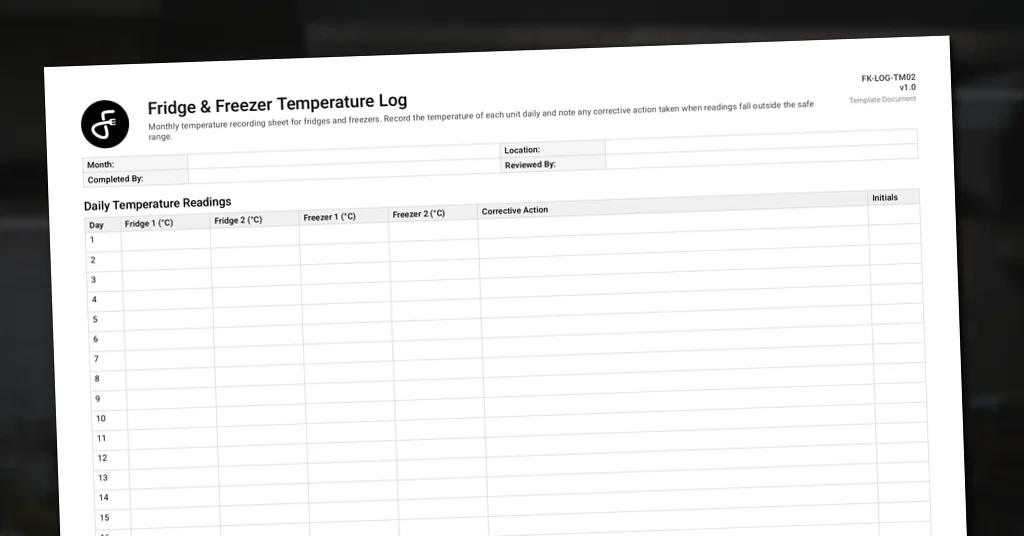
Each row represents one day of the month. The columns capture:
- Day – the date (1 to 31), pre-printed so you do not need to write it in
- Fridge 1 (degrees C) – the temperature reading for your first fridge or cold room
- Fridge 2 (degrees C) – the reading for a second fridge or cold room
- Freezer 1 (degrees C) – the reading for your first freezer
- Freezer 2 (degrees C) – the reading for a second freezer
- Corrective Action – what was done if any reading was outside the safe range
- Initials – who took the readings, for accountability
The header section includes fields for Month, Location, Completed By, and Reviewed By. Write the name of each unit above its column if your equipment names differ from the defaults.
How to Use It
-
Print one log per month and keep it in the kitchen, ideally near the fridges. Each sheet covers a full calendar month with rows for days 1 to 31.
-
Record temperatures at the same time each day. First thing in the morning is ideal, before the kitchen gets busy and doors start opening and closing. This gives you the most consistent and representative readings.
-
Use a calibrated probe thermometer rather than relying on the built-in dial or digital display on the fridge. Built-in displays can drift or show the temperature of the air rather than the food. Place the probe between food items on the middle shelf for the most accurate reading. If you do use the built-in display, note that on the log.
-
Record every reading, even when everything is fine. A full month of readings within the safe range is strong evidence of good practice. Gaps in the log raise questions – an EHO will wonder whether the checks were actually done on those days.
-
Use the corrective action column. If a fridge reads above 8 degrees C or a freezer above minus 15 degrees C, note what you did. Common actions include adjusting the thermostat, checking the door seal, moving food to another unit, disposing of affected stock, or calling an engineer. The key is showing you identified the problem and acted on it.
-
Sign off at the end of the month. A manager should review the completed log, checking that readings were taken consistently and any out-of-range readings were addressed.
-
Keep completed logs for at least 12 months. These records form part of your due diligence file and should be available for inspection at any time.
What Are the Safe Ranges?
- Fridges and cold rooms – 0 to 5 degrees C is ideal. UK law requires food to be kept at 8 degrees C or below, but aiming for 5 degrees C or lower gives you a safety margin and is what most EHOs expect to see.
- Freezers – minus 18 degrees C or below. If a freezer reads above minus 15 degrees C, investigate immediately. Food should never be refrozen once it has thawed above 0 degrees C.
If a reading falls outside the safe range, ask: has the door been left open? Is the thermostat set correctly? Is the seal damaged? Is the unit overloaded? Is the condenser clean and unobstructed? Record the cause and the corrective action in the log.
Adapting the Log to Your Business
The log includes columns for two fridges and two freezers. If your business has more or fewer units, you can:
- Cross out unused columns and write the correct equipment names above the ones you use
- Print multiple copies if you have more than four units – one log per area (e.g. kitchen, prep room, bar) works well
- Rename columns – write “Cold Room”, “Display Fridge”, or “Blast Chiller” above the relevant column
The format is deliberately simple so it works for any food business, from a small cafe with one under-counter fridge to a large kitchen with multiple cold rooms.
Part of a Complete Temperature Monitoring System
This log works alongside your other temperature monitoring records. Together they demonstrate a robust cold chain management system:
- Thermometer Calibration Log – proves your thermometer readings are accurate
- BOH Daily Cleaning Schedule – includes fridge and freezer cleaning tasks
For businesses looking to go further, Forkto’s temperature monitoring features can automate fridge and freezer readings with wireless sensors, alert you instantly when temperatures drift, and store every reading digitally with no paperwork required.
Go Digital
Paper temperature logs work, but they come with real limitations. They get splashed, smudged, and lost. Staff forget to fill them in during a busy service and backfill from memory later. There is no way to verify when a reading was actually taken. And when an inspector asks to see six months of records, you are digging through a filing cabinet.
With Forkto, temperature readings are captured digitally with automatic timestamps. Out-of-range readings trigger instant alerts so problems are caught in minutes, not the next morning. Every record is stored securely, searchable, and ready to show an inspector in seconds. No clipboards, no missing logs, no guesswork.
Frequently asked questions
What temperature should a commercial fridge be in the UK?
UK law requires chilled food to be kept at 8 degrees C or below, but most businesses aim for 0 to 5 degrees C to leave a safety margin. Freezers should run at minus 18 degrees C or below. Record readings daily rather than relying on a single check.
How often should fridge and freezer temperatures be recorded?
At least once a day for each unit, ideally first thing in the morning before doors start opening and closing. A full month of in-range readings is strong evidence of due diligence; gaps in the log raise questions at inspection.
What should I do if a fridge is too warm?
Record the reading and the corrective action in the log. Check whether the door has been left open, the thermostat setting, the door seal, whether the unit is overloaded, and whether the condenser is clean. Move food to another unit if needed and discard any high-risk food that has been above 8 degrees C for too long.
How long should I keep temperature records?
Keep completed temperature logs for at least 12 months. They form part of your due diligence file and should be available for an Environmental Health Officer to inspect at any time.
Tired of paper checklists?
Run this checklist digitally with Forkto
Assign checks to staff, get reminders, capture photos and timestamps, and keep a tamper-proof record for the EHO — no more lost paper or missed checks.
14-day free trial · No card required