Thermometer Calibration Log
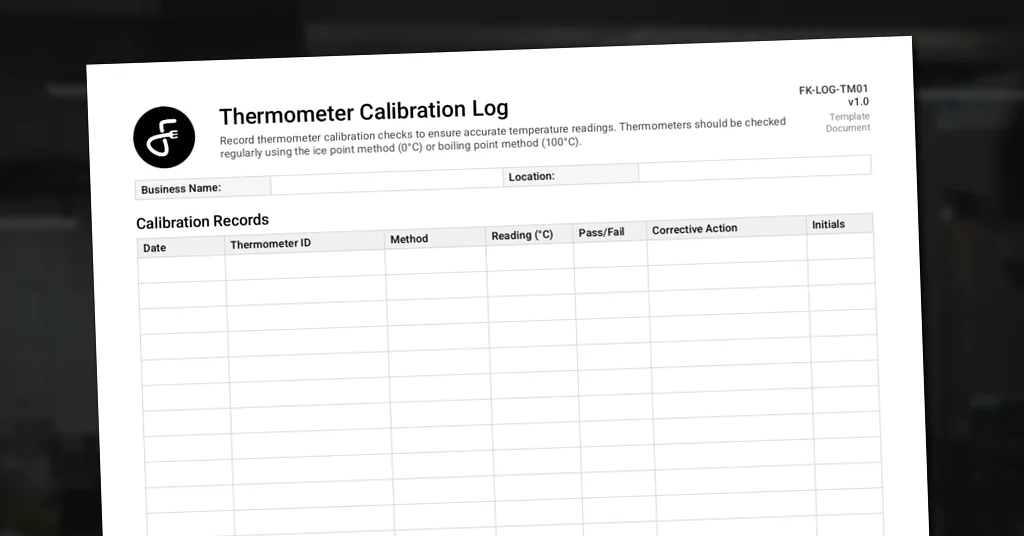
A printable log for recording probe thermometer calibration checks. Track date, thermometer ID, method, readings, pass/fail results and corrective actions for food safety compliance.
Download resource
Download PDFIf you can’t prove your probe thermometer is accurate, every temperature record you take is questionable. Calibration checks are a fundamental part of any food safety management system, and this Thermometer Calibration Log gives you a simple, structured way to document them.
Why Calibration Records Matter
Probe thermometers drift over time. Drops, temperature extremes, and everyday wear gradually push readings off. A thermometer that reads 2-3 degrees out can make unsafe food look safe on paper – and that’s a serious risk.
Environmental Health Officers expect to see evidence that your thermometers are regularly calibrated. Saying “we check them every week” isn’t enough. You need a written record showing what was checked, when, what the reading was, and what action was taken if it failed. This log provides exactly that.
Without calibration records, your entire temperature monitoring system is undermined. Every fridge check, every cooking temperature, every delivery reading relies on the thermometer being accurate. If you can’t demonstrate accuracy, an inspector has no reason to trust any of your temperature records.
For a full walkthrough of how to actually perform calibration, read our Probe Thermometer Calibration Guide, which covers both the ice point and boiling point methods step by step.
What the Log Tracks
Each row of the log captures a single calibration check with the following fields:
- Date – when the calibration was carried out
- Thermometer ID – which probe was tested (e.g. Probe 1, Probe 2). Label your probes so each one can be tracked individually
- Method – whether you used the ice point method (0 degrees C reference) or the boiling point method (100 degrees C reference)
- Reading – the actual temperature displayed by the thermometer during the test
- Pass/Fail – whether the reading fell within the acceptable tolerance of plus or minus 1 degree C
- Corrective Action – what was done if the probe failed. Options include adjusting the thermometer, noting the offset, or replacing it entirely
- Initials – who performed the check, for accountability and traceability
The log also includes fields for Month, Location, and Reviewed By at the top, plus a sign-off section at the bottom.
How to Use It
-
Print one log per month and keep it with your other food safety records. Each sheet gives you space to record daily or weekly calibration checks for the full month.
-
Calibrate before service. The best time to check your probes is during your opening routine, before any food temperature checks are taken. This way, every reading you take during the day is backed by a verified thermometer.
-
Record every check, pass or fail. A log full of passes is good evidence. But recording a fail – and showing what corrective action was taken – is even better. It demonstrates your system works and that problems are caught and dealt with.
-
Use the corrective action column. If a probe reads outside the plus or minus 1 degree C tolerance, note what you did. Adjusted it? Write “adjusted to 0 degrees C”. Replaced it? Write “replaced – new probe in use”. Noted the offset? Write the offset value so staff can compensate.
-
Sign off at the end of the month. A manager should review the completed log, checking that calibrations were done consistently and any failures were addressed properly.
-
Keep completed logs for at least 12 months. These records form part of your due diligence file and should be available for inspection at any time.
How Often Should You Calibrate?
The frequency depends on how heavily your probes are used:
- Light use (a few temperature checks per day) – calibrate weekly
- Moderate use (regular checks across service) – every two to three days
- Heavy use (high-volume kitchen, multiple services daily) – daily
- After any drop or impact – immediately, regardless of schedule
Most food businesses find that building calibration into the daily opening routine is the simplest approach. It takes less than two minutes and removes any guesswork about whether your readings are trustworthy.
Part of a Complete Temperature Monitoring System
This calibration log works alongside your other temperature monitoring and food safety records. If your kitchen already uses structured cleaning and safety documentation, this log fills an important gap – it validates the tool that everything else depends on.
Related resources:
- Fridge & Freezer Temperature Log – daily temperature recording sheet for fridges and freezers
- BOH Daily Cleaning Schedule – for daily back-of-house cleaning tasks
- Probe Thermometer Calibration Guide – step-by-step calibration instructions
For businesses looking to go further with temperature monitoring, Forkto’s temperature monitoring features can automate readings and flag out-of-range results in real time.
Go Digital
Paper logs do the job, but they get lost, damaged, and are difficult to search when you need to pull records for an inspection — one reason many kitchens switch to food safety software. With Forkto, your calibration records become digital, timestamped entries tied to specific staff members and thermometers. Every check is stored automatically, accessible from anywhere, and ready for inspection at a moment’s notice. No clipboards, no filing cabinets, no missing records.
Frequently asked questions
How do you calibrate a probe thermometer?
Use the ice point method (a slushy mix of crushed ice and water should read 0 degrees C) or the boiling point method (boiling water should read 100 degrees C at sea level). The reading should be within plus or minus 1 degree C. Record the result and any corrective action in your calibration log.
How often should a probe thermometer be calibrated?
It depends on use — weekly for light use, every two to three days for moderate use, and daily in high-volume kitchens. Always recalibrate immediately after a probe is dropped or exposed to extreme temperatures. Building a calibration check into the daily opening routine is the simplest approach.
What is the acceptable tolerance for a food thermometer?
Most food businesses work to plus or minus 1 degree C. If a probe reads outside that range during a calibration check, adjust it, record and apply the offset, or replace it — and note the action in your calibration log.
Why do EHOs ask to see calibration records?
Because every temperature record you keep depends on the thermometer being accurate. Without evidence that your probes are regularly calibrated, an inspector has no reason to trust your fridge, cooking or delivery temperature records, which undermines your whole temperature monitoring system.
Tired of paper checklists?
Run this checklist digitally with Forkto
Assign checks to staff, get reminders, capture photos and timestamps, and keep a tamper-proof record for the EHO — no more lost paper or missed checks.
14-day free trial · No card required