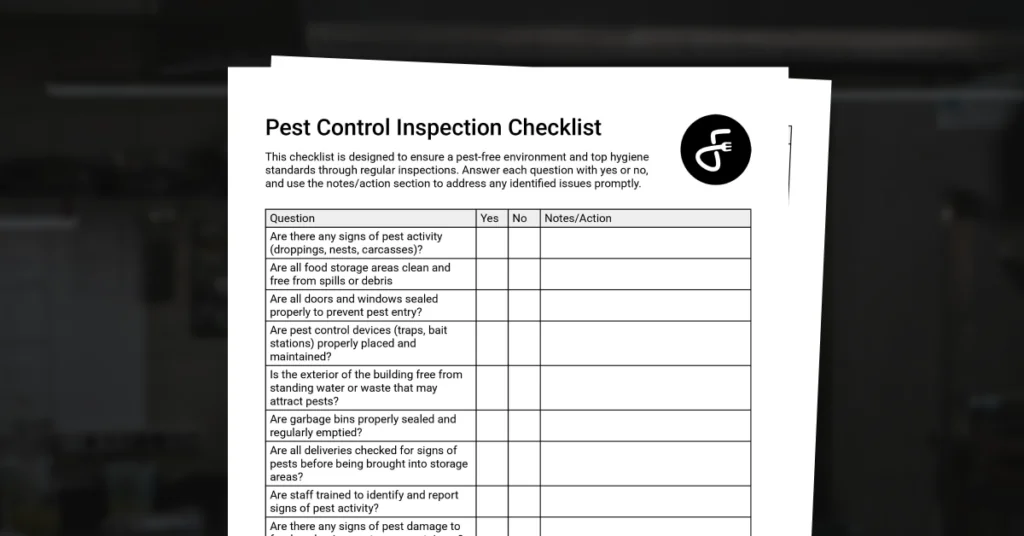
Pest Control Inspection Checklist
This checklist is designed to ensure a pest-free environment and top hygiene standards through regular inspections. Answer each question with yes or no, and use the notes/action section to address any identified issues promptly.
Download resource
Download PDFIn the food industry, maintaining a pest-free environment is crucial for ensuring the safety and quality of the products served. Our Pest Control Inspection Checklist is designed to help food businesses regularly monitor and manage pest risks, ensuring compliance with health regulations and upholding the highest hygiene standards.
The Significance of Pest Control
Pests pose significant health and safety risks in food establishments. They can contaminate food, spread diseases, and cause structural damage, ultimately affecting the business’s reputation and customer trust. Effective pest control is essential to prevent these issues and maintain a safe environment for both staff and customers.
Benefits of Regular Pest Control Inspections
Regular pest control inspections allow for early detection of pest activity, helping to prevent contamination and damage before they become severe. These inspections also ensure compliance with health regulations, avoiding potential fines and legal issues. By staying proactive, businesses can protect their reputation and provide a safe dining experience.
Key Components of the Pest Control Inspection Checklist
Our checklist covers essential areas to ensure comprehensive pest control:
- Signs of Pest Activity: Look for droppings, nests, or carcasses. Immediate action is required if any signs are found.
- Cleanliness of Food Storage Areas: Ensure all areas are clean and free from spills or debris to deter pests.
- Building Integrity: Check that doors and windows are sealed properly to prevent pest entry.
- Pest Control Devices: Verify that traps and bait stations are properly placed and maintained.
- Inspection of Deliveries: Ensure all incoming goods are checked for signs of pests.
How to Use the Pest Control Inspection Checklist
To effectively use the checklist:
- Frequency: Conduct inspections regularly, based on the size and nature of your business.
- Responsibility: Assign specific staff members to carry out and document inspections.
- Documentation: Record findings and actions taken to address any issues, ensuring accountability and follow-up. Food safety software keeps these records time-stamped and inspection-ready.
Best Practices for Maintaining a Pest-Free Environment
Maintaining a pest-free environment requires ongoing effort:
- Staff Training: Train staff to identify and report signs of pest activity promptly.
- Cleanliness: Keep all areas, especially food storage, clean and clutter-free.
- Waste Management: Ensure garbage bins are sealed and regularly emptied to avoid attracting pests.
Conclusion
Effective pest control is vital for the safety and reputation of any food business. By regularly using our Pest Control Inspection Checklist, you can ensure a clean, safe, and pest-free environment for your staff and customers. Prioritize food safety and hygiene by staying vigilant and proactive in your pest control efforts.
Start using the Pest Control Inspection Checklist today to safeguard your business and maintain the highest standards of cleanliness and safety. Your commitment to pest control reflects your dedication to providing a safe and enjoyable experience for everyone who enters your establishment.
Frequently asked questions
Are food businesses legally required to control pests?
Yes. Annex II, Chapter IX of assimilated Regulation (EC) 852/2004 requires food businesses to have adequate procedures in place to control pests, and Chapter I requires premises to be kept in good repair to prevent pest access. Evidence of pest activity can lead to enforcement action and a lower food hygiene rating under the FSA's Food Hygiene Rating Scheme.
How often should pest control inspections be carried out?
There is no single legal frequency — the law requires controls that are adequate for your level of risk. Most food businesses combine a documented in-house check (often weekly or monthly) with regular visits from a professional pest control contractor, typically every one to three months. Higher-risk premises and those near food waste or water should inspect more often.
What signs of pests do EHOs look for during an inspection?
Inspectors look for droppings, gnaw marks, smear marks, nesting material, dead or live insects and rodents, damaged or gnawed packaging, and gaps around doors, pipes and drains that allow pests in. They also check that you actively monitor for pests and keep records of any activity and the action taken.
Do I need a professional pest control contract?
A contract is not a legal requirement, but you must be able to demonstrate effective pest control. Whether you manage it in-house or through a contractor, keep records of inspections, any pest activity, treatments and corrective actions — these form part of the due diligence you can show an Environmental Health Officer.
What happens if pests are found during an EHO inspection?
Evidence of pest activity affects your structural compliance and confidence in management scores under the FHRS, which can drag down your overall food hygiene rating. In serious cases an EHO can issue a Hygiene Improvement Notice, and where there is an imminent risk to health, a Hygiene Emergency Prohibition Notice that closes the business until the problem is resolved.
Tired of paper checklists?
Run this checklist digitally with Forkto
Assign checks to staff, get reminders, capture photos and timestamps, and keep a tamper-proof record for the EHO — no more lost paper or missed checks.
14-day free trial · No card required