Food safety guide
Food Safety for Cafés & Coffee Shops: A UK Guide
UK food safety guide for cafés and coffee shops: registration, fridge and hot-holding temperatures, allergens and Natasha's Law, HACCP and your FHRS rating.
21 June 2026
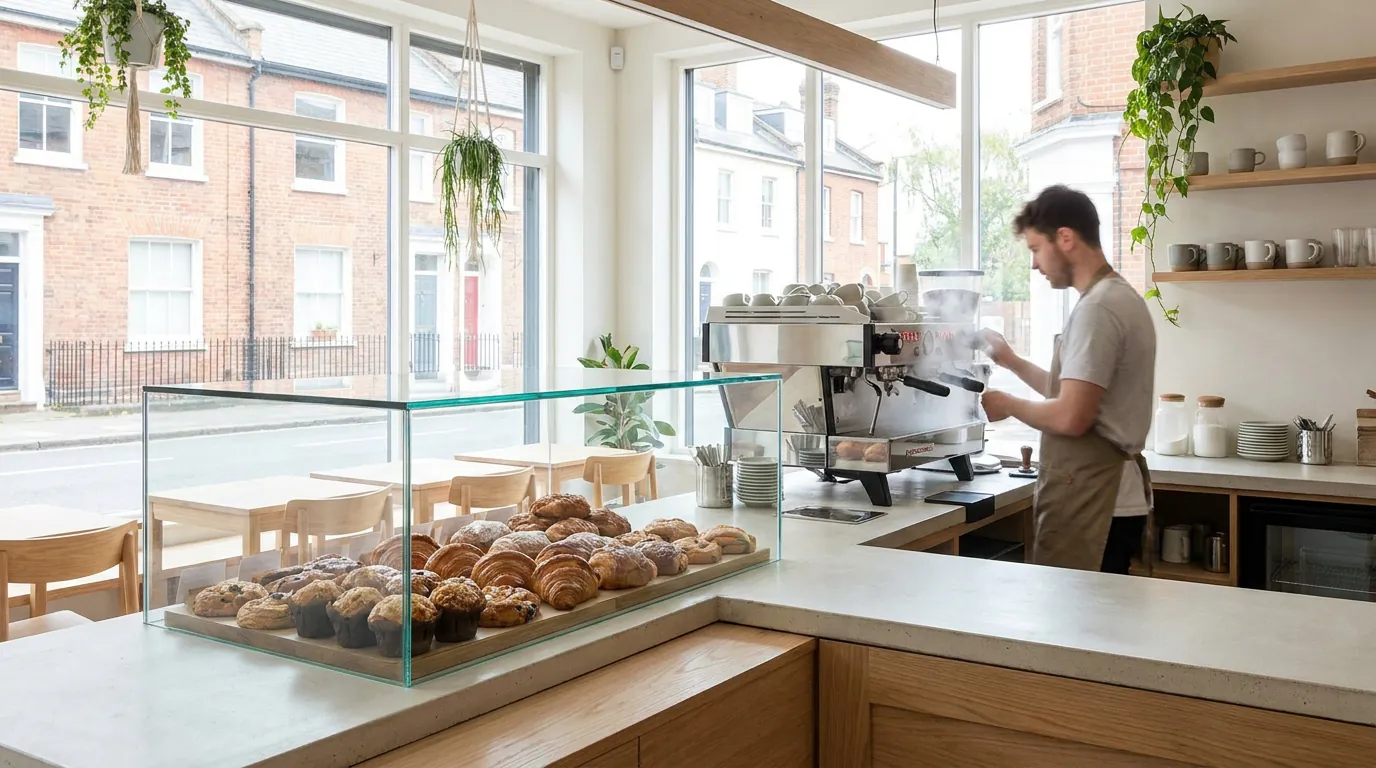
Running a café looks simple from the customer’s side of the counter — a flat white, a slice of cake, a sandwich from the chiller. Behind it sits a set of legal duties that apply to every food business in the UK, whether you have one site or ten, a full kitchen or a single sandwich fridge.
Compliance comes down to four pillars: registering your business, controlling temperatures, managing allergens correctly, and earning a good food hygiene rating — all underpinned by a documented food safety system. This guide walks through the legal requirements for each, with the figures checked against current Food Standards Agency (FSA) and government guidance.
Key facts
- Registration is mandatory and free. Every UK food business, including a café, must register with its local authority at least 28 days before it starts trading (GOV.UK: Register a food business).
- Chill at 8°C or below. That is the legal maximum for chilled food in England, Wales and Northern Ireland; the FSA recommends setting fridges to 5°C or below for a safe margin (FSA: Chilling food correctly).
- Hot-hold at 63°C or above. Cooked food held hot for service must stay at 63°C or above, with a single allowance of up to two hours below that for display (FSA: Cooking safely in your business).
- Natasha’s Law applies to PPDS. Since October 2021, any food prepacked for direct sale must show the name of the food and a full ingredients list with the 14 major allergens emphasised (FSA: Allergen labelling changes for PPDS).
- A HACCP-based system is the law. All food businesses must operate a documented food safety management system based on HACCP principles (FSA: HACCP).
Do you need to register your café before you open?
Yes — register at least 28 days before you start trading
Before you serve a single coffee, you must register your café with the environmental health service at your local authority. The legal deadline is at least 28 days before you open, and registration is free of charge (GOV.UK: Register a food business).
This is not just paperwork. Registration is the first step to being a legitimate, insurable and inspectable business — and trading without it is illegal. It applies to far more than a typical high-street unit: mobile coffee vans, market stalls and home-based baking operations all need to register too. If you run more than one premises, each location is registered separately.
The simplest route is the GOV.UK food business registration portal, which sends your details to the right local authority. Once you are registered, you go onto the list of premises that Environmental Health Officers (EHOs) inspect — which makes the rest of this guide your day-to-day reality rather than background reading.
What temperatures does a café legally need to hit?
Chill at 8°C or below, hot-hold at 63°C or above
Temperature control is where a café either stays out of trouble or walks into it. The two figures to anchor everything around are 8°C and 63°C — the boundaries of the bacterial “danger zone”.
Chilled food. The legal requirement in England, Wales and Northern Ireland is to keep chilled, high-risk food at 8°C or below (FSA: Chilling food correctly). That is the legal limit, not the target. No competent operator runs a fridge at 8°C, because there is no margin for error — every door opening and busy lunchtime nudges it warmer. The FSA recommends setting fridges to 5°C or below so the contents stay safely cold even when the fridge is working hard. An EHO who sees a chiller consistently sitting at 7.5°C will rightly start asking questions.
Hot food. Cooked food held hot for service — anything in a bain-marie, hot cabinet or under a heat lamp — must be kept at 63°C or above (FSA: Cooking safely in your business). There is one exemption: you may hold hot food below 63°C for a single period of up to two hours for display or service, after which it must be thrown away or chilled down safely.
Cooking and reheating. There is no single universal legal temperature for cooking all foods, but a core temperature of 75°C is the widely accepted and recommended standard for cooking and reheating to destroy harmful bacteria (FSA: Cooking safely in your business). Probe the thickest part of the food to confirm it.
The space between 8°C and 63°C is the danger zone, where bacteria multiply rapidly. Everything you store, hold and serve should spend as little time in it as possible — and you need to be able to prove it. For the full detail on probes, logs and how often to check, see our complete guide to restaurant temperature checks.
How should a café handle allergens?
You must provide allergen information for everything you sell
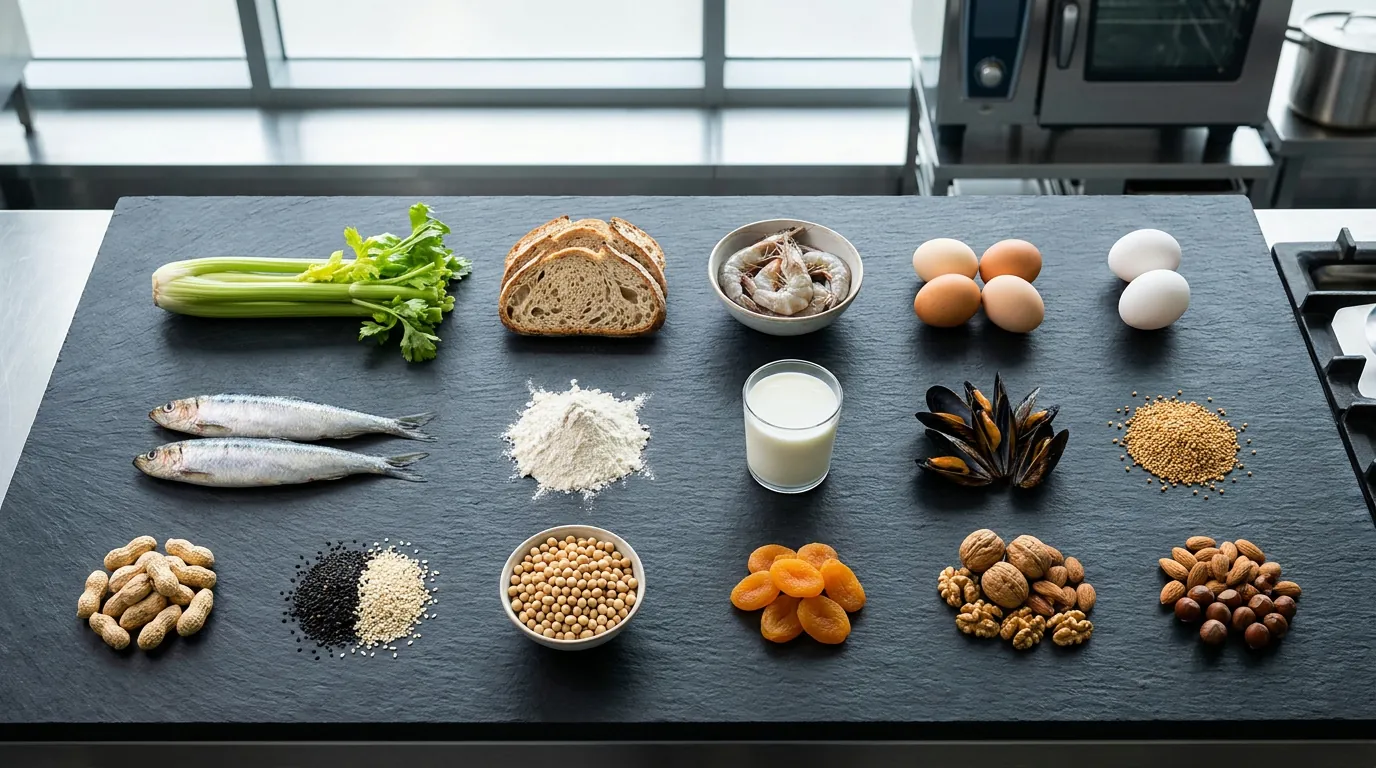
Allergen law is where many cafés get caught out, because the rules change depending on how the food is packaged and sold. There are two distinct situations.
Pre-packed on-site food (PPDS) and Natasha’s Law
This is the blind spot. The moment you wrap a sandwich, box a salad or bag a sausage roll on-site, before a customer chooses it — for example, to fill a grab-and-go display fridge — it becomes food that is prepacked for direct sale (PPDS). The act of pre-packaging is the trigger.
Since October 2021, Natasha’s Law has required every PPDS item to carry a label showing the name of the food and a full ingredients list, with any of the 14 major allergens emphasised (typically in bold) within that list (FSA: Allergen labelling changes for PPDS). A chicken caesar wrap can easily contain twenty-plus ingredients from several suppliers — all of them have to be declared.
The catch many cafés miss: this applies to a single-person operation exactly as it applies to a chain. If you pre-pack it on your premises, it needs a compliant label.
Loose and made-to-order food
Food made fresh to a customer’s order — a sandwich built when they ask for it — is not PPDS, and neither is loose cake on the counter or a coffee made to order. But you still have a duty to provide information on the 14 major allergens for these items (FSA: Allergen guidance for food businesses).
You can provide this in writing (on menus, labels or a chalkboard) or verbally. If you choose to give it verbally, you must display a clear sign telling customers how to ask — and the staff member they ask must be able to answer accurately. That depends on keeping an up-to-date record of which allergens are in which dish, and making sure it is not just one “allergen champion” who knows where to find it.
What does your FHRS food hygiene rating actually measure?
Your rating (0 to 5) is a public score of your hygiene standards
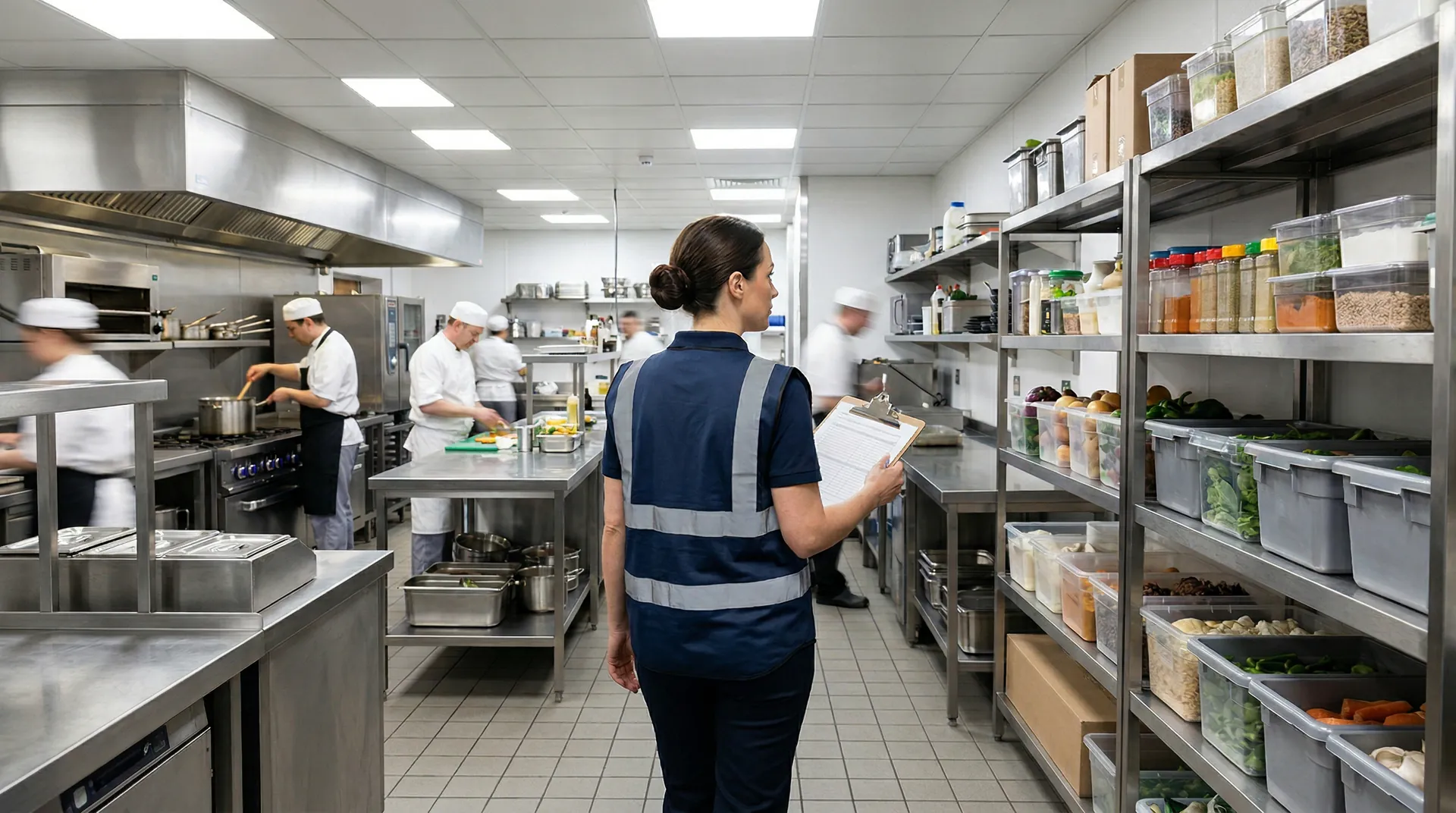
The Food Hygiene Rating Scheme (FHRS) gives your café a score from 0 (“Urgent Improvement Required”) up to 5 (“Very Good”) based on an EHO’s inspection (FSA: Food Hygiene Rating Scheme). The inspector assesses three areas:
- Hygienic food handling — how you prepare, cook, cool, store and reheat food.
- The physical condition of the premises — cleanliness, layout, ventilation, pest control and the state of the building.
- Management of food safety — your records, procedures, and how well staff understand them. This is often labelled confidence in management.
Here is the part most café owners underestimate: a spotless kitchen does not guarantee a 5. The management score is frequently what holds businesses back. A lack of documented procedures, gaps in your temperature logs, or a team member who cannot explain a basic control during the visit can pull your rating down even when the surfaces gleam. Inspectors expect to see that your system works in practice, not just on paper.
Displaying the result is treated differently across the UK. In Wales and Northern Ireland it is a legal requirement to display your FHRS rating sticker; in England, display is encouraged but not currently mandatory (FSA: Food Hygiene Rating Scheme). Either way, the rating is published online, so customers can find it regardless.
Do you really need a HACCP plan for a small café?
Yes — a documented food safety system is the legal bedrock
It is a common misconception that HACCP is only for large kitchens. Under retained Regulation (EC) No 852/2004, all food businesses must put in place and maintain a food safety management system based on the principles of Hazard Analysis and Critical Control Point (HACCP) (Regulation (EC) 852/2004; FSA: HACCP).
In plain terms, that means identifying where food safety could go wrong in your café — chilling, cooking, hot holding, cross-contamination, allergens — putting controls in place, and keeping records to show those controls are working. For most small cafés, the FSA’s Safer Food, Better Business (SFBB) pack provides a ready-made, proportionate framework; you do not need to build a manufacturing-grade plan from scratch.
The records are the point. Temperature logs, cleaning sign-offs and allergen information are the evidence that turns “we do it properly” into something an inspector can verify. They also feed straight back into that confidence in management score. Keeping a structured cleaning routine — both front and back of house — is part of the same discipline; our guide to front-of-house and back-of-house cleaning schedules covers what good looks like.
Where paper diaries tend to fail is consistency: checks signed off before they were done, logs back-filled at the end of the week, the SFBB pack last seen three months ago. Moving routine records to digital daily checks closes that gap, time-stamping each entry as it happens so the trail reflects what actually occurred.
Bringing it together
Food safety in a café is not about heroics — it is about doing ordinary things reliably, day after day, and being able to show it. Register before you trade. Keep your fridges at 5°C and your hot food at 63°C. Label your PPDS items, and have honest allergen answers ready for everything else. Keep your HACCP records current so your FHRS inspection confirms what you already know.
If you are setting up or tightening up, start with the basics that carry the most weight: a reliable temperature routine, a clear allergen record everyone can use, and a cleaning schedule that gets signed off when the work is done. Get those three running smoothly and the rest of compliance tends to fall into place. For more on the tools and routines built specifically around café operations, see Forkto for cafés.
This guide reflects UK food safety requirements as at June 2026, including food business registration duties, FSA chilling and cooking guidance, Natasha’s Law (in force since 1 October 2021), the Food Hygiene Rating Scheme, and HACCP obligations under retained Regulation (EC) 852/2004. Always check the latest FSA and GOV.UK guidance for your nation, as Scotland operates under separate regulations.
Related Forkto software
Frequently asked questions
Do I need to register my new café business in the UK?
Yes. You must register your café with the environmental health service at your local authority at least 28 days before you open. Registration is free, and it applies to all premises — including mobile vans and home-based businesses. Trading without registering is against the law.
What is the legal fridge temperature for a café in the UK?
The legal requirement for storing chilled food in England, Wales and Northern Ireland is 8°C or below. In practice, the Food Standards Agency recommends setting your fridge to 5°C or lower so there is a safe margin for normal temperature fluctuations and door openings.
What is Natasha's Law and does it apply to my café's sandwiches?
Natasha's Law applies to food that is prepacked for direct sale (PPDS). If you package sandwiches or other items on-site before a customer orders them — for example, to fill a display fridge — you must label each one with the name of the food and a full ingredients list, with the 14 major allergens emphasised. It does not apply to food made to order.
How hot do I have to keep food in my café's bain-marie?
You are legally required to keep hot food at 63°C or above. This keeps it out of the temperature danger zone (8°C to 63°C), where harmful bacteria multiply rapidly.
Do I legally need a HACCP plan for my small café?
Yes. Under UK law, all food businesses must put in place and maintain a documented food safety management system based on HACCP (Hazard Analysis and Critical Control Point) principles to identify and control food safety risks. There is no exemption for small cafés.
How is my café's food hygiene rating (FHRS) calculated?
An Environmental Health Officer from your local authority inspects your café and scores three areas: hygienic food handling; the physical condition of the premises (cleanliness, layout, ventilation); and your management of food safety (records, procedures and staff knowledge). These combine into a single rating from 0 to 5.
How do I provide allergen information for loose cakes and coffee?
For non-prepacked food like loose cakes on a counter or drinks made to order, you must still provide information on the 14 major allergens. You can do this in writing (menus, chalkboards) or verbally — but if you give it verbally, you need a clear sign telling customers how to ask.
Can I keep hot food below 63°C?
Only for a limited time. There is an exemption allowing hot food to be held below 63°C for a single period of up to two hours for service or display. After that, it must be thrown away or chilled down safely.
Safe hands, clear records
Stop running food safety on paper
Forkto turns daily checks, temperature logs, HACCP and audits into a few taps on a phone. Your team stays consistent and you're always ready for the EHO.
14-day free trial · No card required