Food safety guide
The Ultimate Guide to FOH and BOH Cleaning Schedules for Restaurants
FOH and BOH cleaning schedules for UK restaurants, with free downloadable checklist templates you can customise. Daily, weekly and deep-clean routines that keep you EHO-ready.
18 April 2024
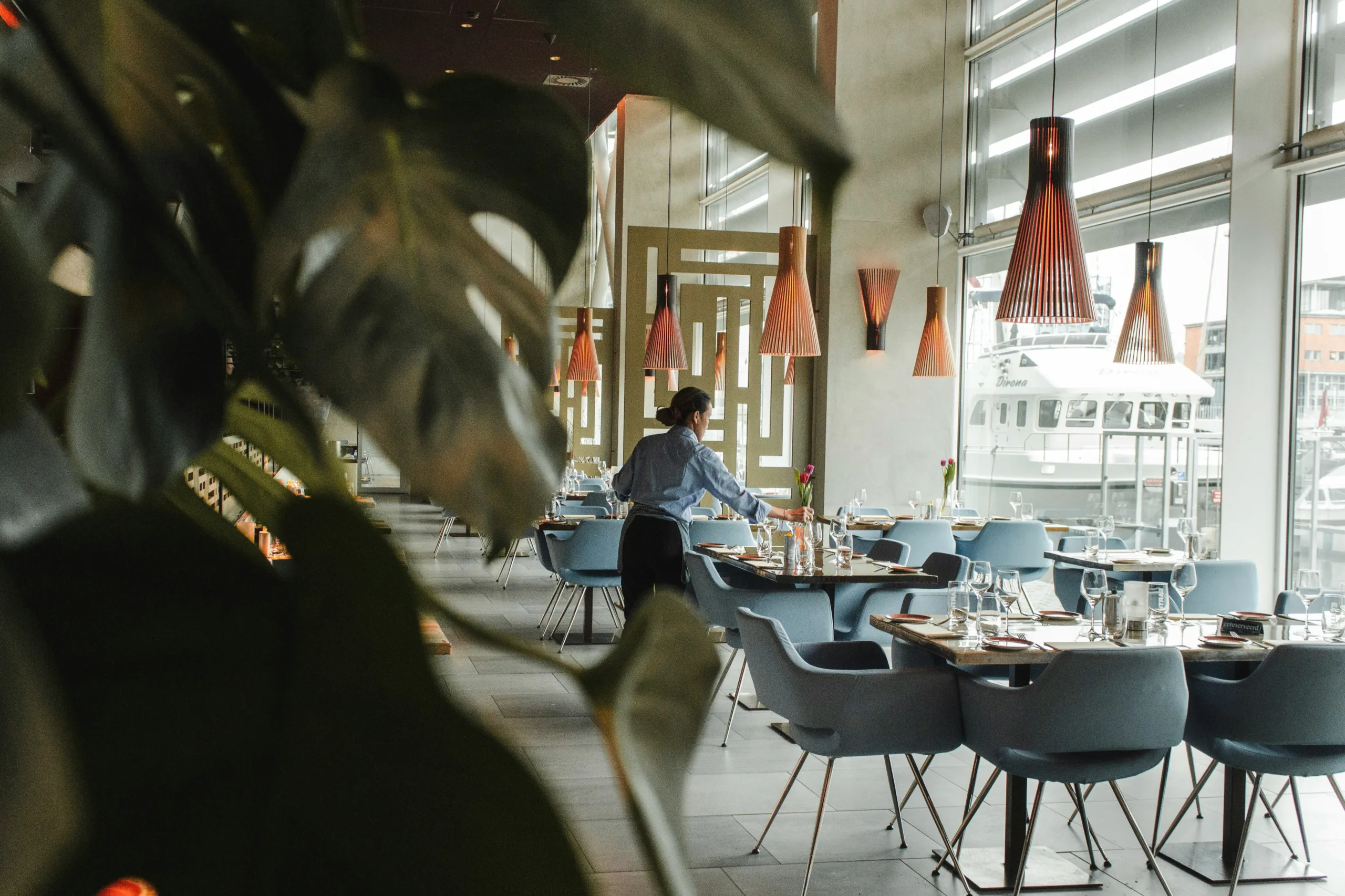
In the restaurant industry, cleanliness is not just about appearance — it directly affects customer health, your reputation, and your legal compliance. For multi-site operators, keeping standards consistent across every location is harder still. A single hygiene failure can cascade into contamination, illness, a damaged brand and enforcement action.
- UK law requires food premises to be “kept clean and maintained in good repair and condition” and food-contact equipment to be “effectively cleaned and, where necessary, disinfected” — Regulation (EC) 852/2004, Annex II.
- The FSA method is always two stages: clean, then disinfect. Disinfectant only works on a visibly clean surface, and must be left for the contact time on the label.
- Disinfectants and sanitisers should meet BS EN 1276 or BS EN 13697 — check the product label.
- Cleanliness is one of the three things judged at inspection. The “physical condition of the business — including cleanliness” feeds your Food Hygiene Rating (0 to 5).
- The simplest way to prove all of this is a written Safer Food Better Business cleaning schedule — what is cleaned, how, with what, how often, and by whom — plus completed records.
Effective cleaning schedules for both front of house (FOH) and back of house (BOH) keep those risks in check. FOH cleanliness — dining areas, toilets and customer-facing spaces — shapes first impressions and the whole experience. BOH cleanliness — kitchen surfaces, equipment and storage — is what prevents cross-contamination and foodborne illness. This guide covers both, and how to run them consistently across one site or many.
The challenges of keeping cleaning consistent
Despite how clearly it matters, managers run into the same obstacles when trying to keep cleaning consistent, especially across multiple sites:
-
Standardising procedures. Variations in layout, equipment and staff experience make uniform standards hard to enforce.
-
Time management. Cleaning competes with prep and service, particularly at peak.
-
Staff compliance. Getting everyone to follow the schedule every time is a constant effort in high-turnover teams.
-
Monitoring and record-keeping. Tracking what’s been done and keeping the records an EHO will ask for is easy to let slide.
What this guide will help you do
This guide gives you a step-by-step approach to creating, running and monitoring FOH and BOH cleaning schedules so you can:
-
Protect customers by minimising the risk of contamination and foodborne illness.
-
Protect your reputation by delivering a consistently clean, hygienic experience.
-
Stay compliant with food hygiene law and the expectations of your local authority (Environmental Health).
-
Streamline cleaning and use your team’s time efficiently.
We’ll work through the building blocks — identifying tasks, setting frequencies, training staff and tracking performance — and look at how digital checklists and monitoring tools make all of this easier to manage across sites.
FOH Cleaning: Setting the Stage for Customer Satisfaction
The front of house is where customers form their impression of your restaurant. A clean, inviting FOH signals that you take care over everything, including the food. A neglected one undermines trust before the first plate arrives — and high-touch items like menus and condiment bottles are a genuine cross-contamination route, not just an appearance issue.
Identifying the FOH areas and items that need regular cleaning
The first step is a complete list of what needs attention. For most restaurants that includes:
-
Dining tables and chairs
-
Menus and menu holders
-
Condiment dispensers and bottles
-
Tableware — salt and pepper shakers, sugar caddies, napkin holders
-
Floors, walls and windows
-
Toilets, including pans, sinks, mirrors and floors
-
Host stand and waiting area
-
POS terminals and tills
-
Beverage stations and coffee machines
-
Waste and recycling bins
A comprehensive list means nothing gets quietly forgotten.
Setting the cleaning frequency for each FOH item
Next, decide how often each item is cleaned. Some surfaces — tables, chairs — need cleaning after every use; others, like walls and windows, may only need a weekly or monthly clean. Base the frequency on:
-
Customer traffic and volume
-
The type of food and drink served
-
The risk to food safety (high-touch and food-contact items rank higher)
-
Your local authority’s expectations and FSA guidance
For example, high-touch surfaces like menus and condiment bottles should be cleaned and sanitised several times a day at busy sites. Toilets — a major factor in customer perception and public health — should be checked and cleaned regularly through the day, with a thorough clean daily.
Writing a step-by-step procedure for FOH staff
Consistency comes from clear instructions. For each task, document:
-
The exact cleaning products and equipment to use
-
The correct dilution and how to apply it
-
The order tasks should be done in
-
Any safety precautions or PPE required
Detailed, easy-to-follow steps mean every team member, whatever their experience, can clean to the same standard.
Choosing the right cleaning products and equipment for FOH
Picking suitable products matters. When choosing cleaning solutions, weigh up:
-
Effectiveness against common FOH soiling — grease, food residue and bacteria
-
Compatibility with the surfaces and materials being cleaned
-
Environmental impact
-
Cost and ease of use
Any product used as a disinfectant or sanitiser should meet BS EN 1276 or BS EN 13697 — check the label. For equipment such as mops, cloths and vacuums, choose durable, efficient tools, and keep FOH and BOH equipment separate (see colour-coding below).
Monitoring FOH cleanliness
Even a well-designed schedule needs checking. Put in place:
-
Regular inspections by managers or a designated supervisor
-
Checklists and logs that record task completion
-
Occasional spot-checks to verify standards are being met
-
A clear way to fix anything that falls short
Digital cleaning tools make monitoring and reporting far less manual. Holding the team accountable and reinforcing why it matters builds a standard that holds even when you’re not watching.
Self-reflection: see your FOH through a customer’s eyes
It’s easy to stop noticing your own restaurant. To judge your FOH honestly, walk in as a first-time customer would.
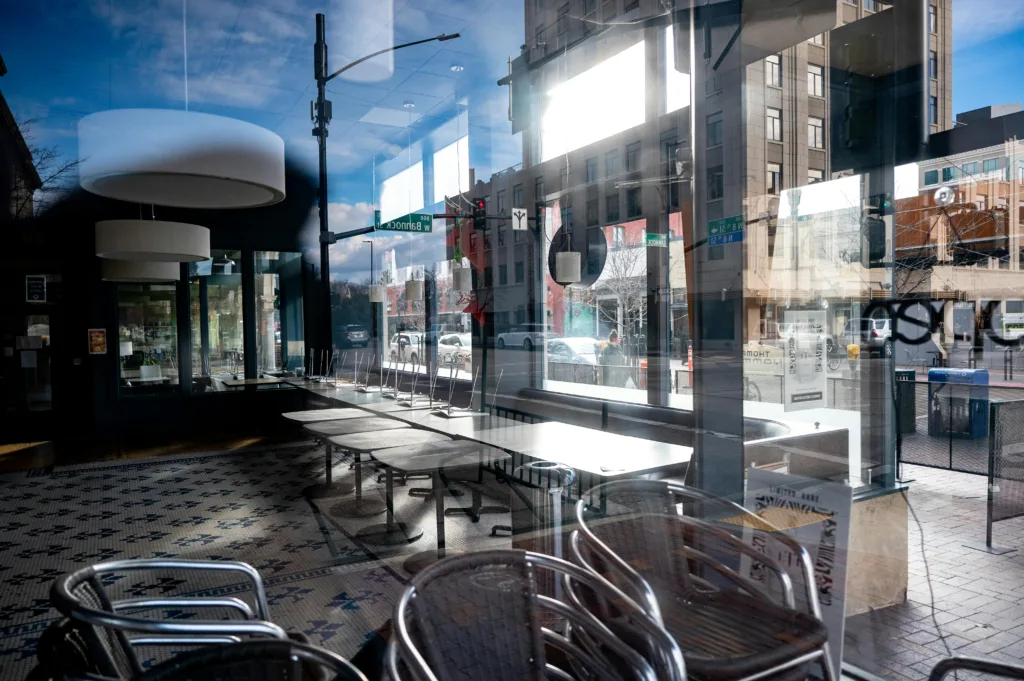
At the entrance:
-
Is the exterior clean and well-maintained?
-
Are the windows and doors free of smudges, fingerprints and debris?
-
Is the entrance inviting and clear of clutter?
In the dining area:
-
Are the floors clean and free of debris, stains or sticky patches?
-
Are tables and chairs sanitised and neatly arranged?
-
Do the menus look clean and undamaged?
-
Are condiment bottles, shakers and tableware clean and well-stocked?
-
Is the lighting adequate, with all bulbs working?
-
Are walls, artwork and décor free of dust and cobwebs?
In the toilets:
-
Are the floors, pans and sinks clean and free of odours?
-
Is there enough soap, toilet paper and hand-drying provision?
-
Are mirrors and fixtures free of water spots and smudges?
-
Is there a visible cleaning check log?
Watching your team:
-
Are staff following proper handwashing and hygiene practices?
-
Do they handle tableware, menus and condiments hygienically?
-
Are cleaning tasks being done regularly?
-
Do staff present a clean, professional appearance?
Weigh what you see against your concept and customers — a fine-dining room carries higher expectations than a casual café. Then turn the gaps into an action plan: revise the schedule, retrain staff, replace tired equipment, or tighten your inspection routine. Repeating this honestly, a few times a year, keeps standards from drifting.
BOH Cleaning: Maintaining a Safe and Hygienic Kitchen
If FOH is the face of your restaurant, BOH is its engine. The kitchen is where food safety is won or lost. UK law is explicit here: under Regulation (EC) 852/2004, Annex II, equipment that food touches must be “effectively cleaned and, where necessary, disinfected … frequently enough to avoid any risk of contamination.”
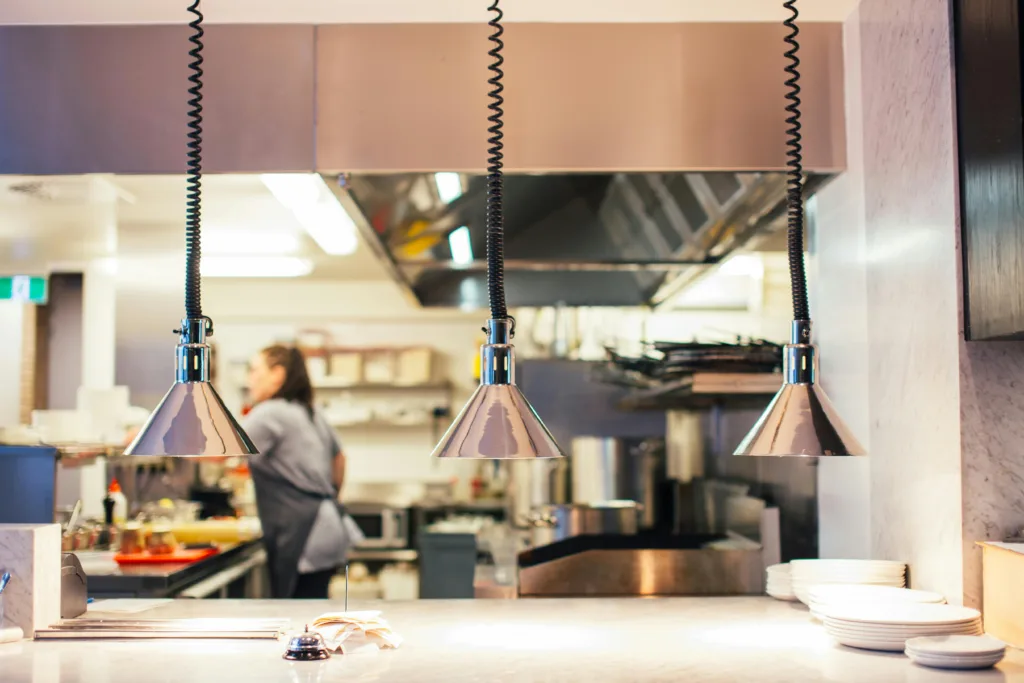
The BOH items and surfaces that need cleaning and disinfecting
Start with a full list of everything that requires regular cleaning and disinfection:
-
Food preparation surfaces (chopping boards, countertops, prep tables)
-
Cooking equipment (hobs, ovens, grills, fryers)
-
Refrigeration (walk-in chillers, undercounter fridges, freezers)
-
Storage (shelving, racks, dry stores)
-
Dishwashing equipment (sinks, dishwashers, drying racks)
-
Floors, walls and ceilings
-
Waste bins and refuse areas
-
Staff toilets and handwashing stations
-
Extraction (canopies, filters, ductwork)
A complete list means no contamination route is missed.
Setting a BOH cleaning schedule
Set a frequency and timing for each task. Frequency depends on:
-
The type of food prepared and served
-
The volume of production
-
The food-safety risk of the item (food-contact surfaces rank highest)
-
FSA guidance and your local authority’s expectations
For example, food-contact surfaces should be cleaned and disinfected after each use and between tasks — especially after raw meat, poultry or fish — while floors may only need sweeping and mopping at the end of each shift. Ovens and fryers might be cleaned daily, with a deeper clean weekly or monthly. Build the schedule around the flow of prep and service so cleaning doesn’t fight against the line.
The two-stage clean: how to clean and disinfect correctly
The single most important BOH technique is the FSA’s two-stage method:
-
Clean — use hot water and a detergent (or a sanitiser used in two passes) to remove visible dirt, food and grease.
-
Disinfect — apply the disinfectant or sanitiser to the now visibly-clean surface and leave it for the contact time stated on the label before rinsing or wiping.
This order is not negotiable: disinfectants don’t work through grease or dirt. As the FSA puts it, “disinfectants will only work on clean surfaces”. Make sure your products meet BS EN 1276 or BS EN 13697, and use the correct dilution and contact time every time.
Detailed cleaning methods for BOH staff
To keep standards consistent, give your team clear instructions for every task:
-
Step-by-step procedures for each job
-
Correct dilution and use of chemicals, with the required contact time
-
The PPE required
-
Safety precautions and how to avoid hazards
-
Visual aids — photos or short videos — to demonstrate technique
Train and refresh staff regularly so good practice sticks and knowledge gaps get caught early.
Choosing BOH cleaning chemicals and tools
When selecting chemicals and tools, consider:
-
Effectiveness against grease, food residue and bacteria
-
Compatibility with food-contact surfaces and equipment materials
-
Compliance with food safety standards — disinfectants meeting BS EN 1276 / BS EN 13697
-
Environmental impact
-
Cost and ease of use
Make sure staff have the right tools — brushes, scrapers, cloths and mops — to actually shift baked-on grime and food debris.
Staying compliant with food safety law in the kitchen
A clean kitchen isn’t only efficient — it’s a legal duty. To stay compliant:
-
Keep your cleaning procedures aligned with current FSA guidance and your local authority’s advice
-
Inspect and audit regularly to confirm tasks are done correctly and consistently
-
Keep records of cleaning — date, time and who was responsible — as the FSA’s Safer Food Better Business system expects
-
Provide ongoing training on handwashing, cross-contamination and temperature control
Prioritising compliance and a genuine food-safety culture protects your customers, your team and your business.
Self-reflection: assess your BOH like an inspector would
Step into the kitchen and look at it the way an EHO would. Ask:
-
Are all food-contact surfaces, equipment and utensils cleaned and disinfected between uses?
-
Are cleaning tasks being done to the schedule and the written procedure?
-
Are chemicals and tools stored away from food and food-contact surfaces?
-
Are staff following handwashing and hygiene rules, in clean uniforms?
-
Are raw ingredients stored to prevent cross-contamination and spoilage?
-
Are food temperatures being monitored and recorded?
-
Is there a clear labelling and stock-rotation system so older stock is used first?
-
Is waste removed often enough to avoid pests and odours?
-
Are floors, walls and ceilings sound — no cracks or holes that harbour bacteria or pests?
-
Is the extraction working, with canopies, filters and ducts free of grease build-up?
Then review the paperwork:
-
Are your cleaning schedules and procedures current and in line with FSA guidance?
-
Are your cleaning records complete and accurate — date, time, person responsible?
-
Are training materials accessible and up to date?
-
Do you have a way to verify the cleaning is actually working, through inspections or audits?
Match what you find against your menu and concept — a kitchen handling high-risk foods such as raw seafood or unpasteurised cheese needs even tighter control. Where you find gaps, build an action plan: revise the schedule, retrain, invest in equipment, and strengthen your records. Doing this regularly is exactly the kind of due diligence that protects you when something does go wrong.
Optimising FOH and BOH Cleaning Schedules
FOH and BOH have different cleaning needs, but the management approach is the same: clear schedules, clear ownership, and continuous review.
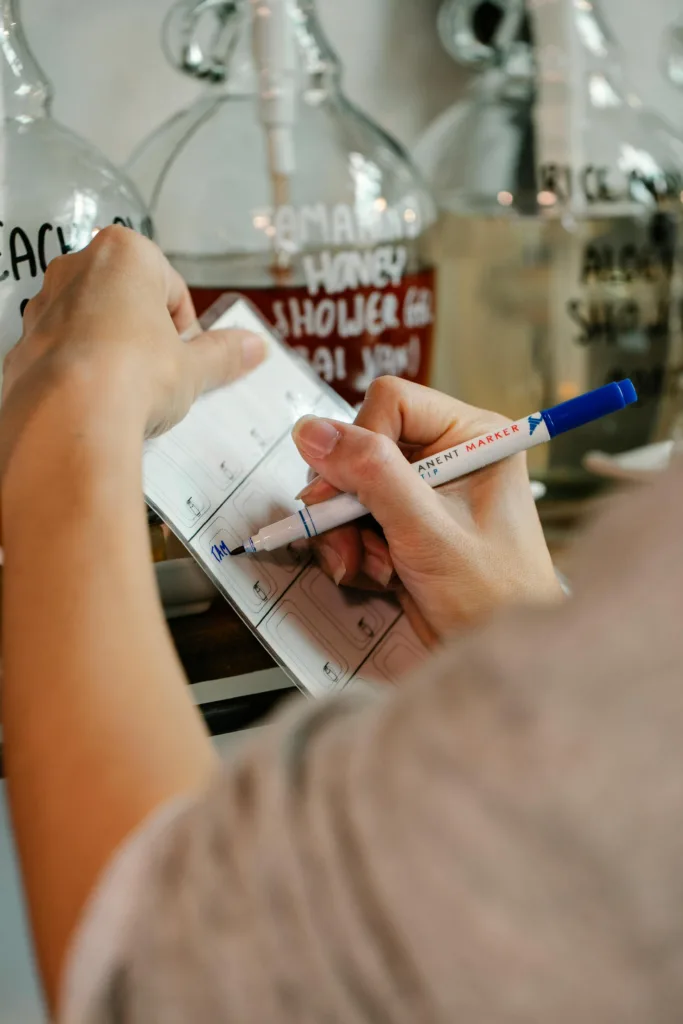
Build separate, tailored schedules
Create a distinct schedule for each area. When designing them:
-
Tailor tasks and frequencies to the area — surfaces, equipment and the contaminants involved
-
Assign each task to a person or role, so ownership is clear
-
Set sensible frequencies — after each use, daily, weekly or monthly
-
Include step-by-step instructions for every procedure
Improve efficiency through review
Cleaning schedules aren’t set-and-forget. To keep them efficient:
-
Review regularly and adjust frequencies or simplify steps where you can
-
Ask staff for feedback — they know where the friction is
-
Track how long tasks take to spot where time is being lost (or where a chemical’s contact time is being skipped)
-
Keep investing in training so the whole team works to the same standard
Promote accountability and compliance
To make sure schedules are actually followed:
-
Communicate expectations and responsibilities clearly
-
Train thoroughly on procedures and best practice
-
Track completion with checklists or logs
-
Inspect cleaned areas and give feedback
-
Keep accurate records — dates, times, responsible staff — ready for inspection
How Forkto Streamlines FOH and BOH Cleaning Schedules
A food safety software platform like Forkto turns the principles above into a system that runs itself. You can build tailored schedules for each area while keeping one consistent, data-driven view of cleanliness across every site.
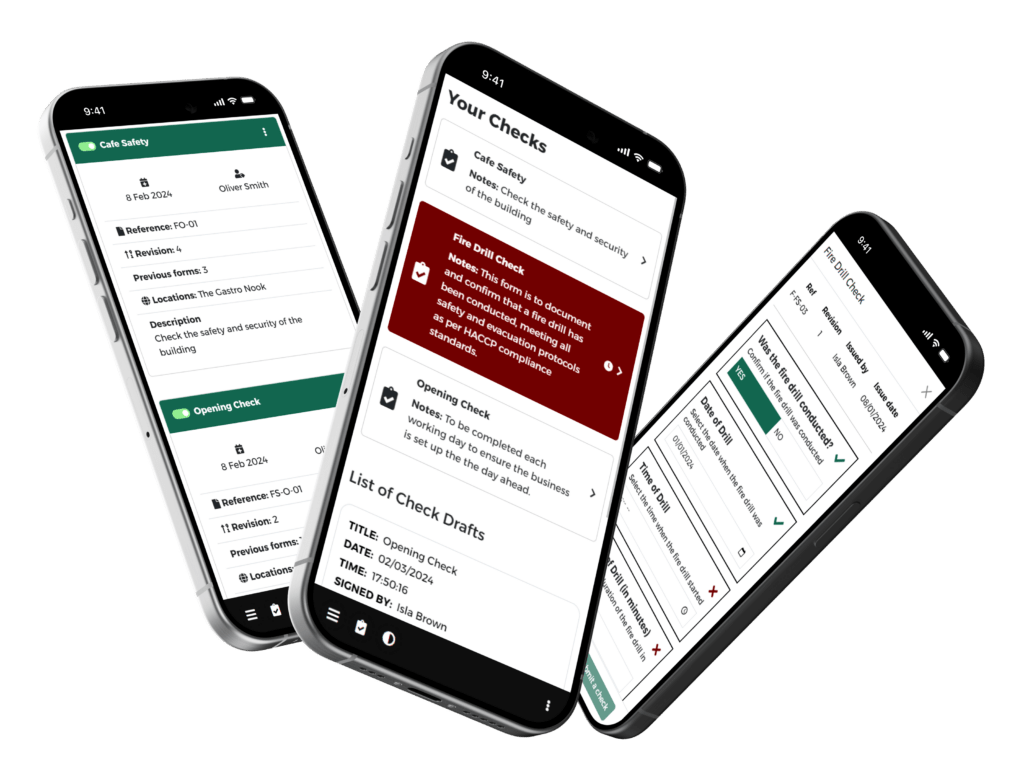
Tailored schedules for FOH and BOH
With Forkto you can build separate schedules for FOH and BOH, each with its own tasks, frequencies and instructions. That lets you:
-
Match each schedule to the area’s real cleaning needs
-
Assign tasks to people or roles for clear accountability
-
Set the right frequency for each task
-
Attach step-by-step instructions, including the correct contact time for disinfectants
Flexibility and data tracking
Forkto lets you split schedules into zones — dining, toilets, kitchen, outdoor areas — and organise tasks by frequency so nothing is missed. Its digital forms also let you track the time spent on each step of a clean: when cleaning the toilets, for instance, you can see how long the pan, sink, mirror and floor each take. That data shows where you can streamline — or where a step (like leaving disinfectant on for its full contact time) is being rushed.
Accountability, compliance and continuous improvement
Forkto also helps you prove and improve your standards:
-
Track task completion in real time
-
Get alerts when a task is overdue or incomplete
-
Generate reports on cleaning performance to refine schedules over time
-
Store cleaning logs and records securely in the cloud — the documentation an EHO will ask for
Best Practices for Effective FOH and BOH Cleaning
A few habits make the biggest difference to keeping standards high across your team.
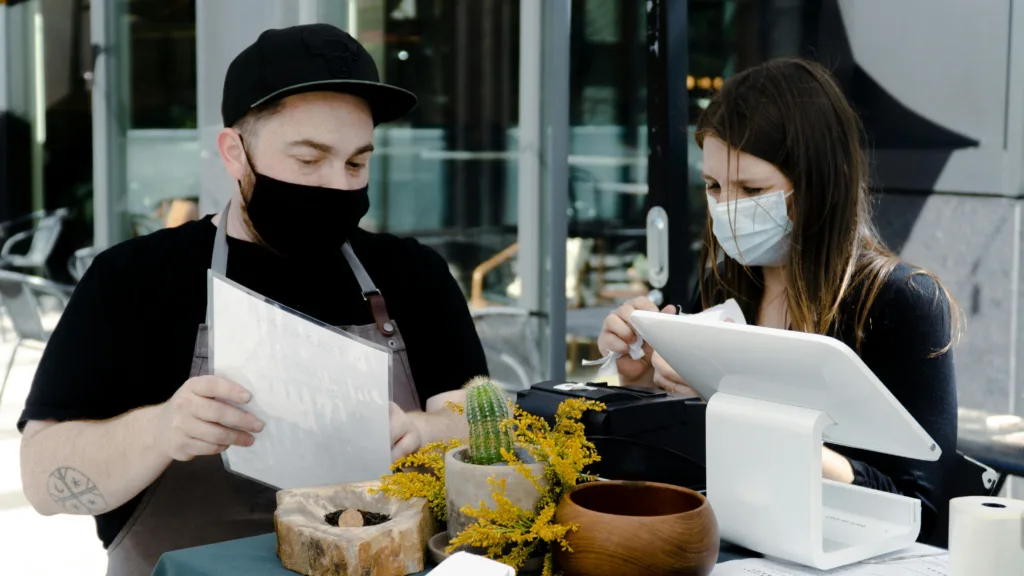
Train staff thoroughly
Training is the foundation of consistent cleaning. Build a programme that covers procedures, the safe use of equipment and chemicals, and hygiene standards; deliver hands-on sessions so staff can practise under supervision; refresh it whenever procedures or regulations change; and keep reinforcing why cleanliness matters to food safety, customers and your hygiene rating.
Use colour-coded cleaning equipment
Colour-coding cloths, mops and equipment helps stop cross-contamination between areas. It’s an industry good-practice convention, not a legal requirement, but it works. A widely-used catering scheme is:
-
Red: toilets and washrooms
-
Blue: general low-risk and bar areas
-
Green: kitchen and food-preparation surfaces
-
Yellow: wash basins
Pick one scheme, store equipment for each area separately, and train everyone to follow it.
Use a checklist and verification system
A good cleaning checklist lists every task by frequency (daily, weekly, monthly), gives the products and method for each, leaves space for staff to sign off, and includes a line for a supervisor to verify the work. Review and update it as procedures and guidance change.
Use technology to manage the schedule
Digital tools cut the admin and improve consistency, especially across sites:
-
Digital checklists and logs updated in real time on mobile
-
Automatic reminders so tasks aren’t missed
-
Cloud storage of records for easy access and audits
-
Integration with your other systems for a single operational view
Build a culture of cleanliness
Tools and schedules only work if the team buys in. Lead by example, keep explaining why cleanliness matters, recognise staff who consistently get it right, welcome feedback on what’s not working, and keep supporting people to improve.
Free Printable Templates
We’ve created free downloadable checklists and schedules to help you put these best practices into action:
- BOH Daily Cleaning Schedule — pre-filled daily task list with Mon-Sun tick-off columns
- FOH Daily Cleaning Schedule — front-of-house daily cleaning with manager sign-off
- Weekly Deep Clean Checklist — 4-week rotating deep clean cycle
- Kitchen Opening & Closing Checklist — daily BOH and FOH tasks for the start and end of each shift
Cleaning Without Compromise
Maintaining a clean, safe restaurant isn’t just about passing inspections — it underpins food safety, customer trust and the long-term health of your business. Whether you run one site or many, well-structured FOH and BOH cleaning schedules are how you turn good intentions into consistent practice.
The principles are simple: list every task, set risk-based frequencies, clean in two stages, write it down, assign it, and check it. Across multiple sites, technology like Forkto is what keeps those standards consistent — from customisable digital checklists and real-time tracking to records that are ready the moment an EHO walks in.
Commit to those habits, keep reviewing them, and give your team the tools and training to maintain them, and cleanliness stops being a scramble before inspection and becomes simply how your restaurant runs.
Related Forkto software
Frequently asked questions
What is the difference between FOH and BOH cleaning?
Front of house (FOH) cleaning covers customer-facing areas — dining areas, toilets, tills, beverage stations and high-touch items like menus and condiments — and is mostly about appearance, comfort and high-touch hygiene. Back of house (BOH) cleaning covers the kitchen — food-contact surfaces, equipment, fridges, floors and extraction — and is primarily about food safety and preventing cross-contamination. Both are part of the same legal duty to keep premises and equipment clean under Regulation (EC) 852/2004.
Is a written cleaning schedule a legal requirement in the UK?
UK law requires food premises to be 'kept clean' and food-contact equipment to be 'effectively cleaned and, where necessary, disinfected' (Regulation (EC) 852/2004, Annex II). It doesn't name 'cleaning schedule', but you must have documented food safety procedures (Article 5), and the FSA's Safer Food Better Business pack provides a cleaning schedule template recording what is cleaned, how, with what and how often. An EHO will expect to see your schedule and completed records at inspection.
What is the correct way to clean and disinfect a surface in a restaurant?
Use the FSA's two-stage method. First clean to remove visible dirt, food and grease, then apply a disinfectant or sanitiser to the now visibly-clean surface and leave it for the contact time stated on the label before rinsing or wiping. Disinfectants do not work on a dirty or greasy surface, so the cleaning stage is not optional.
What does BS EN 1276 mean on a disinfectant?
BS EN 1276 and BS EN 13697 are British/European standards that prove a disinfectant kills bacteria under defined test conditions. The FSA advises that disinfectants and sanitisers used in a food business should meet BS EN 1276 or BS EN 13697 — check the product label — and that you use the correct dilution and contact time stated by the manufacturer.
How often should a restaurant deep clean?
Food-contact surfaces and equipment are cleaned and disinfected between tasks and after each use; general kitchen and dining areas are cleaned every shift; and deeper periodic cleans of fridges, ovens, extraction, storage and hard-to-reach areas run weekly or monthly. There is no single legal frequency — you set it on a risk basis and write it into your cleaning schedule.
Does cleanliness affect my food hygiene rating?
Yes. One of the three areas assessed for your Food Hygiene Rating (0 to 5) is the 'physical condition of the business — including cleanliness, layout, lighting, ventilation, pest control and other facilities'. Visible dirt, grease build-up or missing cleaning records directly pull down the score.
What colour-coding system should we use for cleaning equipment?
Colour-coding cloths, mops and equipment is an industry good-practice convention (not a legal requirement) that helps prevent cross-contamination. A widely-used catering scheme is red for toilets/washrooms, blue for general low-risk and bar areas, green for kitchen and food-preparation areas, and yellow for wash basins. Pick one scheme, document it, and train staff to stick to it.
Safe hands, clear records
Stop running food safety on paper
Forkto turns daily checks, temperature logs, HACCP and audits into a few taps on a phone. Your team stays consistent and you're always ready for the EHO.
14-day free trial · No card required