Food safety guide
Level 2 Food Hygiene Quiz: 30 Practice Questions & Answers
A free Level 2 Food Hygiene quiz: 30 practice questions and answers on temperature, allergens, HACCP and the law, each with a short explanation.
23 July 2026
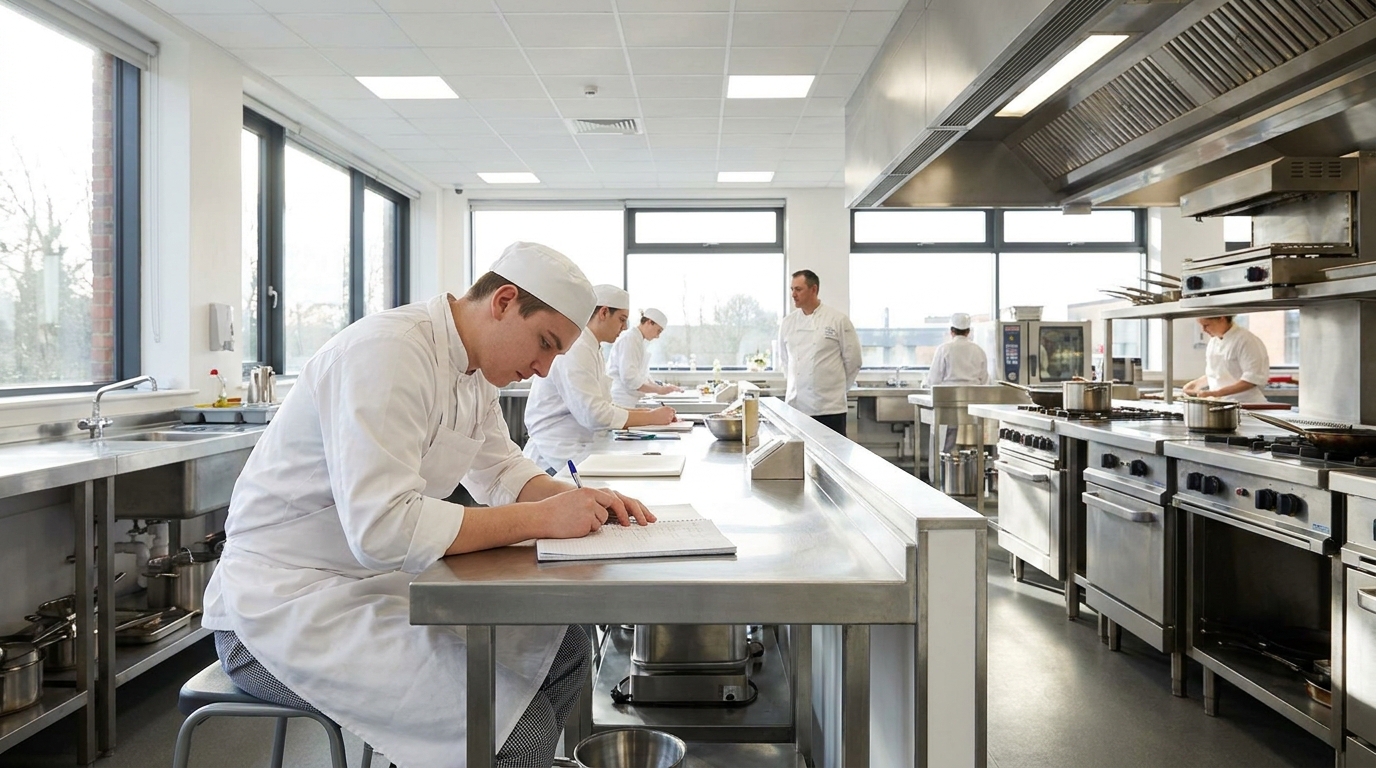
Level 2 Food Hygiene is the standard food safety qualification for anyone who handles or prepares food in a UK business — chefs, kitchen porters, front-of-house, care and retail staff. By law, food handlers must be trained and supervised appropriately before they work with food (FSA, food hygiene for your business). This page is a free practice quiz: 30 multiple-choice questions with the answers and a short explanation for each, covering the full Level 2 syllabus so you can revise before an assessment or test your team’s knowledge.
Work through each question, pick your answer, then read the explanation underneath. The questions are original but cover the same ground as any accredited Level 2 course. Every answer is checked against current UK food safety guidance.
Temperature control
1. By law, the temperature of food in a fridge must not rise above: A) 5°C B) 8°C C) 10°C D) 12°C
Answer: B) 8°C. Keeping chilled food at 8°C or below is a legal requirement in England, Wales and Northern Ireland. The Food Standards Agency recommends setting your fridge to 5°C or below so that fluctuations never push the food over 8°C.
2. Which of these is a safe cooking time and temperature combination for the core of the food? A) 40°C for 2 minutes B) 70°C for 2 minutes C) 50°C for 10 minutes D) 60°C for 6 seconds
Answer: B) 70°C for 2 minutes. The FSA lists several equivalent combinations that all kill harmful bacteria: 70°C for 2 minutes, 75°C for 30 seconds or 80°C for 6 seconds. A core reading of 75°C is the simplest single check.
3. Hot food kept on display for service must be held at or above: A) 45°C B) 55°C C) 63°C D) 75°C
Answer: C) 63°C. Hot holding at 63°C or above is a legal requirement. Food may be displayed below 63°C for a single period of up to two hours, after which it must be reheated, chilled or thrown away.
4. The temperature “danger zone”, where bacteria multiply most easily, is: A) 0°C to 5°C B) 8°C to 63°C C) 63°C to 100°C D) −18°C to 0°C
Answer: B) 8°C to 63°C. Bacteria multiply fastest in this range, around body temperature. The aim of temperature control is to keep food below 8°C or above 63°C and move it through the danger zone as quickly as possible.
5. When reheating food in England, Wales or Northern Ireland, it should be: A) warmed to around 40°C B) steaming hot all the way through (about 70°C for 2 minutes) C) reheated at least twice D) left to warm at room temperature
Answer: B) steaming hot all the way through. Reheated food must reach the same core standard as freshly cooked food, and you should only ever reheat food once. In Scotland the law sets a stricter minimum of 82°C.
6. How long should a temperature probe be left in the food before you take the reading? A) It does not matter B) Until the reading stops changing (around 15 seconds) C) Exactly one second D) Ten minutes
Answer: B) until the reading stops changing. A probe needs a few seconds to equalise with the food, so wait until the number settles — usually around 10 to 15 seconds — before recording it. Insert it into the thickest part or centre, and clean and disinfect it between uses.
Cross-contamination
7. Cross-contamination is best described as: A) cooking food for too long B) the transfer of bacteria or allergens from one food, surface or person to another C) freezing food twice D) food passing its use-by date
Answer: B) the transfer of bacteria or allergens. It is one of the most common causes of food poisoning, and it can be direct (raw touching cooked) or indirect (via hands, cloths, equipment or surfaces).
8. To prevent cross-contamination, raw meat should be stored in the fridge: A) above ready-to-eat food B) below ready-to-eat food C) next to salads D) at room temperature
Answer: B) below ready-to-eat food. Storing raw meat on the lowest shelf stops its juices dripping onto cooked or ready-to-eat items below. Ideally, raw and ready-to-eat foods are kept in separate fridges.
9. In the standard UK colour-coding system, which chopping board is used for raw meat? A) Green B) Red C) Blue D) Yellow
Answer: B) Red. Red is for raw meat, blue for raw fish, yellow for cooked meat, green for salad and fruit, brown for vegetables and white for bakery and dairy. Using separate boards prevents bacteria transferring between foods.
10. Which of the following is an example of direct cross-contamination? A) raw chicken juices dripping onto a cooked ham B) using a freshly cleaned knife C) washing your hands before service D) chilling food quickly
Answer: A) raw chicken juices dripping onto a cooked ham. Direct contamination happens when a contaminated food touches, or drips onto, a ready-to-eat food. The other options are all good practice that reduce risk.
11. The main food safety risk from cross-contamination is: A) mould growing on bread B) harmful bacteria being transferred to ready-to-eat food C) food losing its flavour D) packaging damage
Answer: B) harmful bacteria being transferred to ready-to-eat food. Because ready-to-eat food will not be cooked again to kill bacteria, contaminating it is especially dangerous.
Personal hygiene
12. When should a food handler wash their hands? A) only at the start of a shift B) after handling raw food, after using the toilet, and before handling ready-to-eat food C) once a day D) only when they look dirty
Answer: B). Hands should be washed at every point where they could transfer bacteria — after raw food, after the toilet, after breaks and rubbish, and before handling ready-to-eat food.
13. A food handler suffering from diarrhoea or vomiting must: A) keep working but wear gloves B) report it and stay away from food handling until 48 hours after symptoms stop C) take a painkiller and continue D) only handle wrapped food
Answer: B) stay away until 48 hours symptom-free. Someone with these symptoms can shed bacteria and viruses for a time after they feel better, so they must report it and not return to food handling until at least 48 hours clear.
14. Why should food handlers avoid wearing watches and jewellery when preparing food? A) it looks unprofessional B) it can trap bacteria and become a physical contamination hazard C) it sets off metal detectors D) there is no reason
Answer: B). Jewellery harbours dirt and bacteria and can fall into food as a physical contaminant. A plain wedding band is usually the only item permitted.
15. A cut or graze on a food handler’s hand should be covered with: A) any plaster to hand B) a blue, detectable, waterproof dressing C) nothing, if it is small D) a cloth bandage only
Answer: B) a blue, detectable, waterproof dressing. Blue is used because no food is naturally that colour, so a dressing that falls off is easy to spot, and detectable strips can be picked up by metal detectors.
16. Which describes effective handwashing? A) a quick rinse under cold water B) wet hands, apply soap, scrub all surfaces for at least 20 seconds, rinse and dry thoroughly C) wiping hands on an apron D) a squirt of sanitiser gel on dry hands
Answer: B). Proper handwashing needs warm water, soap, at least 20 seconds of scrubbing (including between fingers and thumbs), a thorough rinse and drying — ideally on a paper towel.
Cleaning and disinfection
17. What is the difference between cleaning and disinfection? A) there is no difference B) cleaning removes dirt and grease; disinfection reduces bacteria to a safe level C) disinfection removes visible dirt D) cleaning kills all bacteria
Answer: B). Cleaning deals with visible dirt and grease; disinfection then reduces the bacteria you cannot see. You usually clean first, because dirt stops a disinfectant working.
18. The “contact time” on a disinfectant is: A) how long it can be stored B) the time it must be left on a surface to kill bacteria C) its shelf life D) how long to rinse it off
Answer: B) the time it must be left on the surface. If you wipe a disinfectant off too soon it will not have killed the bacteria, so always follow the contact time on the label.
19. “Clean as you go” means: A) cleaning only at the end of the day B) cleaning and clearing up continuously as you work through a task C) deep cleaning once a week D) using more chemicals than usual
Answer: B). Cleaning as you go keeps work areas tidy and reduces the build-up of dirt and bacteria, and it makes the end-of-day clean far easier.
20. Which surfaces need both cleaning and disinfection? A) floors only B) food contact surfaces and hand contact surfaces C) walls only D) windows
Answer: B) food and hand contact surfaces. Chopping boards, worktops, equipment, taps, handles and switches all need disinfecting because they are touched frequently and can spread bacteria.
Allergens
21. How many allergens must, by law, be declared in the UK? A) 8 B) 10 C) 14 D) 20
Answer: C) 14. UK law requires 14 named allergens to be declared, including cereals containing gluten, eggs, milk, peanuts, tree nuts, fish, crustaceans, molluscs, soya, celery, mustard, sesame, lupin and sulphur dioxide (sulphites).
22. Which of these is one of the 14 regulated allergens? A) tomatoes B) celery C) potatoes D) chicken
Answer: B) celery. Celery (including celeriac and celery salt) is one of the 14. Tomatoes, potatoes and chicken are not on the regulated list.
23. Under Natasha’s Law, food that is prepacked for direct sale (PPDS) must show: A) the price only B) the name of the food and a full ingredients list, with the allergens emphasised C) nothing extra D) only a use-by date
Answer: B). Since October 2021, PPDS foods — items packed on the same premises before being ordered, such as a wrapped sandwich — must carry a full ingredients list with the 14 allergens emphasised (for example in bold).
24. If a customer asks whether a dish contains a specific allergen, staff should: A) make their best guess B) check accurate allergen information and give a clear, definite answer C) say it is “probably fine” D) refuse to serve them
Answer: B). Allergen information must be accurate and available. Staff should never guess — a wrong answer can be life-threatening — and should check the recipe or allergen matrix before confirming.
25. To safely prepare a meal for someone with a food allergy, you should: A) use the same utensils as everything else B) use clean, separate equipment and surfaces and wash your hands first C) simply wipe the board with a cloth D) cook the meal faster
Answer: B). Preventing allergen cross-contact means clean, dedicated equipment and surfaces, freshly washed hands, and care that no trace of the allergen reaches the dish.
HACCP and the law
26. What does HACCP stand for? A) Hazard Analysis and Critical Control Point B) Health And Catering Control Plan C) Hygiene And Cleaning Control Procedure D) Hazard And Cooking Check Process
Answer: A) Hazard Analysis and Critical Control Point. HACCP is a system for identifying food safety hazards and controlling them at the points that matter most.
27. A piece of broken glass found in food is an example of which type of hazard? A) biological B) chemical C) physical D) allergenic
Answer: C) physical. Physical hazards are objects such as glass, metal, plastic or bone. Biological hazards are bacteria and viruses; chemical hazards include cleaning products; allergens are a category of their own.
28. A “critical control point” (CCP) is: A) any step in the process B) a step where a control is essential to prevent or reduce a hazard to a safe level C) the busiest time of the day D) the point where deliveries arrive
Answer: B). A CCP is a step — such as cooking or chilling — where control is essential, and where losing control would make the food unsafe.
29. Under UK law, food businesses must have a food safety management system based on: A) HACCP principles B) guesswork C) staff memory D) a single paper diary
Answer: A) HACCP principles. Having a documented, HACCP-based food safety management system is a legal requirement. Many small caterers use the FSA’s Safer Food, Better Business pack to meet it.
30. Which free scheme does the Food Standards Agency provide to help small caterers manage food safety? A) COSHH B) Safer Food, Better Business (SFBB) C) RIDDOR D) PAT testing
Answer: B) Safer Food, Better Business (SFBB). SFBB is the FSA’s free, ready-made food safety management system for small catering and retail businesses. COSHH, RIDDOR and PAT testing relate to wider health and safety, not food hygiene specifically.
How the real assessment works
A Level 2 Food Hygiene assessment is normally 20 to 30 multiple-choice questions taken at the end of the course, with a typical pass mark of around 75% (usually at least 15 out of 20). Online courses give you an instant result and a certificate to download and print on passing.
A Level 2 certificate has no legal expiry date, but the widely followed best practice is to refresh your training every three years to stay current with guidance and the law. Employers may set their own renewal policy on top of that.
Remember that holding a certificate is not itself a legal requirement in the UK — the legal duty is that food handlers are appropriately trained and supervised for the work they do. A recognised course is simply the clearest way to evidence that to an environmental health officer.
Keep learning and keep it recorded
If you found gaps in your knowledge here, the topics above are covered in depth across our guides — the full UK food temperature chart, what cross-contamination is and how to prevent it, our complete guide to HACCP, and the Natasha’s Law allergen labelling guide. For what the law actually requires of you as an employer, see our guide to food safety training requirements in the UK.
Once your team is trained, the harder job is proving it stays trained. Forkto’s staff training feature records who has completed which training and when it is due for renewal, so the evidence an EHO asks for is ready without digging through certificates.
Frequently asked questions
What is the pass mark for a Level 2 Food Hygiene course?
Most Level 2 Food Hygiene assessments are multiple choice with a pass mark of around 75% — typically getting at least 15 of 20 questions correct, though this varies slightly by provider. The assessment covers temperature control, contamination, personal hygiene, cleaning, allergens and the law.
How many questions are on a Level 2 Food Hygiene exam?
A Level 2 Food Hygiene assessment is usually 20 to 30 multiple-choice questions taken at the end of the course. There is no time-pressured exam hall for most online courses; you answer the questions and receive an instant result and certificate on passing.
Does a Level 2 Food Hygiene certificate expire?
A Level 2 Food Hygiene certificate has no legal expiry date, but industry best practice is to refresh your training every three years to stay current with guidance and law. Employers may set their own renewal policy.
By law, the temperature of food in a fridge must not rise above what?
8°C. Keeping chilled food at 8°C or below is a legal requirement in England, Wales and Northern Ireland, though the Food Standards Agency recommends setting fridges to 5°C or below to allow for fluctuations.
Is this Level 2 Food Hygiene quiz free?
Yes. All 30 practice questions and answers on this page are free to use for revision or staff training, with no sign-up required. They cover the standard Level 2 syllabus but are not a substitute for a certificated course.
Related Forkto software
Frequently asked questions
What is the pass mark for a Level 2 Food Hygiene course?
Most Level 2 Food Hygiene assessments are multiple choice with a pass mark of around 75% — typically getting at least 15 of 20 questions correct, though this varies slightly by provider. The assessment covers temperature control, contamination, personal hygiene, cleaning, allergens and the law.
How many questions are on a Level 2 Food Hygiene exam?
A Level 2 Food Hygiene assessment is usually 20 to 30 multiple-choice questions taken at the end of the course. There is no time-pressured exam hall for most online courses; you answer the questions and receive an instant result and certificate on passing.
Does a Level 2 Food Hygiene certificate expire?
A Level 2 Food Hygiene certificate has no legal expiry date, but industry best practice is to refresh your training every three years to stay current with guidance and law. Employers may set their own renewal policy.
By law, the temperature of food in a fridge must not rise above what?
8°C. Keeping chilled food at 8°C or below is a legal requirement in England, Wales and Northern Ireland, though the Food Standards Agency recommends setting fridges to 5°C or below to allow for fluctuations.
Is this Level 2 Food Hygiene quiz free?
Yes. All 30 practice questions and answers on this page are free to use for revision or staff training, with no sign-up required. They cover the standard Level 2 syllabus but are not a substitute for a certificated course.
Safe hands, clear records
Stop running food safety on paper
Forkto turns daily checks, temperature logs, HACCP and audits into a few taps on a phone. Your team stays consistent and you're always ready for the EHO.
14-day free trial · No card required