Food safety guide
The FHRS Brand Standard Explained: The Rules Inspectors Follow
The FHRS Brand Standard is the FSA rulebook councils follow to score food hygiene ratings — what it sets, how ratings are calculated, and your rights.
20 July 2026

The FHRS Brand Standard is the Food Standards Agency’s official rulebook that tells every local authority how to operate the Food Hygiene Rating Scheme — how ratings are scored, how the branding and online platform are used, and how appeals and re-ratings are handled (FSA, Brand Standard and statutory guidance). Its whole purpose is consistency: it exists so that a food hygiene rating of 5 in Cardiff means exactly what a 5 in Newcastle means, whichever council carried out the inspection.
Most business owners never read it, and that is a missed opportunity. Because the Brand Standard is public, it is effectively the inspector’s playbook — the same criteria your rating is scored against, written down. This guide explains what the Brand Standard is, who it binds, how it turns an inspection into a 0-to-5 rating, and the safeguards it gives you.
What the Brand Standard is
The Food Hygiene Rating Scheme Brand Standard is guidance the FSA issues to local authorities. It is not a document businesses have to comply with directly — it governs how councils run the scheme. It covers the practical machinery of the FHRS: how officers translate an inspection into a rating, how the FHRS logos and stickers may be used, how the national rating database and IT platform are operated, and how councils keep their scoring consistent with one another.
The FSA updates it periodically; the current edition on gov.uk was published in April 2024. Alongside it, the FSA publishes statutory guidance for Wales and Northern Ireland, where parts of the scheme are written into law rather than adopted voluntarily.
The reason it matters to businesses is simple: everything an environmental health officer does when they rate you flows from this one document. If you want to know the rules of the game, this is where they are written.
Who the Brand Standard applies to
The Brand Standard and its accompanying statutory guidance apply to local authorities in England, Wales and Northern Ireland. But the legal force is different in each:
| Nation | Framework | Display of rating |
|---|---|---|
| England | Brand Standard (voluntary framework councils agree to follow) | Voluntary |
| Wales | Statutory guidance under the Food Hygiene Rating Act 2013 | Mandatory |
| Northern Ireland | Statutory guidance under the Food Hygiene Rating Act (NI) 2016 | Mandatory |
| Scotland | Separate Food Hygiene Information Scheme (not FHRS) | Separate scheme |
In England, the scheme is voluntary in the sense that councils adopt the Brand Standard to keep ratings consistent, and businesses are encouraged — but not legally required — to display their sticker. In Wales and Northern Ireland, the scheme is underpinned by their own Food Hygiene Rating legislation, which makes display a legal duty and gives the safeguards statutory weight. Scotland is outside the FHRS altogether, running its own Food Hygiene Information Scheme.
Whichever nation you are in, the scoring method the officer uses is the same — which is why the Brand Standard is worth reading wherever you trade.
How ratings are calculated under the Brand Standard
This is the part most operators want. Under the Brand Standard, the officer scores three separate elements, and — the counter-intuitive bit — a lower score is better:
- Hygienic food handling — how food is prepared, cooked, reheated, cooled and stored.
- Physical condition of the premises — cleanliness, layout, lighting, ventilation, pest control and facilities.
- Confidence in management — your food safety management system, records, staff training and track record.
Each element is scored on a fixed scale of points:
| Element | Possible scores (lower is better) |
|---|---|
| Hygienic food handling | 0, 5, 10, 15, 20, 25 |
| Physical condition / structure | 0, 5, 10, 15, 20, 25 |
| Confidence in management | 0, 5, 10, 20, 30 |
The three scores are then added, and the total is matched to a rating band. Crucially, there is a second test: a cap on the highest single element. Both tests have to be satisfied.
| Rating | Total of the three scores | No single element above |
|---|---|---|
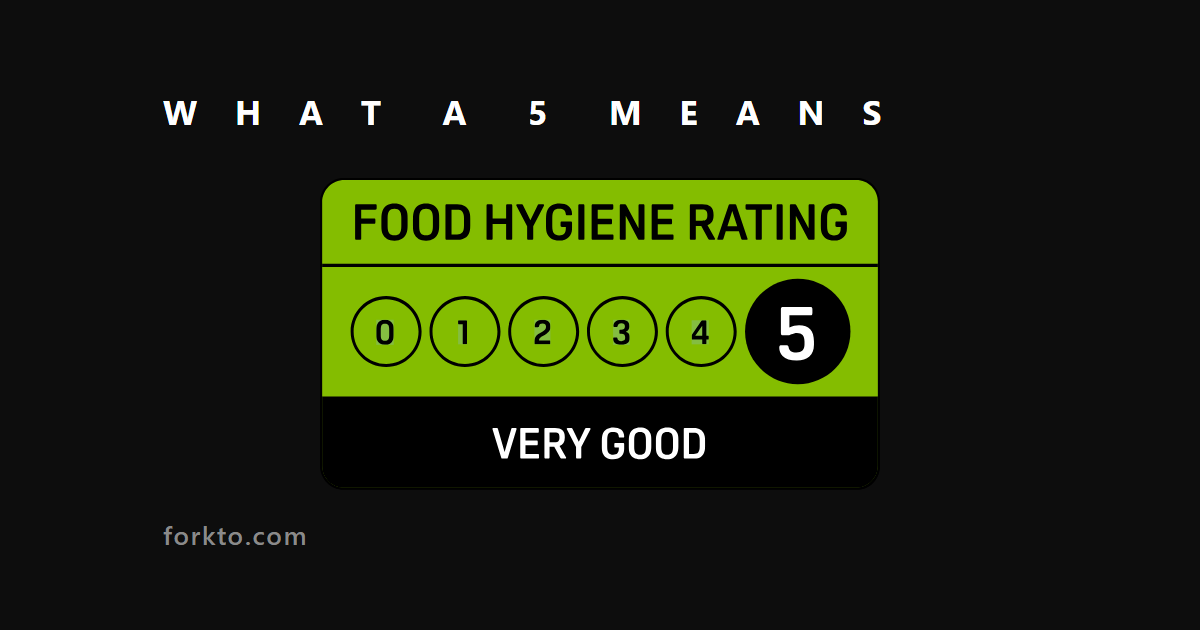
| 5 (very good) | 0–15 | 5 |
| 4 (good) | 20 | 10 |
| 3 (generally satisfactory) | 25–30 | 10 |
| 2 (improvement necessary) | 35–40 | 15 |
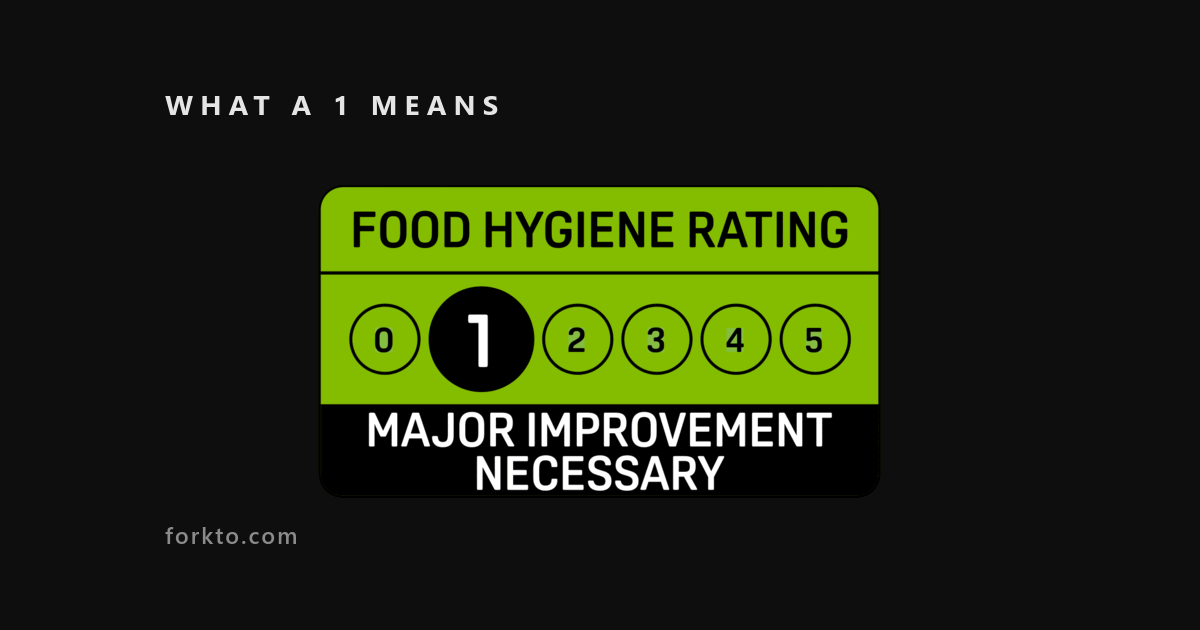
| 1 (major improvement necessary) | 45–50 | 20 |
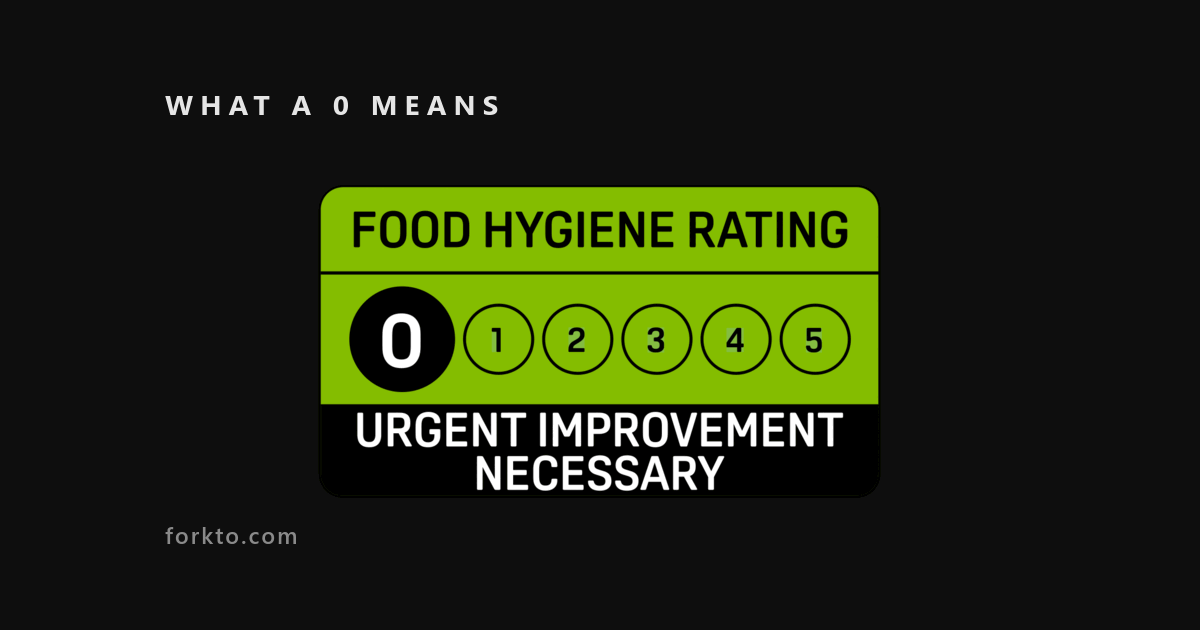
| 0 (urgent improvement necessary) | above 50 | — |
The single-element cap is the mechanic that trips most businesses up. You can have a low total and still miss the top rating because one element scored too high. A business scoring 0, 5 and 10 totals just 15 — inside the range for a 5 — but the single 10 caps it at a rating of 4. The rating is defined by your weakest element, not your average, which is why closing a single gap is so often the whole job. Our guide to how ratings are scored works through the arithmetic in more detail, and the confidence in management explainer covers the element that most often does the capping.
The safeguards the Brand Standard gives you
The Brand Standard isn’t only rules for officers — it also sets out the protections businesses are entitled to. There are three worth knowing by heart:
- Right to reply. You can submit comments about your rating — for example, explaining improvements you have made since the inspection — and your response is published online alongside the rating at ratings.food.gov.uk. This lets you add context for customers who look you up.
- Right to appeal. If you believe the rating does not reflect the standard at the time of the inspection, you can appeal in writing within 21 days of being notified of your rating (FSA, FHRS guidance for businesses). The appeal is considered by a senior officer who was not involved in the original inspection.
- Right to request a re-rating (re-visit). Once you have made the improvements the officer identified, you can ask for a re-inspection to get a new rating before your next scheduled inspection — you don’t have to live with a poor score until the routine visit comes around. The re-visit is unannounced and assesses the whole business, so the score can go up or down.
Knowing these three, and their deadlines, is the single most practical reason for a business to read the standard. A missed 21-day appeal window or an unused right to reply is a safeguard wasted.
Display requirements at a glance
The Brand Standard and the Wales/Northern Ireland statutory guidance also govern how the rating is shown:
- Wales and Northern Ireland: display is a legal requirement. The sticker must be shown at or near each customer entrance, positioned so customers can easily see and read it before they enter.
- England: display is voluntary but actively encouraged by the FSA. A 4 or 5 on the door is a genuine commercial asset, so most strong businesses display anyway.
- Scotland: not covered — Scotland operates the separate Food Hygiene Information Scheme.
Ratings for all businesses, displayed or not, are published on the national database at ratings.food.gov.uk, so a customer can always look you up whether or not a sticker is on show.
What businesses can actually use it for
The Brand Standard is a technical document written for regulators, but for an operator its value is straightforward: it tells you the rules the inspector plays by, so you can prepare against the real criteria rather than guesswork. Three practical uses:
- Self-audit against the exact elements you’ll be scored on. The three elements and their descriptors are the officer’s checklist — so they can be yours too. Our EHO inspection guide breaks the assessment down step by step, and the free EHO readiness score shows which of the three scored areas is your weakest link before an officer ever arrives.
- Target the element that caps your rating. Because the rating is defined by the highest single score, the standard tells you where to spend your effort: find the element sitting at a 10 and close it, rather than polishing areas that are already at 0 or 5. The action plan for reaching a 5 follows exactly that logic.
- Use your rights on time. If a rating feels wrong, the standard gives you 21 days to appeal and an open-ended right to reply — but only if you act. Reading the standard is how you learn those windows exist.
The evidence side of the standard
Two of the three elements the Brand Standard scores — physical condition and, above all, confidence in management — are judged substantially on evidence: records that show your controls are working, consistently, over time. An officer awards a high confidence-in-management score when the paperwork demonstrates that food safety is genuinely managed, not just intended.
That is where the standard becomes a day-to-day operational matter rather than a document you read once. Keeping temperature logs, cleaning schedules, delivery checks and audits complete and current is what turns “we do this” into “here is the proof we do this”. Running those checks and audits digitally time-stamps each one as it happens, so the evidence the Brand Standard asks an officer to look for is already assembled and defensible on any inspection day — not reconstructed the night before. When the rules of the game are written down, the winning move is simply to keep the record the rules ask for.
Frequently asked questions
What is the FHRS Brand Standard?
The Food Hygiene Rating Scheme Brand Standard is the Food Standards Agency’s official guidance that tells local authorities how to run the FHRS — how to score ratings, use the branding and IT platform, and handle appeals and re-ratings consistently. Its purpose is to make sure a rating means the same thing whichever council issued it. It is written for local authorities, but it is public, so businesses can read the exact rules an inspector follows.
Who has to follow the Brand Standard?
Local authorities (councils) in England, Wales and Northern Ireland. In England the Brand Standard is a voluntary framework that councils agree to follow to keep ratings consistent, while Wales and Northern Ireland have statutory guidance backed by their own Food Hygiene Rating legislation, which makes parts of the scheme — including mandatory display — legally binding. Scotland runs a separate scheme and is not covered.
How is a food hygiene rating calculated under the Brand Standard?
The inspector scores three elements — hygienic food handling, the physical condition of the premises, and confidence in management — where a lower score is better. The three scores are added, and the total is matched to a rating band. There is also a cap on the highest single element: to get a 5 the total must be 0–15 and no single element may score above 5. One weak element can therefore hold back an otherwise strong business.
What rights does the Brand Standard give my business?
Three main safeguards. You have a right to reply that is published online alongside your rating; a right to appeal in writing within 21 days of being notified if you believe the rating is wrong or unfair; and a right to request a re-rating (re-visit) once you have made improvements, so you don’t have to wait for the next scheduled inspection. Knowing these deadlines is the practical value of reading the standard.
Do I legally have to display my food hygiene rating sticker?
It depends where you are. In Wales and Northern Ireland display is a legal requirement — the sticker must be shown at or near each customer entrance where it is easily seen and read. In England display is voluntary but strongly encouraged. Scotland uses a separate Food Hygiene Information Scheme rather than the 0-to-5 FHRS.
Related Forkto software
Frequently asked questions
What is the FHRS Brand Standard?
The Food Hygiene Rating Scheme Brand Standard is the Food Standards Agency's official guidance that tells local authorities how to run the FHRS — how to score ratings, use the branding and IT platform, and handle appeals and re-ratings consistently. Its purpose is to make sure a rating means the same thing whichever council issued it. It is written for local authorities, but it is public, so businesses can read the exact rules an inspector follows.
Who has to follow the Brand Standard?
Local authorities (councils) in England, Wales and Northern Ireland. In England the Brand Standard is a voluntary framework that councils agree to follow to keep ratings consistent, while Wales and Northern Ireland have statutory guidance backed by their own Food Hygiene Rating legislation, which makes parts of the scheme — including mandatory display — legally binding. Scotland runs a separate scheme and is not covered.
How is a food hygiene rating calculated under the Brand Standard?
The inspector scores three elements — hygienic food handling, the physical condition of the premises, and confidence in management — where a lower score is better. The three scores are added, and the total is matched to a rating band. There is also a cap on the highest single element: to get a 5 the total must be 0–15 and no single element may score above 5. One weak element can therefore hold back an otherwise strong business.
What rights does the Brand Standard give my business?
Three main safeguards. You have a right to reply that is published online alongside your rating; a right to appeal in writing within 21 days of being notified if you believe the rating is wrong or unfair; and a right to request a re-rating (re-visit) once you have made improvements, so you don't have to wait for the next scheduled inspection. Knowing these deadlines is the practical value of reading the standard.
Do I legally have to display my food hygiene rating sticker?
It depends where you are. In Wales and Northern Ireland display is a legal requirement — the sticker must be shown at or near each customer entrance where it is easily seen and read. In England display is voluntary but strongly encouraged. Scotland uses a separate Food Hygiene Information Scheme rather than the 0-to-5 FHRS.
Safe hands, clear records
Stop running food safety on paper
Forkto turns daily checks, temperature logs, HACCP and audits into a few taps on a phone. Your team stays consistent and you're always ready for the EHO.
14-day free trial · No card required