Food safety guide
Pest Control for Food Businesses: A UK Guide
What UK food businesses must legally do to control pests: the law, EHO inspections, signs of infestation, record-keeping and a compliant pest plan.
7 June 2026
Effective pest control isn’t just good housekeeping in a UK food business — it’s a legal duty, and the consequences of getting it wrong run all the way to immediate closure, unlimited fines and imprisonment. A single rodent dropping behind a fridge, spotted by an inspector, can undo months of otherwise excellent practice.
This guide explains what UK law actually requires, what an Environmental Health Officer (EHO) looks for, and how to build a pest management system that holds up to scrutiny. For a ready-made template you can use on the floor, our free pest control inspection checklist is the companion to this guide.
Key facts
- UK food businesses must have “adequate procedures… to control pests” under Regulation (EC) 852/2004, Annex II, Chapter IX, which is retained (assimilated) in UK law.
- Pest control is a foundational prerequisite of any HACCP-based food safety management system — not an optional add-on.
- EHOs can serve a Hygiene Emergency Prohibition Notice and close a business immediately where pest activity poses a risk to health.
- Offences under the Food Safety Act 1990 and the Food Safety and Hygiene (England) Regulations 2013 can carry unlimited fines and up to two years’ imprisonment.
- A professional pest control contract backed by detailed records is central to a “due diligence” defence.
Is pest control a legal requirement for UK food businesses?
Yes. The core duty is short and unambiguous: you must have “adequate procedures… to control pests.” Everything else is about what “adequate” means in practice.
Regulation (EC) 852/2004: your core responsibility
The headline obligation sits in Annex II, Chapter IX of Regulation (EC) No 852/2004, retained in UK law, which states that adequate procedures are to be in place to control pests in all food premises. The same regulation goes further on the building itself: the design and construction of food premises must permit good food hygiene practices, including protection against contamination and, in particular, pest control.
The Food Standards Agency (FSA) reinforces this in its premises guidance, confirming that premises must allow “protection against contamination and pest control,” that food waste and rubbish must be removed from food rooms quickly so it doesn’t attract pests, and that openings to the outside should be fitted with easily removable insect-proof screens (FSA: setting up your food business premises).
The penalties for failure: the Food Safety Act 1990
Pest control failures are enforced through the Food Safety Act 1990 and the Food Safety and Hygiene (England) Regulations 2013. Offences can result in unlimited fines and imprisonment for up to two years. Where an inspector finds pest activity that presents an imminent risk to health, they can serve a Hygiene Emergency Prohibition Notice and shut the business down on the spot.
Set against that, the cost of a regular pest control contract is modest. The real comparison isn’t “contract vs no contract” — it’s a manageable monthly cost versus emergency closure, prosecution, lost trade and a damaged reputation.
How pest control fits into your HACCP system
Pest control is not a standalone chore. It’s a prerequisite programme — one of the foundations your HACCP-based food safety management system is built on. If pests can get to your food, the rest of your controls are undermined. In practice, most small UK caterers and retailers manage this through the FSA’s Safer Food, Better Business (SFBB) system, which treats pest control as a routine, recorded part of daily operations rather than an afterthought.
What does an EHO look for during a pest control inspection?
EHOs assess three things: evidence of pests, proof of prevention, and proof of process (your documentation). For a full picture of how visits run, see our EHO inspection guide.
Physical inspection: pests and proofing
The officer will look for physical signs of pests — droppings, gnaw marks, smear marks, shed skins and the pests themselves — and then assess the building for the conditions that let them in. That means checking entry points and proofing: gaps around pipes and doors, damaged seals, unscreened openings, and food waste left where it can attract pests.
Documentation review: proving your due diligence
This is where many otherwise tidy kitchens fall down. The officer will ask to see your pest control documentation: contractor visit reports, monitoring records, and evidence of the corrective actions you took when something was flagged. A professional contract plus a complete record of visits, findings and actions is a key part of a due diligence defence — the legal argument that you took all reasonable precautions. Keeping that paper trail consistently audit-ready is exactly the kind of routine our audits feature is designed to support, so the evidence is already in order before an officer walks in.
The link to your food hygiene rating
Pest control feeds directly into how an inspector judges your business. Evidence of pests, or an inability to show you’re managing the risk, undermines confidence in your management — which is precisely what your food hygiene rating reflects. Demonstrating control on paper matters almost as much as the physical state of the kitchen.
How do you build a compliant pest management system?
An effective system combines four elements: prevention, monitoring, professional support, and record-keeping.
Step 1: Prevention — deny access, food and shelter
Most infestations are preventable. The goal is to deny pests the three things they need:
- Access — proof the building. Seal gaps around pipework and cabling, fit and maintain insect-proof screens on openings, keep external doors closed, and repair damaged seals and brickwork.
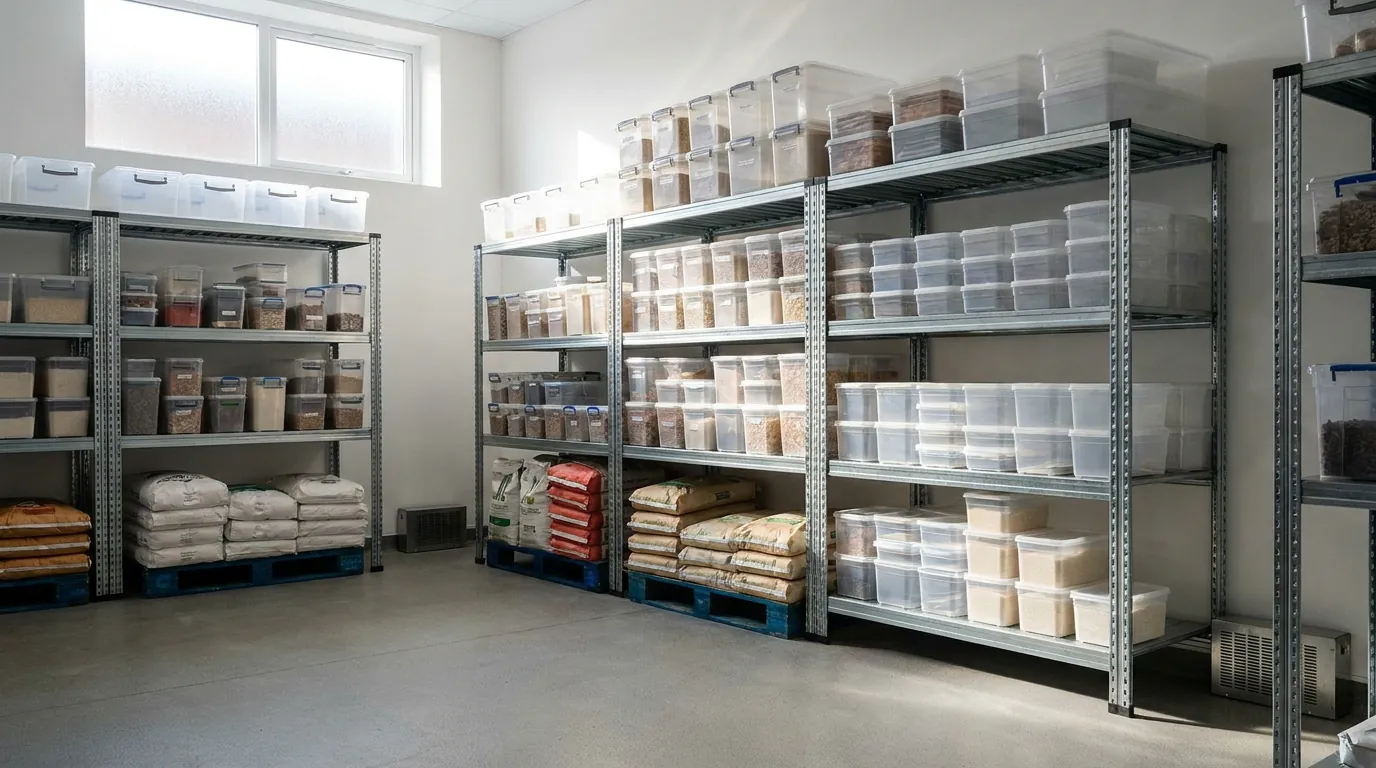
- Food — remove food waste and dirty plates promptly, never leave food out overnight, store ingredients in sealed containers off the floor, and keep bin areas clean and lidded.
- Shelter — reduce clutter and standing water, and keep storage areas tidy so harbourage points are easy to spot.
A critical safety point: never let pest control bait or chemicals, including sprays, come into contact with food, packaging, equipment or surfaces — they are likely to be poisonous to people.
Step 2: Monitoring — daily checks and recognising the signs
Prevention only works if someone is actually looking. Build pest checks into your daily routine and record that they’ve been done. The FSA’s own advice is to check for pests regularly and put reminders in your diary so they don’t get missed.
Train your team to recognise the early warning signs:
- Droppings near food, in storage or along walls
- Gnawed packaging or holes in stock and structure
- Smear marks along skirting and walls (from rodents brushing past)
- Shed skins or egg cases (from cockroaches)
- Webbing, and live or dead pests
- A musty or foul odour, which can point to a heavier infestation
Our free pest control inspection checklist turns this into a simple walk-round you can run and sign off each day.
Step 3: Professional contracts — what to expect
The law doesn’t explicitly require you to hold a pest control contract, but it’s treated by EHOs as the minimum standard for showing you have adequate procedures in place. A contractor will carry out a risk assessment, recommend a visit frequency, place and monitor controls, and — importantly — leave you a written report each visit.
Visit frequency is risk-based. Higher-risk operations such as restaurants and takeaways are typically advised to have monthly visits, while lower-risk premises may only need quarterly inspections. Your contractor will advise the right schedule for your site.
Step 4: Record-keeping — what to document
If it isn’t written down, an inspector can’t see that it happened. Keep:
- Your contractor’s contact details and a log of every visit, plus any feedback or action points they recommend
- Daily monitoring checks, recorded as they’re done
- Incidents and the corrective actions you took
- Evidence that recommended proofing or repairs were completed
When pests are found, the FSA’s expectation is clear: contact your contractor immediately, throw away any food that may have been touched or contaminated, thoroughly wash and disinfect all affected equipment, surfaces and utensils, and record the incident and your response in your diary.
What are the common pests in UK kitchens, and how do you spot them?
The main culprits in UK food businesses fall into three groups: rodents, insects and birds — confirmed both by the regulations and FSA premises guidance. In day-to-day kitchen terms, rodents, flies and cockroaches cause the most problems.
Rodents (rats and mice)
The classic and most damaging pest. Watch for droppings, gnawed packaging and cabling, smear marks along walls, and a distinctive musty smell. Rodents contaminate far more food than they eat and can spread through small structural gaps, so proofing and prompt waste removal are your first line of defence.
Flying insects (flies)
Flies move directly between waste and food, carrying contamination on contact. Insect-proof screens on openings, fly-killing units sited away from food, lidded bins and quick clean-down of spills all reduce the risk. A sudden increase in flies often points to a nearby breeding source — usually waste or standing water.
Crawling insects (cockroaches and beetles)
Cockroaches are nocturnal and hide in warm, dark, humid spots — behind and beneath equipment, near motors and pipework. Tell-tale signs include shed skins, egg cases, droppings that look like ground pepper, and a musty odour. Because they breed quickly and hide well, cockroach problems almost always need professional treatment rather than DIY measures.
Pest control questions UK food businesses ask
Can I just do pest control myself? You’re responsible for daily checks and keeping a clean environment, but professional support is essential for compliance — especially where chemical treatments are involved. DIY poisons are often not strong enough for a serious infestation, and a problem left to escalate can end in closure.
Do I really need a contract if I never see pests? Seeing no pests is the goal, not proof you’re protected. The contract and its records are what demonstrate adequate procedures to an EHO and underpin a due diligence defence — they matter most precisely when something has gone wrong.
How long should I keep records? Keep pest control reports, monitoring logs and corrective-action records for long enough to demonstrate an ongoing, consistent history of control to an inspector. A rolling, well-organised file is far more convincing than a handful of recent reports.
Making pest control part of the daily routine
Pest control is a non-negotiable part of food safety management, not a separate task you bolt on for inspection day. The businesses that pass comfortably are the ones that treat it as routine: proof the building, deny pests food and shelter, check every day, bring in a professional, and write it all down.
Do that consistently and you protect three things at once — your customers, your reputation, and your right to keep trading. Start with a daily walk-round using the pest control inspection checklist, keep the records tidy, and act on what your contractor tells you. The proof that you’re in control is built day by day, long before an inspector asks to see it.
Last updated 7 June 2026. This guide reflects UK requirements as at June 2026, including Regulation (EC) 852/2004 (assimilated), the Food Safety Act 1990, the Food Safety and Hygiene (England) Regulations 2013, and current FSA Safer Food, Better Business and premises guidance. Always check the latest FSA guidance and take professional advice for your specific premises.
Related Forkto software
Frequently asked questions
Is pest control a legal requirement for a food business in the UK?
Yes. All UK food businesses must have 'adequate procedures... to control pests' under retained EU law, specifically Regulation (EC) No 852/2004, Annex II, Chapter IX. It is a legal obligation to protect food from contamination, and failure to comply can lead to enforcement action including closure, unlimited fines and imprisonment.
Do I need a professional pest control contract?
The law does not explicitly require a contract, but a professional contract is widely treated by Environmental Health Officers as the minimum standard for demonstrating you have adequate procedures in place. The contract and its associated records are a critical part of a due diligence defence if you ever face prosecution.
What are the most common signs of a pest infestation?
Common signs include droppings, gnawed packaging or holes, smear marks along walls (from rodents), shed skins or egg cases (from cockroaches), webbing, and live or dead pests. A musty or foul odour can also indicate a heavier infestation.
How often should a pest controller visit my food business?
Frequency depends on risk. Higher-risk businesses such as restaurants and takeaways are typically advised to have monthly visits, while lower-risk premises may only need quarterly inspections. Your pest control professional will recommend an appropriate schedule after a risk assessment.
What will an EHO look for during an inspection regarding pest control?
An Environmental Health Officer checks for physical signs of pests (such as droppings or gnaw marks), assesses the building for potential entry points (proofing), and reviews all your pest control documentation, including contractor visit reports, monitoring records and evidence of corrective actions taken.
What happens if an EHO finds pests in my kitchen?
If an EHO finds evidence of a pest infestation that poses an imminent risk to public health, they can serve a Hygiene Emergency Prohibition Notice, forcing immediate closure of the business. This can be followed by prosecution, leading to fines and, in serious cases, imprisonment.
What should I do if I find pests?
Contact a professional pest control contractor immediately. Throw away any food you think has been touched or contaminated by pests. Thoroughly wash and disinfect all equipment, surfaces and utensils that may have been contaminated. Then record the incident and the actions you took in your daily diary.
Can I do pest control myself?
You are responsible for daily checks and keeping a clean environment, but professional support is essential for legal compliance, especially where chemical treatments are involved. DIY poisons are often not strong enough for a serious infestation, and failing to control a problem can ultimately lead to business closure.
Safe hands, clear records
Stop running food safety on paper
Forkto turns daily checks, temperature logs, HACCP and audits into a few taps on a phone. Your team stays consistent and you're always ready for the EHO.
14-day free trial · No card required