Food safety guide
Food Hygiene Rating 0: What It Means and What to Do Next
A food hygiene rating of 0 means urgent improvement is necessary. What a 0 means, whether you can stay open, and the steps to recover your FHRS score.
2 July 2026
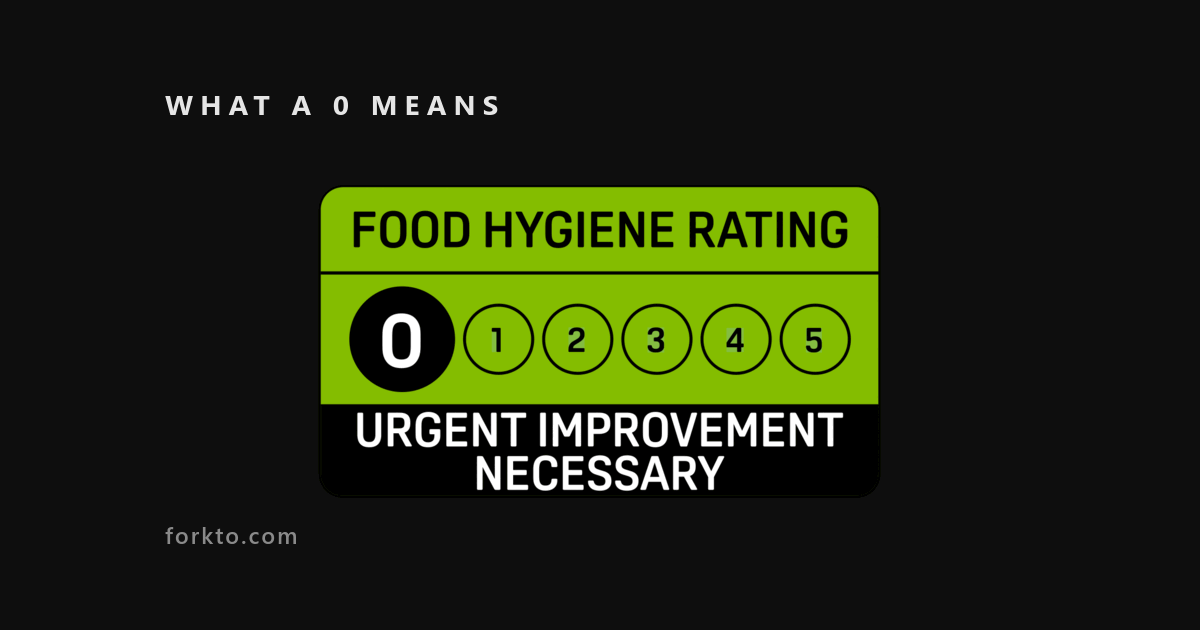
A food hygiene rating of 0 is the lowest score on the Food Hygiene Rating Scheme (FHRS) and officially means urgent improvement is necessary — the Food Standards Agency’s verdict that standards failed badly at your last inspection (FSA, Food Hygiene Rating Scheme). It is the worst rating a business can hold, and it is published for every customer to see. But a 0 does not automatically shut you down, and it is not permanent.
If you have just been given a 0, this guide explains exactly how the score arises, whether you can keep trading, what it costs you commercially, and the precise steps back up the scale. If you are a customer who has looked up a venue and found a 0, the short version is at the end.
What a 0 rating officially means
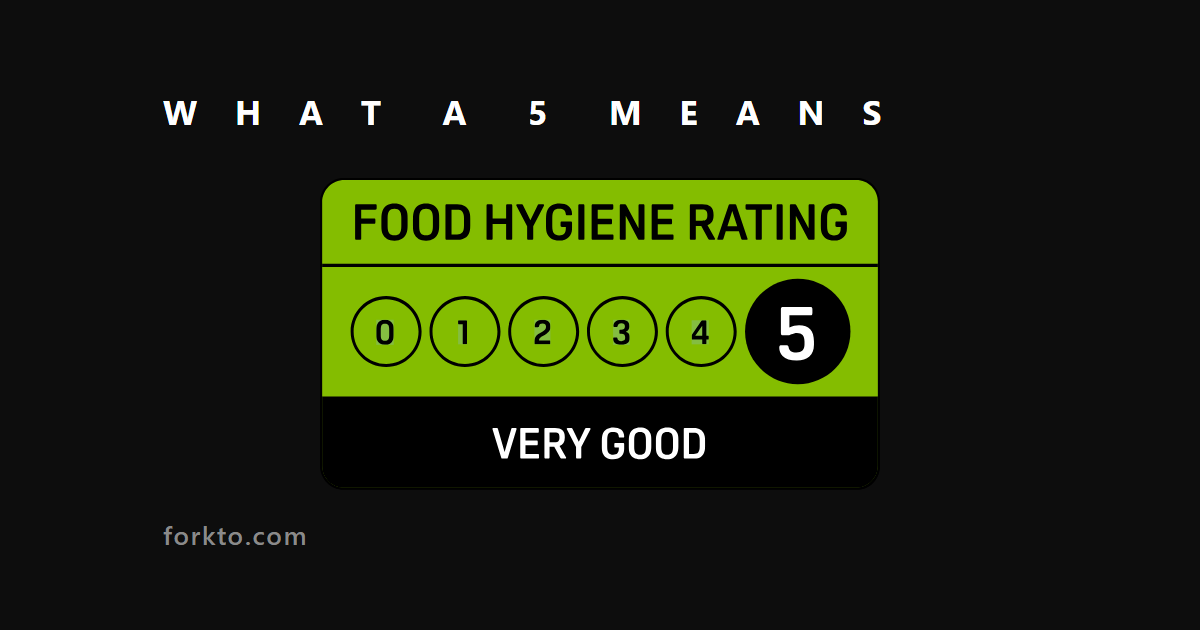
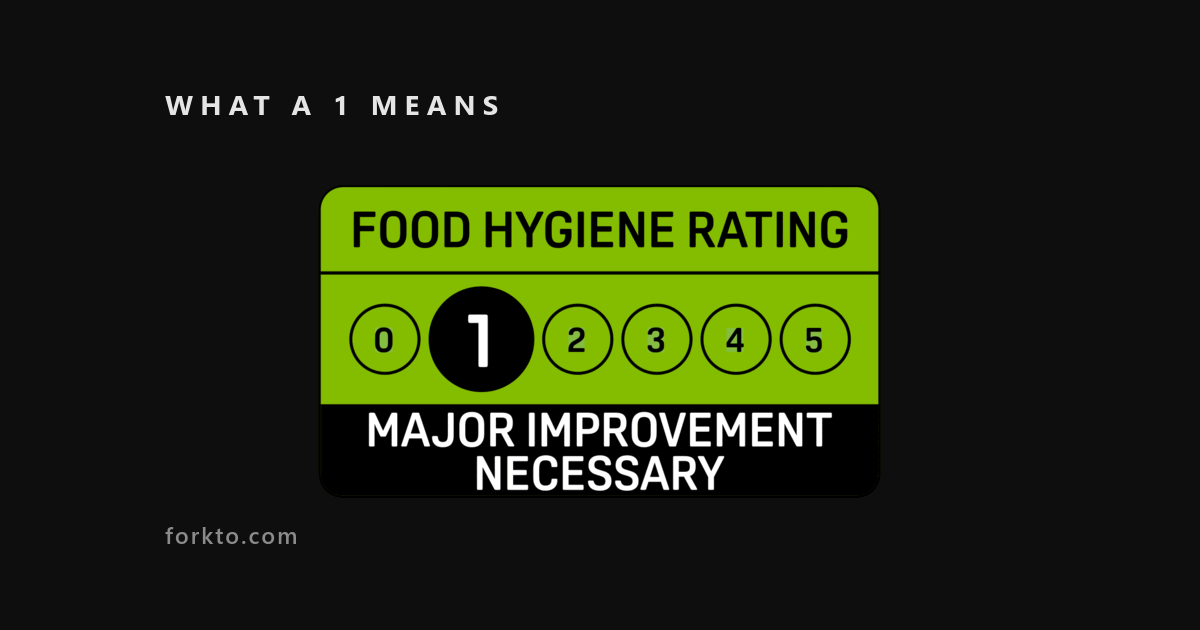
The FHRS rates every food business in England, Wales and Northern Ireland from 0 to 5 based on the standards an inspector finds on the day. The descriptors run:
| Rating | What it means |
|---|---|
| 5 | Very good |
| 4 | Good |
| 3 | Generally satisfactory |
| 2 | Improvement necessary |
| 1 | Major improvement necessary |
| 0 | Urgent improvement necessary |
A 0 is not a grey area. It tells the public that the officer found serious, wide-ranging problems and has little confidence they will be fixed without urgent action. Across the UK only 3.0% of rated food businesses sit below a 3, so a 0 is genuinely rare — see the latest UK food hygiene rating statistics. Every rating is published on ratings.food.gov.uk, searchable by name, postcode or town, so a 0 is visible to customers, delivery platforms and B2B clients from the moment it goes live.
How a business ends up with a 0 — the scoring
Your rating is built from three element scores, and a lower score is better. The inspector assesses hygienic food handling, the structural condition of the premises, and confidence in management (your systems, records and track record). The three scores are added, then checked against both a total-score band and a cap on the highest single score (FSA FHRS Brand Standard).
| Rating | Total of the three scores | No single element above |
|---|---|---|
| 5 | 0–15 | 5 |
| 4 | 20 | 10 |
| 3 | 25–30 | 10 |
| 2 | 35–40 | 15 |
| 1 | 45–50 | 20 |
| 0 | above 50 | — |
There are two distinct routes to a 0, and understanding which one you are on tells you what to fix first:
- A very high total. Add the three scores and if the total exceeds 50, you land at 0. This is the “everything is wrong at once” route — poor hygiene, poor structure and poor management together.
- One catastrophic element caps you at 0, whatever the total. The rules drop your rating until the worst single score fits within the band. To sit at a 1, no single element may exceed 20. So a confidence-in-management score of 30 (“poor track record; no food safety management system”) forces a 0 on its own. So does a 25 in hygiene or structure (“almost total non-compliance”), because 25 exceeds the 20 ceiling that a 1 allows.
That second route is the one owners find hardest to accept. You can have a kitchen that looks broadly clean and still be rated 0 if the officer concludes there is no working, documented food safety management system behind it — because confidence in management is a forward-looking judgement about whether standards will be maintained. The full mechanics are in our guide to how food hygiene ratings are scored, and the element that most often sinks a rating has its own confidence in management explainer.
Can you stay open with a 0 food hygiene rating?
Almost always, yes. The rating and the power to close you are two separate things. A 0 is a published score; it does not, by itself, stop you trading.
A food business is only forced to shut when an environmental health officer decides the conditions pose an imminent risk of injury to health and serves a Hygiene Emergency Prohibition Notice under regulation 8 of the Food Hygiene (England) Regulations 2013 (legislation.gov.uk; equivalent regulations apply in Wales and Northern Ireland). That notice has immediate effect, and the officer must apply to a magistrates’ court within three days for a Hygiene Emergency Prohibition Order to confirm it. The trigger is danger — a serious pest infestation, sewage, no hot water for handwashing — not the rating number.
In practice the two often coincide: the same inspection that produces a 0 can also produce enforcement action. But a 0 with no prohibition notice means you can keep trading while you put things right. Do not assume a 0 forces closure, and do not assume it means you are safe from closure either — read what the officer actually served alongside the rating.
What a 0 costs you
Even without a closure notice, a 0 has hard commercial consequences:
- Display obligations. In Wales (since 28 November 2013) and Northern Ireland (since 7 October 2016) you are legally required to display your rating sticker at or near each customer entrance — a 0 included — and non-display carries a fixed penalty notice of £200 (FSA, Food Hygiene Rating Scheme). Display is voluntary in England and there is no display scheme in Scotland, but the rating is online regardless.
- Delivery platforms. Just Eat requires a minimum rating of 3, while Deliveroo and Uber Eats require a minimum of 2. A 0 falls below all of them and generally triggers removal rather than a warning. For a takeaway where apps drive most orders, that is an immediate revenue hit — see our delivery platform hygiene rating requirements guide for each platform’s relisting pathway.
- Customer trust. Consumers actively avoid the bottom of the scale, and Google surfaces the FHRS score next to many businesses’ opening hours. A 0 is the single most damaging thing a prospective customer can see.
Exactly what to do next
Recovering from a 0 follows a clear sequence. Do not skip to requesting a re-rating before the work is genuinely done.
- Read the inspection report in full. The officer must notify you of the rating in writing, either at the inspection or within 14 days (gov.uk, FHRS guidance for businesses). The report lists every non-compliance — that list is your fix-it plan.
- Fix the physical and the paperwork together. A deep clean and repairs address hygiene and structure, but the fastest gains at the bottom of the scale usually come from putting a real, documented food safety management system in place (Safer Food, Better Business for most small businesses) and keeping the records current. This is a legal duty under Article 5 of Regulation (EC) 852/2004, not optional good practice (legislation.gov.uk), and it is the backbone of the confidence-in-management score.
- Consider a right to reply. If your rating is hurting trade while you improve, you can submit a free right to reply to be published next to your rating. There is no deadline — you can submit it any time up to your next inspection (gov.uk, FHRS guidance for businesses).
- Appeal only if the rating is genuinely wrong. If you believe the 0 does not reflect the standards found at the inspection, you can appeal in writing within 21 days of being notified. It goes to the local authority’s Lead Officer for Food, never the officer who inspected you. Appeal is not the same as improving and asking to be re-scored.
- Request a re-rating once the work is done. You can ask for a re-inspection after you have accepted the rating and rectified the non-compliances. In England, where no fee is charged, a re-rating is not usually carried out in the first three months and should happen within six months of the original inspection; where a fee applies (and in Wales and Northern Ireland), the re-visit happens within three months of your written request. The re-visit is unannounced and assesses the whole business, so keep every record current, not just the points you fixed.
Our EHO inspection prep checklist covers the same criteria the inspector uses, so you can self-audit before you invite them back, and our action plan for moving from 1 to 5 sets out the 30/60/90-day sequence in detail. Before requesting a re-visit, run the free EHO readiness score to find which of the three scored areas is holding you down. And because a 0 puts you well inside the offer, you qualify for Forkto free until you get your 5 — we only get paid when your rating goes up.
The path back to 5
A 0 is recoverable, and the destination is the top of the scale, not a comfortable middle. The businesses that climb back fastest are the ones that stop treating records as an inspection-day scramble and start capturing them as the work happens. That is exactly what food safety software is for: every temperature check, cleaning sign-off and opening routine logged at the point of the task, time-stamped and ready to show. When the officer returns, the confidence-in-management evidence that sank you at 0 is already in place.
Once you have climbed off the bottom, the next question becomes which single element is capping you — see what a rating of 1 or a rating of 2 requires to move up, where a rating of 3 leaves you, and what separates a good 4 from the top score.
If you are a customer who found a 0
A 0 means the last inspection found serious hygiene failures and the Food Standards Agency’s own descriptor is “urgent improvement necessary”. The rating reflects conditions on the inspection date, which may be recent or up to a couple of years old depending on the business’s risk category, and the business may have improved since — check the inspection date on ratings.food.gov.uk and whether the business has posted a right to reply. But a 0 is the clearest warning the scheme gives.
Frequently asked questions
Can a business stay open with a 0 food hygiene rating?
Yes. A 0 rating does not close a business by itself. Trading only stops if an environmental health officer serves a Hygiene Emergency Prohibition Notice because conditions pose an imminent risk to health, which a magistrates’ court then confirms. Many businesses rated 0 keep trading while they fix the problems and wait for a re-inspection.
How do you recover from a food hygiene rating of 0?
Read the inspection report, fix every non-compliance the officer listed — especially your documented food safety management system — then request a re-rating once the work is genuinely done. The re-visit is unannounced and assesses the whole business, not just the points you worked on, so the rating can go up, stay the same or go down.
How quickly can I be re-inspected after a 0?
In England, where no fee is charged, a re-rating is not usually carried out in the first three months and should take place within six months of the original inspection. If your council charges a fee, or you are in Wales or Northern Ireland, the re-visit happens within three months of your written request.
Does a 0 food hygiene rating mean I broke the law?
A 0 means standards fell well below what food hygiene law requires, but the rating itself is not a prosecution. Separate enforcement — a hygiene improvement notice, a prohibition, or prosecution — may follow the same inspection where the breaches are serious enough.
Do delivery apps remove businesses with a 0 rating?
Yes. Just Eat requires a minimum rating of 3, and Deliveroo and Uber Eats require a minimum of 2, so a 0 sits below every major platform’s threshold and typically triggers removal until you improve and are re-rated.
Related Forkto software
Frequently asked questions
Can a business stay open with a 0 food hygiene rating?
Yes. A 0 rating does not close a business by itself. Trading only stops if an environmental health officer serves a Hygiene Emergency Prohibition Notice because conditions pose an imminent risk to health, which a magistrates' court then confirms. Many businesses rated 0 keep trading while they fix the problems and wait for a re-inspection.
How do you recover from a food hygiene rating of 0?
Read the inspection report, fix every non-compliance the officer listed — especially your documented food safety management system — then request a re-rating once the work is genuinely done. The re-visit is unannounced and assesses the whole business, not just the points you worked on, so the rating can go up, stay the same or go down.
How quickly can I be re-inspected after a 0?
In England, where no fee is charged, a re-rating is not usually carried out in the first three months and should take place within six months of the original inspection. If your council charges a fee, or you are in Wales or Northern Ireland, the re-visit happens within three months of your written request.
Does a 0 food hygiene rating mean I broke the law?
A 0 means standards fell well below what food hygiene law requires, but the rating itself is not a prosecution. Separate enforcement — a hygiene improvement notice, a prohibition, or prosecution — may follow the same inspection where the breaches are serious enough.
Do delivery apps remove businesses with a 0 rating?
Yes. Just Eat requires a minimum rating of 3, and Deliveroo and Uber Eats require a minimum of 2, so a 0 sits below every major platform's threshold and typically triggers removal until you improve and are re-rated.
Safe hands, clear records
Stop running food safety on paper
Forkto turns daily checks, temperature logs, HACCP and audits into a few taps on a phone. Your team stays consistent and you're always ready for the EHO.
14-day free trial · No card required