Food safety guide
How to Improve Your Food Hygiene Rating from 1 to 5: A UK Action Plan
How to improve your food hygiene rating from 1 to 5: how the three FHRS elements are scored and why confidence in management is your biggest lever.
14 June 2026

A food hygiene rating of 1 is not a life sentence. The Food Standards Agency is explicit that every business, regardless of its nature or size, should be able to achieve the top rating, because a 5 requires nothing more than basic compliance with food hygiene law (FSA FHRS Brand Standard). The question is not whether you can get there. It is which levers actually move the rating, and in what order — the UK food hygiene rating statistics show most businesses already sit at a 4 or 5.
We work with UK food businesses on exactly this problem, and the pattern is consistent: operators pour effort into scrubbing the kitchen, then stay stuck at a 1 or 2 because the score that traps them is the one they never think about — confidence in management. This guide walks through how the rating is built, why that third element is your biggest lever, and a practical plan to move up the scale.
Key facts
- Your FHRS rating combines three inspection scores: how hygienically food is handled, the structural condition of the premises, and how the business manages food safety (confidence in management).
- Lower scores are better. To reach a 5 your three scores must total 0–15 with no single element above 5.
- One high score caps the whole rating, no matter how low your total is.
- The most controllable lever is confidence in management, evidenced by a documented food safety management system (such as SFBB) and complete, up-to-date records.
- If you have already improved, you can request a re-rating. You can also use the right to reply or appeal a rating you think is wrong.
Can you really go from a 1 to a 5?
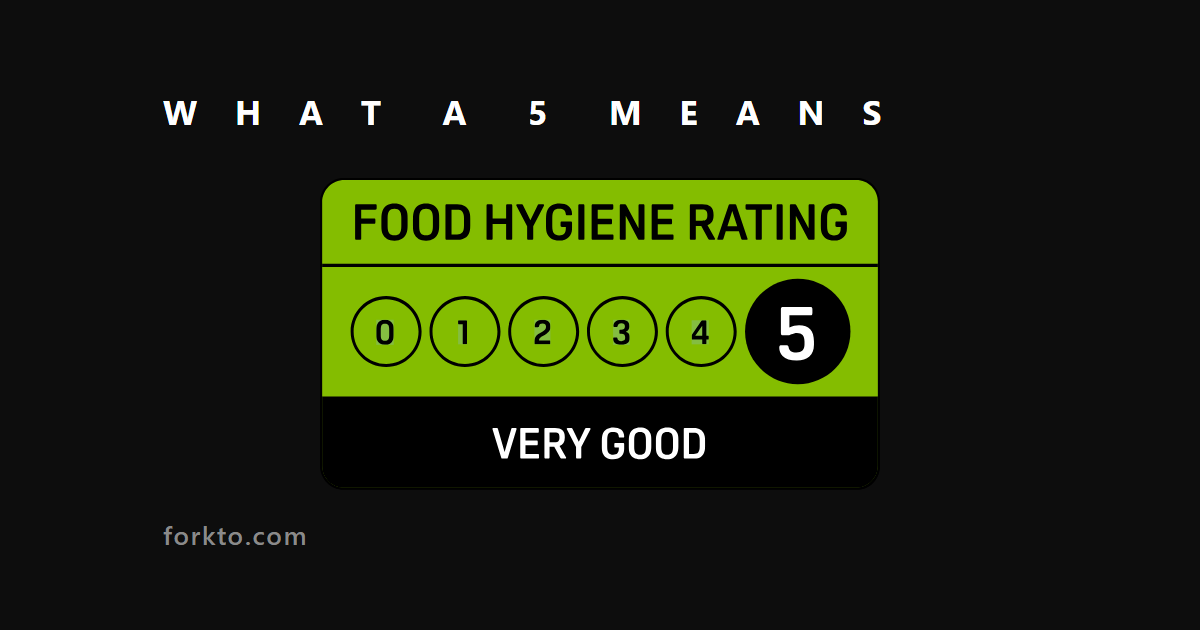
Yes. The FSA’s own Brand Standard states that an establishment achieves the top rating by scoring 5 for each of the three elements, and that all businesses should be able to reach it because it requires only basic legal compliance (FSA FHRS Brand Standard).
The fastest controllable gains usually come from the third element — confidence in management — because it is the one most often left undocumented. A genuinely clean, well-run kitchen can still be capped at a 4 (or lower) purely because the officer is not convinced the standard will be maintained. Fix that, and the rating tends to follow.
How is your food hygiene rating actually calculated?
The rating is given by a food safety officer (an environmental health practitioner) from your local authority following an inspection, and it must be provided to you in writing — either at the time or, without undue delay, within 14 days (FSA, how ratings work). Inspection frequency is risk-based, ranging from every six months for the highest-risk businesses to every two years for lower-risk ones. For what the officer actually does on the day, see our EHO inspection guide.
The three things the officer scores
The rating is built from three elements, each scored numerically against the food hygiene intervention rating scheme in the Food Law Code of Practice (England) (FSA FHRS Brand Standard):
- Food hygiene and safety — how hygienically food is handled across preparation, cooking, re-heating, cooling and storage (FSA, how ratings work).
- Structure and cleanliness — the physical condition of the premises: cleanliness, layout, lighting, ventilation and pest control.
- Confidence in management — how the business manages food safety through its processes, training and systems.
Lower is better: how the scores map to the 0–5 rating
Each element is scored, and a lower number means better compliance. The total of the three scores is then mapped to the public 0–5 rating, but with a catch: no single element is allowed to exceed a set ceiling for each band (FSA FHRS Brand Standard).
| Rating | Total of the three scores | No single element above |
|---|---|---|
| 5 | 0–15 | 5 |
| 4 | 20 | 10 |
| 3 | 25–30 | 10 |
| 2 | 35–40 | 15 |
| 1 | 45–50 | 20 |
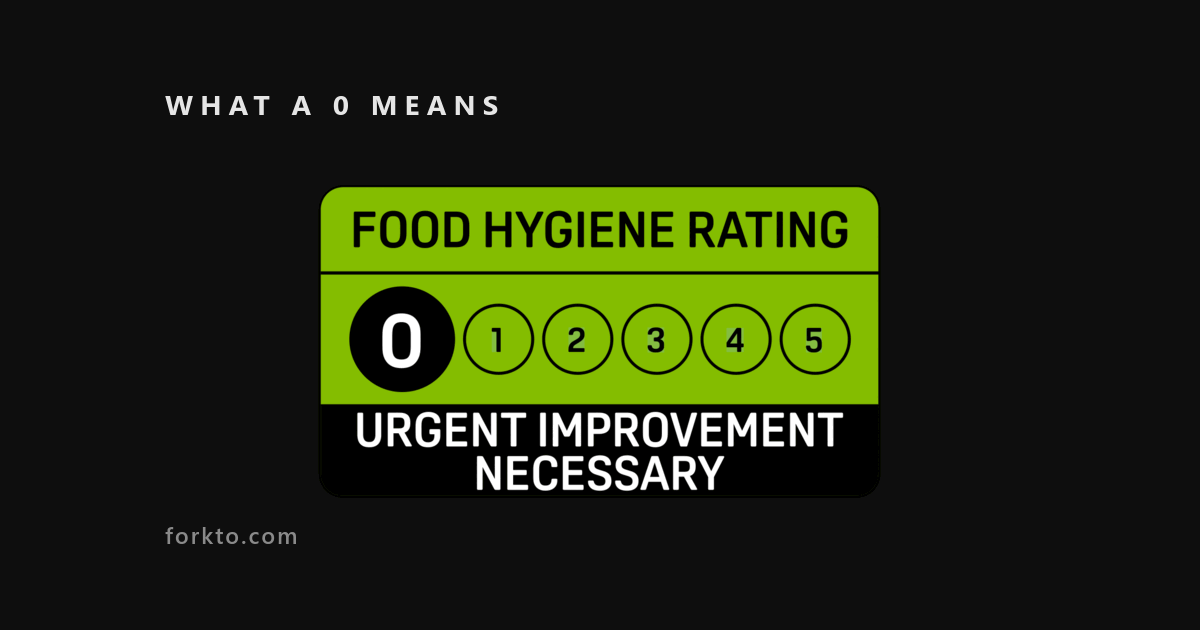
| 0 | above 50 | — |
Why one bad score sinks the whole rating
This is the part operators miss. A single high element score caps your rating regardless of how good your total is. The Brand Standard’s own worked examples make it stark:
- Scores of 5, 5, 5 (total 15) = rating 5.
- Scores of 0, 5, 10 (total 15) = rating 4 — the same total, but the highest individual score of 10 exceeds the additional scoring factor allowed for a 5.
- Scores of 5, 5, 20 (total 30) = rating 1 — two excellent scores cannot rescue one bad one.
In other words, you cannot average your way to a good rating. The full scoring mechanics are covered in our pillar guide on mastering food hygiene ratings; the takeaway here is that your worst element is the one that defines you.
Why “confidence in management” is your biggest lever
What the confidence scores actually mean
Confidence in management is scored differently from the other two elements. It can only be awarded as 0, 5, 10, 20 or 30 — it skips 15 and 25 (FSA FHRS Brand Standard).
| Score | Descriptor |
|---|---|
| 0 | Excellent record of compliance |
| 5 | Good record |
| 10 | Satisfactory record |
| 20 | Significantly varying record |
| 30 | Poor track record |
The maths that traps good kitchens at a 4
Look back at the rating table. A 5 requires no single element above 5. Because confidence in management cannot be scored at anything between 5 and 10, a “satisfactory record” — a score of 10 — automatically caps your overall rating at 4, even if your hygiene and structure are immaculate. Go a step worse to a 20 (“significantly varying record”) and you are capped at a 1.
That is why a genuinely clean kitchen can stall. The difference between a 10 and a 5 is largely about documentation: a score of 5 requires satisfactory documented food safety management procedures with records generally maintained but with some minor deficiencies or gaps, while a 0 requires records that are maintained alongside staff who are trained and supervised (FSA FHRS Brand Standard).
It is about the future, not just inspection day
Critically, confidence in management is not a re-check of your current hygiene. It is the officer’s judgement on how likely it is that satisfactory compliance will be maintained in future. They weigh up your documented food safety management procedures (such as SFBB), your HACCP-based procedures, your track record, and your staff supervision, instruction and training (FSA FHRS Brand Standard).
There is also a sting in the tail. Hygiene and structural failures that reflect non-adherence to your HACCP-based procedures will also drag down the confidence in management score — so a single lapse can damage two of your three scores at once. For a deeper look at this element, see our guide to the confidence in management score.
The action plan: fixing each element
Element 1 — hygienic food handling
This is the everyday discipline of how food moves through your kitchen: preparation, cooking, re-heating, cooling and storage (FSA, how ratings work). The FSA’s Safer Food Better Business system organises this around the 4Cs — cross-contamination, cleaning, chilling and cooking (FSA, Safer Food Better Business). Get those four right, consistently, and this element looks after itself.
Element 2 — structure and cleanliness
This element covers the fabric of the premises: cleanliness, layout, lighting, ventilation and pest control (FSA, how ratings work). Some of it is fixed (you cannot move a wall the week before an inspection), but a lot of it is maintenance: surfaces in good repair, adequate lighting and ventilation, and a working pest control regime. These are the points officers can see at a glance.
Element 3 — prove your system with SFBB and a complete diary
This is where most rating improvements are actually won. Safer Food Better Business (SFBB) is the FSA’s food safety management system for small businesses in England and Wales. It covers cross-contamination, cleaning, chilling, cooking and management, plus a diary for daily records, and businesses complete a 4-weekly review (FSA, Safer Food Better Business).
The system only earns you confidence-in-management credit if the records are real and current. That means daily checks completed at the point of the task, not back-filled the night before an inspection, and the 4-weekly review actually done. Building and keeping that evidence trail is precisely what a structured audits and records system is for.
Your legal baseline: the HACCP duty
None of this is optional good practice — it is the law. Under Article 5(1) of Regulation (EC) 852/2004, food business operators must “put in place, implement and maintain a permanent procedure or procedures based on the HACCP principles.” Article 5(4) requires them to keep the documents describing those procedures up to date at all times and to retain other documents and records for an appropriate period (legislation.gov.uk, Article 5). That legal duty is the backbone of the confidence in management element. Businesses that fail inspections most often fail here — our analysis of why businesses fail inspections digs into the recurring causes.
How to get re-rated after you have improved
Who can request it, and when
If you are rated 0 to 4, you can request a re-inspection (re-rating) — but only after you have accepted the rating and rectified the non-compliances (FSA FHRS Brand Standard). A re-rating is for businesses that have genuinely improved, not a quick second roll of the dice.
Timings: the free route, the paid route, and the six-month maximum
How long you wait depends on whether your council charges a fee:
- No fee: there is a three-month standstill from the date of the original inspection, and the re-visit must take place within three months of the end of that standstill — so the maximum wait is six months.
- Fee charged: there is no standstill, and the re-visit happens within three months of your request or payment.
Local authorities in England may charge a fee for a requested re-rating under the general power in the Localism Act 2011; in Wales and Northern Ireland, all local authorities charge a fee (food.gov.uk, FHRS for businesses).
What to expect on the day
The re-visit is unannounced, and the officer assesses your level of compliance overall — not just the areas you worked on. That means the rating could go up, down or stay the same, so you need to be inspection-ready every day, not just on the points you fixed. Importantly, a new rating cannot be given on documentary evidence alone: there must be a visit to the establishment (FSA FHRS Brand Standard).
Your safeguards: appeal vs right to reply
These two routes are often confused. One challenges a rating you think is wrong; the other helps you manage your reputation while you improve.
Appealing a rating you think is wrong
If you believe the rating does not reflect the standards found at the inspection, you can appeal in writing within 21 days of being notified (this period includes weekends and bank holidays, and was extended from 14 to 21 days in October 2016). The appeal is decided by the local authority’s Lead Officer for Food or a designated deputy — never the officer who gave the rating — and you are notified of the outcome within 21 days. While an appeal is in progress, your entry at food.gov.uk/ratings shows “awaiting publication” (FSA FHRS Brand Standard).
Using your right to reply while you wait
If you did not get the top rating, the right to reply lets you tell customers about improvements you have made since the inspection, or about unusual circumstances on the day. You can submit it in writing at any time up to your next inspection, and it is published at food.gov.uk/ratings alongside your rating until a new rating is given (food.gov.uk, FHRS for businesses). It is a useful tool to use while you wait out the standstill before a re-rating.
England, Wales, Northern Ireland and Scotland: the differences
The FHRS applies in England, Wales and Northern Ireland — but it is voluntary in England and statutory in Wales and Northern Ireland. Scotland runs a separate scheme entirely, the Food Hygiene Information Scheme (FSA FHRS Brand Standard).
Display rules differ too. In England, you do not have to display your rating, though the FSA strongly encourages it. In Wales, you are legally required to display it in a prominent place such as the front door, entrance or window. In Northern Ireland, you must display it at or near each customer entrance (FSA, food hygiene rating scheme).
A 30/60/90-day plan to move up the scale
You cannot change the rating overnight, but you can build the evidence and the habits that a re-rating rewards.
Days 1–30 — stabilise and document.
- Accept the rating and read the inspection report; list every non-compliance the officer raised.
- Put a documented food safety management system in place — SFBB if you are a small business in England or Wales — covering the 4Cs and management (FSA, Safer Food Better Business).
- Start the daily diary of records today, completed at the point of each task.
Days 31–60 — embed and train.
- Fix the structural and cleanliness points within your control: repairs, lighting, ventilation, pest control.
- Train and supervise staff, and keep the training records — both feed the confidence in management score (FSA FHRS Brand Standard).
- Complete your first 4-weekly SFBB review so there is a visible cycle of self-checking.
- Consider submitting a right to reply if your current rating is hurting trade.
Days 61–90 — prove it and request the re-rating.
- Confirm the non-compliances are genuinely rectified, then request a re-inspection (you must have accepted the rating first) (food.gov.uk, FHRS for businesses).
- Remember the re-visit is unannounced and whole-premises, so keep every record current — there is no “paperwork-only” shortcut to a new rating.
The bottom line
Improving a food hygiene rating from a 1 to a 5 is rarely about one dramatic deep-clean. It is about closing the gap on the element you cannot see from the kitchen floor: confidence in management. A clean kitchen scores on hygiene, but a documented system and an honest, up-to-date record of daily checks is what convinces the officer your standard will hold — and that is what lifts the cap off your rating. Build the habit, keep the evidence, and request the re-rating once the work is genuinely done.
Frequently asked questions
How long does it take to improve a food hygiene rating from 1 to 5?
You cannot change it instantly. After you accept the rating and fix the non-compliances you request a re-inspection. Where no fee is charged there is a three-month standstill from the original inspection, and the re-visit happens within three months after that — so up to six months. If your council charges a fee there is no standstill and the re-visit takes place within three months of your request or payment (FSA FHRS Brand Standard).
What is the single biggest factor I can control to raise my rating?
Confidence in management. A spotless kitchen scores on the hygiene element, but to score 5 or 0 on confidence in management you must show a documented food safety management system (such as SFBB) and up-to-date records that convince the officer compliance will be maintained. A confidence score of 10 caps your overall rating at 4, and 20 caps it at 1 (FSA FHRS Brand Standard).
How is the 0 to 5 food hygiene rating actually calculated?
The officer scores three elements (food hygiene and safety, structure, confidence in management); lower scores are better. To get a 5 the total must be 0 to 15 with no single score above 5. A 4 needs a total of 20 with none above 10, a 3 needs 25 to 30, a 2 needs 35 to 40, a 1 needs 45 to 50, and above 50 is a 0. One high individual score drags the whole rating down (FSA FHRS Brand Standard).
Can I appeal my food hygiene rating, and how?
Yes, if you believe the rating does not reflect the standards found at inspection. Appeal in writing within 21 days of being notified (this includes weekends and bank holidays). It is decided by the Lead Officer for Food or a deputy, never the officer who rated you, and you are told the outcome within 21 days. Appeal is different from requesting a re-rating after making improvements (FSA FHRS Brand Standard).
Will the re-inspection only look at the things I fixed?
No. The re-visit is unannounced and the officer assesses your standards overall, not just the points you worked on, so the rating could go up, down or stay the same. A new rating cannot be given on paperwork alone — there must be a visit (FSA FHRS Brand Standard).
Do I legally have to display my food hygiene rating?
In England, no, but the FSA strongly encourages it. In Wales you are legally required to display the rating in a prominent place such as the front door, entrance or window, and in Northern Ireland at or near each customer entrance. Scotland uses a separate Food Hygiene Information Scheme (FSA, food hygiene rating scheme).
What is the right to reply and should I use it?
If you did not get the top rating you can submit a right to reply explaining improvements made since the inspection or unusual circumstances on the day. Submit it in writing at any time up to your next inspection; the council may edit offensive or inaccurate content and then publishes it at food.gov.uk/ratings next to your rating until a new one is given. It is useful while you wait for a re-rating (food.gov.uk, FHRS for businesses).
Related Forkto software
Frequently asked questions
How long does it take to improve a food hygiene rating from 1 to 5?
You cannot change it instantly. After you accept the rating and fix the non-compliances you request a re-inspection. Where no fee is charged there is a three-month standstill from the original inspection, and the re-visit happens within three months after that, so up to six months. If your council charges a fee there is no standstill and the re-visit takes place within three months of your request or payment.
What is the single biggest factor I can control to raise my rating?
Confidence in management. A spotless kitchen scores on the hygiene element, but to score 5 or 0 on confidence in management you must show a documented food safety management system (such as SFBB) and up-to-date records that convince the officer compliance will be maintained. A confidence score of 10 caps your overall rating at 4, and 20 caps it at 1.
How is the 0 to 5 food hygiene rating actually calculated?
The officer scores three elements (food hygiene and safety, structure, confidence in management); lower scores are better. To get a 5 the total must be 0 to 15 with no single score above 5. A 4 needs a total of 20 with none above 10, a 3 needs 25 to 30, a 2 needs 35 to 40, a 1 needs 45 to 50, and above 50 is a 0. One high individual score drags the whole rating down.
Can I appeal my food hygiene rating, and how?
Yes, if you believe the rating does not reflect the standards found at inspection. Appeal in writing within 21 days of being notified (this includes weekends and bank holidays). It is decided by the Lead Officer for Food or a deputy, never the officer who rated you, and you are told the outcome within 21 days. Appeal is different from requesting a re-rating after making improvements.
Will the re-inspection only look at the things I fixed?
No. The re-visit is unannounced and the officer assesses your standards overall, not just the points you worked on, so the rating could go up, down or stay the same. A new rating cannot be given on paperwork alone, there must be a visit.
Do I legally have to display my food hygiene rating?
In England, no, but the FSA strongly encourages it. In Wales you are legally required to display the rating in a prominent place such as the front door, entrance or window, and in Northern Ireland at or near each customer entrance. Scotland uses a separate Food Hygiene Information Scheme.
What is the right to reply and should I use it?
If you did not get the top rating you can submit a right to reply explaining improvements made since the inspection or unusual circumstances on the day. Submit it in writing at any time up to your next inspection; the council may edit offensive or inaccurate content and then publishes it at food.gov.uk/ratings next to your rating until a new one is given. It is useful while you wait for a re-rating.
Safe hands, clear records
Stop running food safety on paper
Forkto turns daily checks, temperature logs, HACCP and audits into a few taps on a phone. Your team stays consistent and you're always ready for the EHO.
14-day free trial · No card required