Food safety guide
Food Hygiene Rating 5: What It Means and How to Keep It
A food hygiene rating of 5 means very good — the top score. What a 5 proves, what it doesn't, how businesses lose one, and how to keep yours.
14 July 2026
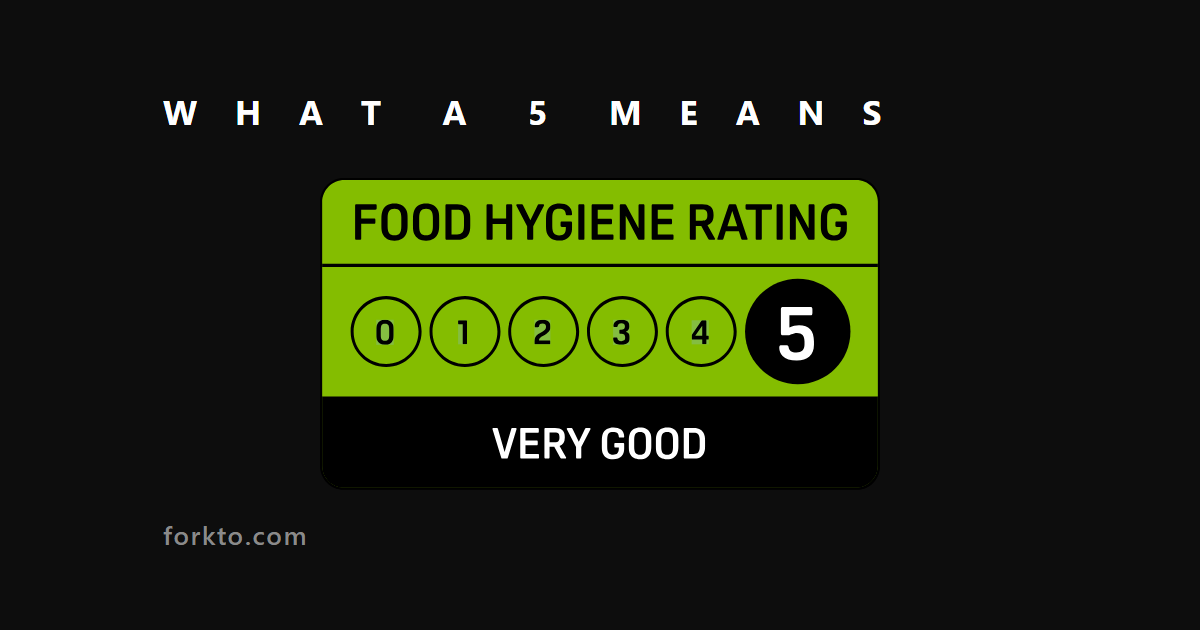
A food hygiene rating of 5 means hygiene standards are very good — the top score on the Food Hygiene Rating Scheme (FHRS) 0-to-5 scale (FSA, Food Hygiene Rating Scheme). To earn it, a business has to score well on all three things an inspector assesses — how food is handled, the condition of the premises, and how food safety is managed — with no single area falling short. It is the rating most customers now expect to see, and the one delivery platforms, insurers and B2B buyers look for first.
If you have just been awarded a 5, the real challenge isn’t getting it — it’s keeping it. This guide explains exactly what a 5 proves, what it doesn’t, how businesses quietly lose one between inspections, and what it takes to hold the top rating year after year.
What a 5 means on the scale
| Rating | What it means |
|---|---|
| 5 | Very good |
| 4 | Good |
| 3 | Generally satisfactory |
| 2 | Improvement necessary |
| 1 | Major improvement necessary |
| 0 | Urgent improvement necessary |
A 5 is the highest rating a food business can receive. It is awarded when the inspecting officer is satisfied on every front — not just that the kitchen was clean on the day, but that the systems behind it are good enough to keep it that way. In the latest figures, 78.2% of rated UK food businesses hold a 5 (see the UK food hygiene rating statistics), so while a 5 is common, dropping below it puts you in a visible minority.
What a 5 does not mean
A 5 is easy to over-read. It is a strong signal, but it is specific about what it measures:
- It is not a food quality or taste award. The FHRS rates hygiene — handling, premises and management — not how good the food is, portion sizes, service or value. A greasy-spoon café and a fine-dining restaurant can both hold a 5.
- It is a snapshot, not a live feed. A rating reflects standards on the day of the last inspection, which may have been weeks or many months ago. A 5 says the business was very good then; it does not prove the same standard is being kept today.
- It does not mean zero risk. No inspection can guarantee nothing will ever go wrong. A 5 means the officer found no significant non-compliance and had confidence in the management — not that a mistake is impossible.
Those limits matter, because they are exactly where a 5 slips. The rating rewards maintained standards, and the gap between “very good on inspection day” and “very good every day” is where most lost 5s are lost.
How the top score is actually earned
Your rating is built from three element scores, and — counter-intuitively — a lower score is better:
- Hygienic food handling — preparation, cooking, reheating, cooling and storage.
- The structural condition of the premises — cleanliness, layout, lighting, ventilation, pest control and facilities.
- Confidence in management — your systems, records, training and track record of keeping food safe.
The three scores are added, and the total is checked against a band. But there is a second, stricter test: no single element may score above 5. That is what makes a 5 different from every other rating.
| Rating | Total of the three scores | No single element above |
|---|---|---|
| 5 | 0–15 | 5 |
| 4 | 20 | 10 |
| 3 | 25–30 | 10 |
| 2 | 35–40 | 15 |
| 1 | 45–50 | 20 |
| 0 | above 50 | — |
The practical consequence: a business can have a total low enough for a 5 and still miss it because one element scored a 10. A rating of 4 is almost always exactly this — two strong elements dragged down by one that came in at 10, most often confidence in management. To hold a 5, all three have to stay at 5 or below at every inspection.
How businesses lose a 5
Very few businesses lose a 5 because their kitchen suddenly becomes dirty. They lose it because one of the three elements drifts — usually the management one — between an inspection they aced and the next unannounced visit. The common culprits:
- Records slipping. A 5 is partly earned on documentation: temperature logs, cleaning schedules, delivery checks, and a food safety management system that reflects what you actually do. When the business gets busy, records are the first thing to slide — logs get back-filled, the periodic review gets skipped, gaps appear. On paper the kitchen is fine; on the inspection the evidence isn’t there, and confidence in management drops from a 5 to a 10.
- Staff turnover. The 5 was often built around one or two people who understood the systems. When they leave, the routines can leave with them. New staff who can’t explain the controls, or who quietly stop completing checks, pull the management score down even if the food is still handled well.
- Complacency between visits. With inspections sometimes years apart for lower-risk businesses, it is easy to treat the 5 as permanent. Small structural issues go unrepaired, a cleaning corner gets cut, a new menu item introduces a handling risk nobody documented — none of it dramatic, all of it enough to cost a point.
- A change the systems didn’t keep up with. A new supplier, a new process (vacuum packing, sous-vide, a delivery arm) or a refurbishment each changes your hazards. If your documented system doesn’t change with it, the officer sees a gap between practice and paperwork.
Because a re-inspection is unannounced, there is no chance to tidy up first. Whatever state the business is genuinely in on the day is the state that gets scored.
How to keep a 5
Keeping the top rating is about making “very good” the default state of the business, not a performance staged for inspection day. In practice that means:
- Capture records as the work happens, not afterwards. The single biggest reason a genuinely good kitchen scores a 10 on management is a patchy evidence trail. If every temperature reading, cleaning sign-off and opening check is logged at the moment it is done, the evidence an officer needs for a 5 is already complete before they walk in.
- Keep your food safety management system live. Whether it is Safer Food, Better Business or a HACCP-based plan, it has to match what you actually do today — and maintaining a HACCP-based procedure is a legal duty in its own right, not just a rating factor. Review it whenever anything changes, and carry out the reviews the system asks for.
- Build the routine so it survives staff changes. Train every food handler on the checks, not just the manager. Make the system something the business runs, not something one person carries.
- Self-audit against the officer’s criteria. Don’t wait for the inspection to find out where you stand. Periodically walk the business as an inspector would — our EHO inspection guide sets out exactly what they assess, and the free EHO readiness score shows which of the three scored areas is your weakest link.
What a 5 is worth
A 5 pays for itself in ways a 4 doesn’t quite:
- Customer trust. In Wales (since 28 November 2013) and Northern Ireland (since 7 October 2016) you must display your rating at or near each customer entrance (FSA, Food Hygiene Rating Scheme); display is voluntary in England, and Scotland runs a separate scheme. A green-and-black 5 sticker on the door is one of the few pieces of independent, official reassurance a customer sees before they buy.
- Delivery platforms. A 5 clears every threshold with room to spare — well above Just Eat’s minimum of 3 and the minimum of 2 that Deliveroo and Uber Eats require (delivery platform requirements guide) — and platforms surface the rating to customers, so a 5 competes better inside the app.
- B2B and contracts. Corporate caterers, event organisers, wholesalers and public-sector tenders frequently require a 5. It is the one rating that never disqualifies you from a contract on hygiene grounds.
Losing a 5 doesn’t just cost pride — it can quietly cost listings, contracts and walk-in confidence until you win it back.
If you slip below a 5
If a re-inspection has dropped you to a 4 or lower, the route back is the same one that earned the 5 in the first place: find the single element that fell, close the gap, embed it, then request a re-rating once the improvement is genuinely routine. Our action plan for getting back to a 5 covers the sequence, and Forkto is free until you get your 5 if you have slipped and want to lock the top rating back in.
If you are a customer who found a 5
A 5 means the last inspection judged the business’s hygiene standards “very good” — the top of the scale, with no significant concerns found. It covers how food is handled, the condition of the premises and how well food safety is managed. Two things are worth knowing: it rates hygiene, not food quality or taste; and it reflects conditions on the inspection date, which you can look up any time at ratings.food.gov.uk.
The bottom line
A 5 is easy to earn once and easy to lose slowly. The businesses that hold it aren’t the ones that scramble before an inspection — they’re the ones whose records are always current, whose systems survive a change of staff, and whose “very good” is simply how they run on an ordinary Tuesday. Moving your routine checks to digital daily checks is the most reliable way to make that the default: every reading and sign-off is time-stamped as it happens, so the evidence for a 5 is complete on any day an officer chooses to arrive — not assembled the night before.
Frequently asked questions
What does a food hygiene rating of 5 mean?
A food hygiene rating of 5 means hygiene standards are “very good” — the top score on the FHRS scale. It is awarded when all three inspected areas (food handling, the condition of the premises, and confidence in management) score well, with no single area falling short. It rates hygiene, not food quality, and reflects standards on the day of the last inspection.
Is 5 the highest food hygiene rating?
Yes. 5 is the top of the Food Hygiene Rating Scheme’s 0-to-5 scale, meaning very good. There is no higher rating. Around 78% of rated UK food businesses currently hold a 5, so it is common but not universal.
How do I keep a 5 food hygiene rating?
Keep your records complete and current, keep your food safety management system matching what you actually do, and make sure the routine survives staff changes so it isn’t carried by one person. Because re-inspections are unannounced, the reliable way to hold a 5 is to run at that standard every day rather than preparing for a visit — logging checks as they happen so the evidence is always there.
Can a business lose its 5 food hygiene rating?
Yes. A 5 reflects only the last inspection, and re-inspections are unannounced. Businesses most often drop below a 5 when records slip between visits, when key staff leave and take the routines with them, or when standards drift through complacency. A single element scoring 10 instead of 5 is enough to cap an otherwise strong business at a 4.
Does a food hygiene rating of 5 mean the food is good quality?
No. The rating covers food hygiene and safety — how food is handled, the condition of the premises and how food safety is managed — not the taste, quality, value or service. A basic café and a high-end restaurant can both hold a 5, and a 5 says nothing about whether you will enjoy the meal.
How long does a food hygiene rating of 5 last?
A rating stays in place until the next inspection, which can be anything from six months to two years or more away depending on the business’s risk level. There is no fixed expiry, but the rating always reflects the last inspection date — so a 5 can be several months or years old, and the business is expected to maintain that standard throughout.
Related Forkto software
Frequently asked questions
What does a food hygiene rating of 5 mean?
A food hygiene rating of 5 means hygiene standards are 'very good' — the top score on the FHRS scale. It is awarded when all three inspected areas (food handling, the condition of the premises, and confidence in management) score well, with no single area falling short. It rates hygiene, not food quality, and reflects standards on the day of the last inspection.
Is 5 the highest food hygiene rating?
Yes. 5 is the top of the Food Hygiene Rating Scheme's 0-to-5 scale, meaning very good. There is no higher rating. Around 78% of rated UK food businesses currently hold a 5, so it is common but not universal.
How do I keep a 5 food hygiene rating?
Keep your records complete and current, keep your food safety management system matching what you actually do, and make sure the routine survives staff changes so it isn't carried by one person. Because re-inspections are unannounced, the reliable way to hold a 5 is to run at that standard every day rather than preparing for a visit — logging checks as they happen so the evidence is always there.
Can a business lose its 5 food hygiene rating?
Yes. A 5 reflects only the last inspection, and re-inspections are unannounced. Businesses most often drop below a 5 when records slip between visits, when key staff leave and take the routines with them, or when standards drift through complacency. A single element scoring 10 instead of 5 is enough to cap an otherwise strong business at a 4.
Does a food hygiene rating of 5 mean the food is good quality?
No. The rating covers food hygiene and safety — how food is handled, the condition of the premises and how food safety is managed — not the taste, quality, value or service. A basic café and a high-end restaurant can both hold a 5, and a 5 says nothing about whether you will enjoy the meal.
How long does a food hygiene rating of 5 last?
A rating stays in place until the next inspection, which can be anything from six months to two years or more away depending on the business's risk level. There is no fixed expiry, but the rating always reflects the last inspection date — so a 5 can be several months or years old, and the business is expected to maintain that standard throughout.
Safe hands, clear records
Stop running food safety on paper
Forkto turns daily checks, temperature logs, HACCP and audits into a few taps on a phone. Your team stays consistent and you're always ready for the EHO.
14-day free trial · No card required