Food safety guide
Stock Rotation & FIFO in a Commercial Kitchen: A UK Guide
A practical UK guide to stock rotation and FIFO in commercial kitchens: how to run First-In First-Out, use-by vs best-before, labelling, and what EHOs check.
17 June 2026
- FIFO means “First-In, First-Out” — you use the oldest stock first. It’s the backbone of safe stock rotation in any commercial kitchen.
- Selling or serving food past its ‘use by’ date is a criminal offence under UK food law, even if the food looks and smells fine (Food Safety Act 1990; FSA).
- Chilled food must be kept at 8°C or below by law in England, Wales and Northern Ireland; the FSA recommends 5°C or below, with hot food held at 63°C or above (FSA chilling guidance).
- ‘Use by’ is about safety; ‘best before’ is about quality — food is generally still safe after a ‘best before’ date, but never after a ‘use by’ date (FSA).
- EHOs check stock rotation directly — out-of-date food, poor labelling and a missing system can pull down your Food Hygiene Rating (FSA FHRS).
Every kitchen has a story about the tub of cream pushed to the back of the walk-in, found three weeks later. Stock rotation is the discipline that stops that happening — and in a commercial kitchen it isn’t housekeeping, it’s food safety. Done well, “First-In, First-Out” (FIFO) keeps your food safe, your waste down, and your records clean for the day an Environmental Health Officer walks in.
This guide explains what FIFO is, how to build a system that actually holds up under service, the critical difference between ‘use by’ and ‘best before’, and exactly what an EHO checks. The facts here are grounded in Food Standards Agency (FSA) guidance and UK food law.
What is FIFO, and why does it matter in a UK kitchen?
FIFO (First-In, First-Out) is a stock rotation system that makes sure the oldest food is always used before newer deliveries. It matters because it does three jobs at once: it protects food safety, it keeps you on the right side of UK food law, and it cuts the waste that quietly eats your margin.
Use the oldest stock first
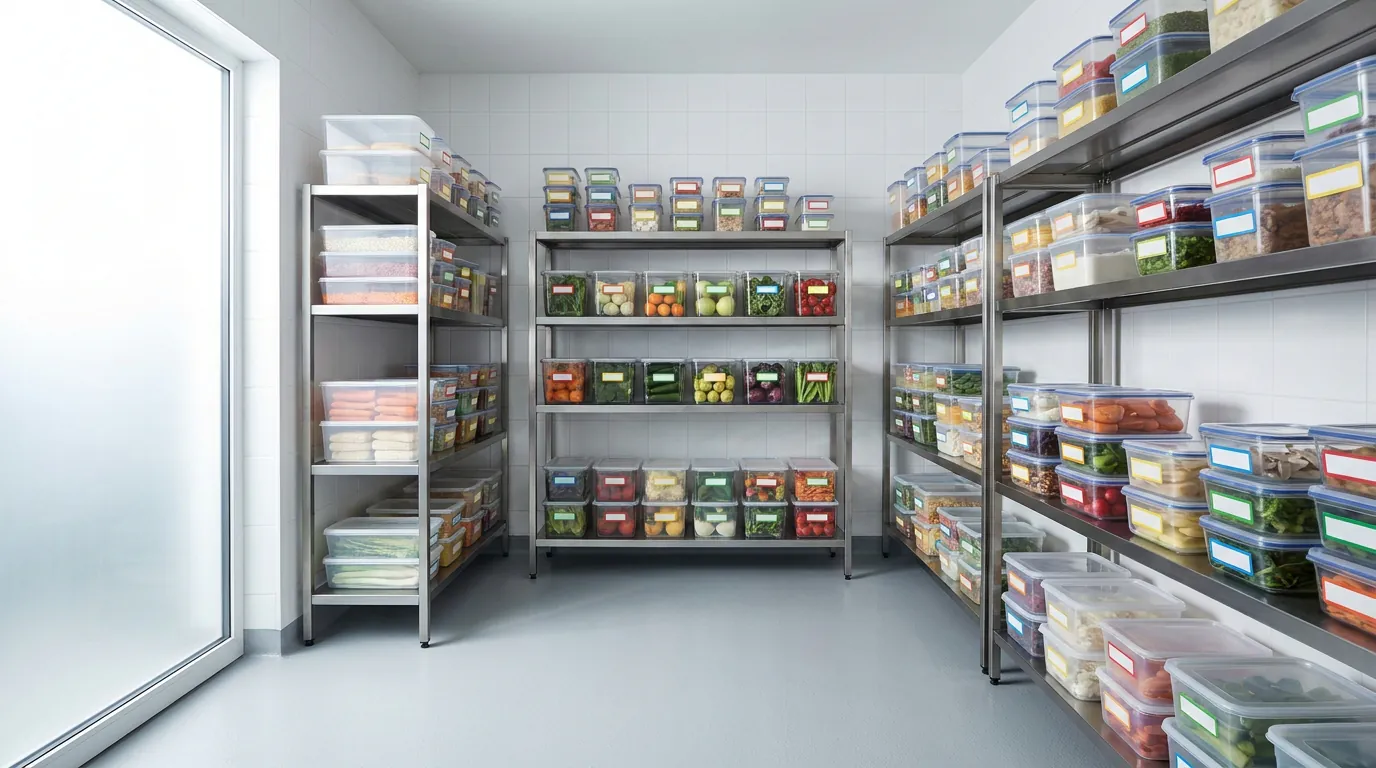
The principle is simple. When a delivery arrives, new stock goes behind what’s already there, so the oldest items sit at the front and get used first. It applies everywhere food is stored — fridges, freezers, and dry stores — and to everything from cases of tinned tomatoes to tubs of cooked rice you portioned this morning. The whole system only works if every member of the team instinctively reaches for the front.
More than good practice: how FIFO supports UK food law
FIFO itself isn’t named in legislation, but the principles behind it are a legal necessity. The Food Safety Act 1990 requires the food you serve to be safe, and it is a criminal offence to sell or use food after its ‘use by’ date — the point at which it may be unsafe (FSA). The FSA’s Safer Food, Better Business (SFBB) pack spells out the same expectation under stock control: check dates on delivery, use FIFO, and throw away anything that has passed its ‘use by’ date. A reliable rotation system is how you stay compliant in practice rather than just on paper.
The business case: less waste, more margin
Every item you bin because it expired at the back of a shelf is money you’ve already paid for, thrown away. Poor rotation means buying ingredients twice — once to waste, once to actually serve. A tidy FIFO system turns that leakage into usable stock, which is why food safety and profitability pull in the same direction here. Digital stock management makes the pattern visible: what you hold, what’s coming up to date, and what’s quietly going off. If you want to see the leakage in black and white first, run our free Kitchen Waste Log for a fortnight — most kitchens are surprised by what the reason codes reveal.
How do you set up a FIFO system that actually works?
A reliable FIFO system rests on three steps: check deliveries, store food correctly (new behind old), and label everything clearly. Get those three right and rotation largely runs itself.
Step 1: Check dates at the point of delivery
Stock control starts before anything reaches a shelf. Check every delivery against its dates as it arrives, and refuse short-dated stock you can’t realistically use in time — accepting it just imports a problem into your walk-in. Check chilled and frozen items are at the right temperature on arrival too, because shelf life assumes the cold chain was never broken. This proactive step at goods-in is one of the most commonly skipped parts of stock control. Our guide to goods-in delivery checks covers the full procedure.
Step 2: Store food correctly (fridges, freezers, dry stores)
Once a delivery passes its checks, rotate it in immediately — new stock behind old, in every storage area. Storage temperature is what makes shelf life real:
- Chilled storage: 8°C or below is the legal maximum in England, Wales and Northern Ireland; the FSA recommends 5°C or below as best practice (FSA chilling guidance).
- Freezers: around -18°C.
- Hot holding: 63°C or above for food being kept hot for service (FSA).
Keep dry stores organised and off the floor too, so the oldest cases are always reachable at the front. A shelf that’s a jumble of dates is a shelf where something will expire unseen.
Step 3: Label everything — date codes and secondary labels
The moment food leaves its original packaging, the manufacturer’s date no longer applies — so you have to apply your own. Anything decanted, opened or prepared in-house needs a secondary label showing what it is and a new ‘use by’ date. FSA-aligned good practice is to give in-house prepared foods a shelf life of around three days including the day of preparation, and to use opened cooked meats within about two days (FSA chilling guidance). Clear, consistent date labels are what let staff trust the front-of-shelf rule. Handwritten labels are legal but error-prone; day-dot printers or digital labelling reduce mistakes. Our date labelling guide goes deeper on getting this right.
‘Use by’ vs ‘best before’: what’s the difference?
This is the distinction that trips kitchens up most, and it’s a safety-critical one. A ‘use by’ date is about safety. A ‘best before’ date is about quality (FSA).
‘Use by’ — the safety deadline you can’t ignore
‘Use by’ appears on perishable, higher-risk foods such as cooked meats, dairy, fish and prepared meals. After this date the food may be unsafe even if it looks and smells perfectly fine, because harmful bacteria you can’t see may have grown. You must not sell or serve food past its ‘use by’ date — doing so is a criminal offence (FSA). This is the hard line your FIFO system exists to defend.
‘Best before’ — quality, not safety
‘Best before’ (sometimes “best before end” or BBE) appears on longer-life foods like tinned, dried and frozen goods. After this date the food is generally still safe to eat, but its flavour, texture or appearance may have dipped. It is not illegal to sell food past its ‘best before’ date provided it’s still safe — but a storeroom full of expired ‘best before’ stock is a clear sign of weak rotation, and an EHO will read it that way.
What does an EHO check on stock rotation?
During an inspection, an EHO will physically check your storage areas for out-of-date food, assess your labelling, and question staff to confirm the system genuinely works day to day. Stock rotation feeds directly into your hygiene practices and the inspector’s confidence in how the business is managed — both of which shape your Food Hygiene Rating Scheme (FHRS) score.
What inspectors look for in your fridge, freezer and storeroom
Expect an EHO to:
- Open fridges, freezers and dry stores and look for anything past its ‘use by’ date.
- Check that a clear rotation system like FIFO is actually being followed — oldest at the front, new behind.
- Inspect labelling, especially on opened, decanted and prepared items.
- Confirm storage temperatures are being held and recorded.
- Ask staff to explain the system, because a well-run FIFO process with trained people is a strong signal that management takes food safety seriously.
A clean, time-stamped audit trail helps enormously here. Digital food records mean your temperature logs and checks are ready to show, rather than reconstructed the night before.
Common FIFO mistakes that drag down your rating
The recurring slip-ups are predictable, which makes them avoidable:
- New deliveries stacked in front of older stock, so the old stock never moves.
- Decanted or prepared food with no secondary label and no ‘use by’ date.
- Out-of-date items found at the back of a shelf or chest freezer.
- Relying on one person to “keep an eye on dates” instead of a system everyone follows.
- Accepting short-dated deliveries that were always going to be wasted.
Any of these can push your hygiene practices score the wrong way — and a single finding can dent both your hygiene score and the inspector’s confidence in management at once.
The bottom line
Stock rotation isn’t a tidying job you do when service is quiet — it’s a daily control that keeps food safe, keeps you compliant, and keeps money out of the bin. The mechanics are simple: check dates on delivery, store new behind old at the right temperature, label everything you open or prepare, and train every member of the team to use the front first. Build that into the rhythm of the kitchen and FIFO stops being a chore. It becomes the reason an EHO opens your walk-in, sees exactly what they’d hope to, and moves on.
Related Forkto software
Frequently asked questions
What is FIFO and why is it important?
FIFO stands for 'First-In, First-Out'. It is a stock rotation system where the food received first is used first. It keeps food fresh and safe, reduces waste, and helps you comply with UK food safety law by making sure nothing slips past its 'use by' date at the back of a shelf.
Is FIFO a legal requirement in the UK?
The term 'FIFO' isn't written into law, but the principles behind it are a legal necessity. The Food Safety Act 1990 requires all food you serve to be safe, and using or selling food past its 'use by' date is a criminal offence. Environmental Health Officers expect to see a robust stock rotation system like FIFO in place during inspections.
What is the difference between a 'use by' and 'best before' date?
A 'use by' date is about safety: food should not be eaten or sold after this date because it could cause food poisoning, even if it looks and smells fine. A 'best before' date is about quality: the food is still safe to eat after this date, but its flavour or texture may have deteriorated.
How do I implement FIFO in my kitchen?
Check dates at the point of delivery, then place new stock behind existing stock in every fridge, freezer and dry store so the oldest is always at the front. Clearly label all items, especially anything decanted or prepared in-house, with a name and a 'use by' date. Train every member of staff to use the items at the front first.
What will an EHO look for regarding stock rotation?
An EHO will check fridges, freezers and dry stores for out-of-date food, assess whether a clear stock rotation system like FIFO is being followed, check that opened and prepared items are correctly labelled, and ask staff questions to confirm they understand the procedures.
Can I sell food past its 'best before' date?
Yes. It is not illegal to sell food after its 'best before' date, provided it is still safe to eat. However, a large amount of stock sitting past its 'best before' date can signal poor stock management to an EHO, so it is best avoided.
What temperature should my fridges and freezers be?
By law in England, Wales and Northern Ireland, chilled food must be kept at 8°C or below, but the FSA's best-practice recommendation is 5°C or lower. Freezers should be kept at around -18°C. Hot food being held for service must be at 63°C or above.
What happens if I don't rotate stock properly?
You risk serving unsafe food, which can lead to food poisoning, complaints and legal action. An EHO is likely to score you poorly, which can lower your Food Hygiene Rating Scheme rating and damage your reputation. You will also throw away more food, which is money straight down the drain.
Safe hands, clear records
Stop running food safety on paper
Forkto turns daily checks, temperature logs, HACCP and audits into a few taps on a phone. Your team stays consistent and you're always ready for the EHO.
14-day free trial · No card required