Food safety guide
Do Customers Check Food Hygiene Ratings? New FSA Data
Yes. 55% of UK adults checked a food hygiene rating last year. New FSA data on what customers now expect, why a 3 loses trade and what operators should change.
29 September 2026
Do customers check food hygiene ratings?
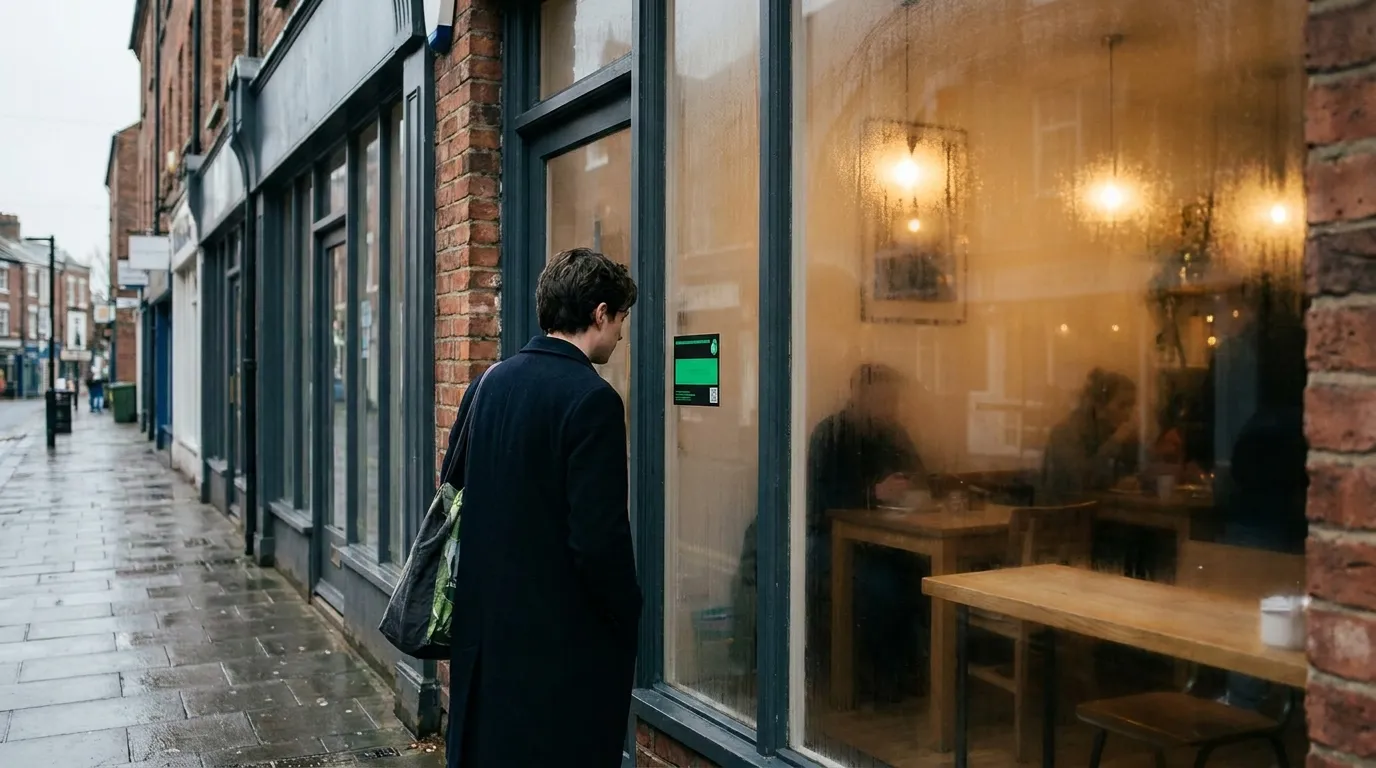
Yes, and far more of them than a few years ago. In the Food Standards Agency’s latest Food and You 2 survey, 55% of adults checked the food hygiene rating of a food business in the previous 12 months. In every earlier round since 2021 the figure was between 41% and 44% (FSA, Food and You 2: FHRS report wave 11).
This guide sets out what the new data says about how customers use your rating, what they now treat as acceptable, and the practical changes that follow for your business.
The report was published on 29 September 2026. Ipsos ran the fieldwork for the FSA between 19 May and 7 August 2025, with 5,898 adults across England, Wales and Northern Ireland. It is the first annual round after five years of twice-yearly surveys, so it gives a clean comparison with every round back to late 2020.
| Finding | Latest figure | Earlier rounds |
|---|---|---|
| Checked a rating in the last 12 months | 55% | 41% to 44% |
| Say 4 is the lowest rating they would accept | 52% | 39% in 2020/21 |
| Say 3 is the lowest rating they would accept | 25% | 36% to 41% |
| Only accept a 5 | 14% | 8% to 9% |
| Walked away because no sticker was displayed | 28% | 15% to 18% |
| Recognise the sticker when shown it | 92% | 87% to 92% |
| Think display should be required by law | 94% | 91% to 95% |
| Find ratings easy to find online | 29% | First asked in this round |
The questions about acceptable ratings, missing stickers and mandatory display were asked only of people who had heard of the scheme. That is 91% of adults, so the difference is small.
Customers now expect a 4 or a 5
The biggest change in this round is the rating that customers treat as the minimum. Among people who know the scheme, 52% said a 4 is the lowest rating they would usually consider acceptable. A further 14% said they would only accept a 5. Only 25% said a 3 was acceptable (FSA Food and You 2 FHRS report).
Put the other way, two in three customers who know the scheme would now think twice about a 3. In the first comparable round, from November 2020 to January 2021, a 3 was the most common answer, chosen by 41%.
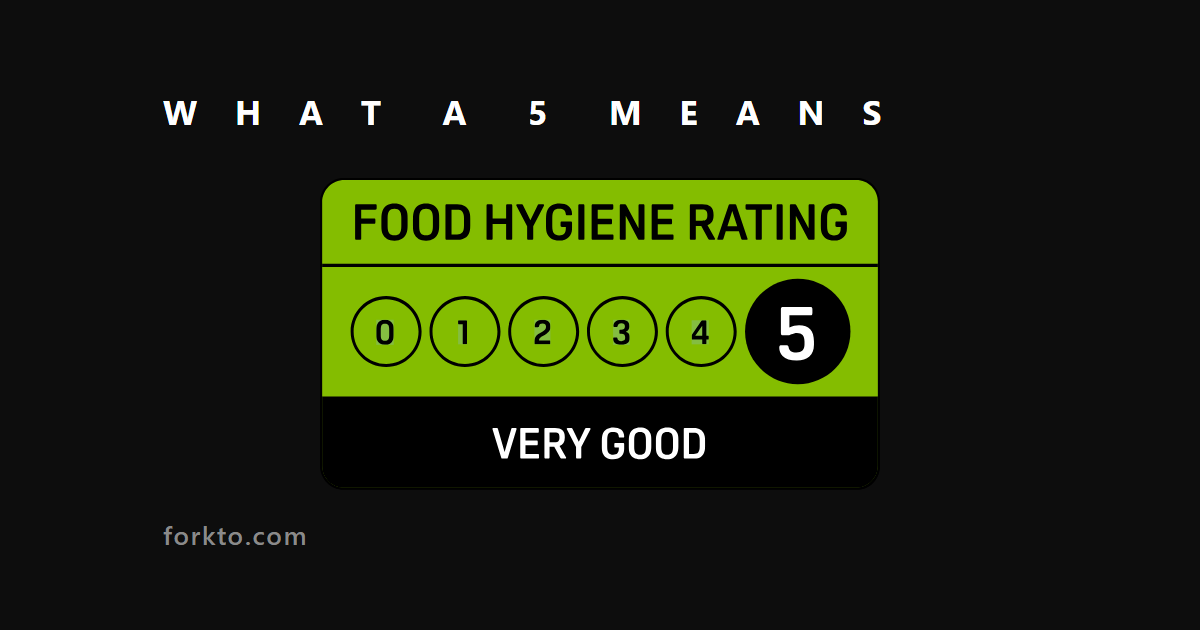
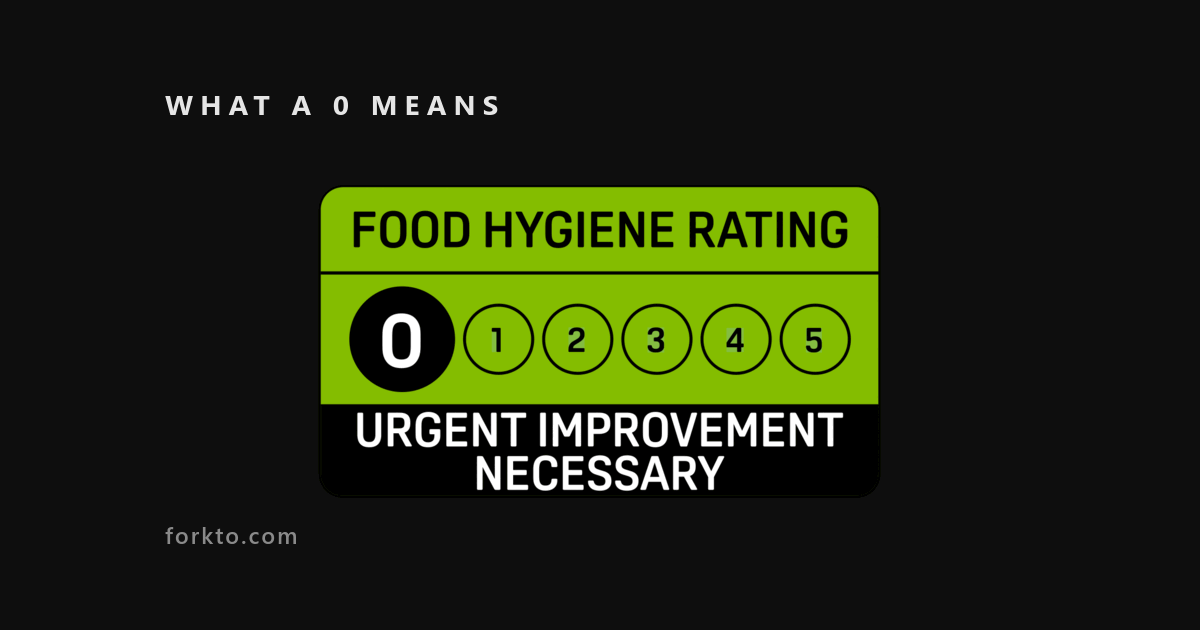
That matters because a 3 is not a failing rating. It means hygiene standards are generally satisfactory and that the business broadly complies with the law (FSA, Food Hygiene Rating Scheme). Our guide to what a food hygiene rating of 3 means explains how a 3 arises. The survey shows that customers no longer read a 3 as “fine”. Many read it as a reason to go next door.
Older customers are the strictest. About 22% of people aged 75 or over and 23% of those aged 65 to 74 said they would only accept a 5, against 6% of 16 to 24 year olds. If your trade depends on older customers, the gap between a 4 and a 5 is worth more to you than the average suggests.
A food hygiene rating of 4 now meets the expectation of most customers. A 5 removes the question entirely.
Who checks, and how they do it
Checking is most common among younger adults and families. In this round:
- 67% of 16 to 24 year olds had checked a rating, falling to 29% of people aged 75 or over.
- 62% of people with children under 16 at home had checked, against 52% of those without.
- 64% of adults in Wales had checked, against 58% in Northern Ireland and 55% in England.
Of the people who checked, 86% looked at the sticker at the premises. About a quarter checked on the business’s own website (27%) and on a food ordering or delivery app (26%). Fewer checked the FSA’s ratings website (16%). Checking on business websites and delivery apps has grown since 2023, from 21% and 20% respectively (FSA Food and You 2 FHRS report).
The practical point is simple. Your sticker is still the place where most customers meet your rating. But a growing group meets it on a screen first, before they decide to visit or order.
Where the rating sits in the decision
The rating is not the first thing people think about. When choosing a takeaway, 48% of people said they generally consider the food hygiene rating, behind previous experience (82%), food quality (80%) and price (70%). When eating out, 48% also said they consider the rating, but 71% consider how clean the place is (FSA Food and You 2 FHRS report).
Read that alongside the minimum-rating results. Most customers do not choose a place because of its rating. They rule a place out because of it. A low rating, or no visible rating, removes you from the shortlist before food, price or reviews come into it.
A missing sticker now costs you customers
In this round, 28% of people who know the scheme said they had decided against a food business in the past year because it did not display its sticker. In every earlier round the figure was between 15% and 18%. In Wales, where display is a legal requirement, it was 37% (FSA Food and You 2 FHRS report).
Customers also told the FSA what they assume when the sticker is missing:
- 53% would worry that the business had poor hygiene standards.
- 49% would assume it had a low rating and was trying to hide it.
- 48% would worry about the safety of eating there.
- 47% would expect a higher risk of food poisoning.
- Only 3% said they would not be concerned.
In England, display is voluntary. The FSA encourages businesses to put the sticker in a window or on the door where customers can see it (FSA, FHRS guidance for businesses). In Wales and Northern Ireland, businesses must display their sticker at or near each customer entrance under the Food Hygiene Rating (Wales) Act 2013 and the Food Hygiene Rating Act (Northern Ireland) 2016. Scotland runs a separate scheme with a Pass or Improvement Required result.
Public support for a legal duty is steady. In every round since 2020, between 91% and 95% of people who know the scheme said display should be required by law. The figure in this round was 94%.
For an English business with a 4 or a 5, not displaying the sticker has a clear cost and no benefit. Customers do not read a blank window as neutral.
The online gap
This round asked a new question: how easy is it to find a rating when you order or shop online? Only 29% said it was easy. For eating out or shopping in person, 56% said it was easy (FSA Food and You 2 FHRS report).
At the same time, customers clearly expect to see the rating online:
| Place | Say the rating should be clearly displayed there |
|---|---|
| A takeaway’s own website | 94% |
| A restaurant’s or café’s own website | 93% |
| Food ordering and delivery apps | 93% |
| A hotel’s or B&B’s website | 92% |
| A supermarket’s website | 84% |
| A food business’s social media | 81% |
Customers are looking for the rating online and not finding it. That is an easy gap to close. The FSA provides official rating images for websites, apps, social media and emails, and it sets rules for their use (FSA, Displaying your rating):
- Use only your current rating.
- Do not alter the images.
- Do not present the images as an FSA endorsement.
- Get stickers only from your local authority.
Showing an out-of-date or incorrect rating breaks those rules and may be an offence under trading standards legislation. Update your website, social profiles and menus on the day a new rating is published.
Delivery platforms pull ratings from FSA data, and each has its own minimum rating. Our guide to food hygiene rating requirements on delivery platforms sets out the thresholds for Just Eat, Deliveroo and Uber Eats.
What to do with this data
The survey does not change the law. It changes the commercial case. These steps follow directly from it.
1. Treat a 4 as the floor
If you hold a 3, most customers who check will now see it as a warning. Read your last inspection report, fix each point raised, and request a re-rating once the work is done. In England a re-rating inspection is not usually made in the first three months after the original inspection, and you can then expect it within six months. In Wales and Northern Ireland it is made within three months of your written request (FSA FHRS guidance for businesses). Our step-by-step guide to improving a food hygiene rating from 1 to 5 covers the process.
2. Aim for a 5 if your customers skew older or family
Older customers are the most likely to accept only a 5. Families with children are the most likely to check. If either group matters to you, the move from 4 to 5 is worth the effort. The difference is often the confidence in management score, which rests on your records rather than on the kitchen itself.
3. Display the sticker, even in England
Put it at the entrance, at eye level, where it can be seen from outside. Replace it on the day a new rating arrives. If the sticker is lost, your local authority can issue a new one.
4. Put the rating on every screen customers use
Add the FSA rating image to your website, booking page, social profiles and email footer. Check that your delivery app listings show the correct rating. Customers are looking for it there and, for now, often not finding it.
5. Keep evidence that supports the rating
Customers see the number. The officer sees the paperwork behind it. Daily opening and closing checks, temperature records and cleaning schedules are what keep a 5 at the next visit. Our free opening and closing checklist is a practical start, and digital daily checks keep those records complete without extra paperwork.
What an EHO looks for
Nothing in the survey changes how inspections work. The rating still comes from three areas the officer scores at each visit (FSA, Food Hygiene Rating Scheme):
- Hygienic food handling: preparation, cooking, reheating, cooling and storage.
- Physical condition of the premises: cleanliness, layout, lighting, ventilation and pest control.
- Confidence in management: your food safety management system and the records that show it works.
Records are often the difference between a 4 and a 5. Regular internal audits that mirror the officer’s three areas show you the gaps before the officer does. Our guide to a 5-star food hygiene rating covers each area in detail.
Common mistakes
- Treating a 3 as safe. It is legally satisfactory, but fewer than three in ten customers who know the scheme now accept it.
- Keeping a good sticker in the office. In England, 28% of people who know the scheme have walked away from a business with no visible sticker.
- Showing an old rating online. It confuses customers and can breach the FSA’s image rules.
- Editing the rating image. Recolouring or cropping the official image is not allowed without FSA permission.
- Forgetting delivery listings. A quarter of people who check do so on a delivery app.
- Relying on reviews alone. Good reviews do not cancel out a missing or low rating, because many customers rule a place out before they read the reviews.
Read the figures with care
The survey is an official statistic, but it measures what people say. The FSA notes that self-reported answers can be affected by social desirability and recall bias (FSA, Food and You 2). Saying you would only accept a 4 is not the same as walking past a 3 every time.
The trend is the stronger evidence. The same questions, asked the same way, show a clear rise across five years in checking, in expected standards and in walking away from a blank window. The results for Scotland were collected separately and are not part of these figures.
The bottom line
Customers check food hygiene ratings more than ever, and most who know the scheme now expect at least a 4. A 3 keeps you legal but costs you trade. A missing sticker costs you more, because customers assume the worst. Aim for a 5, display the sticker at the entrance even where the law does not require it, and put your current rating on your website and delivery listings, where a growing share of customers look first.
Related Forkto software
Frequently asked questions
Do customers actually check food hygiene ratings?
Yes, and more than ever. In the FSA's Food and You 2 survey, 55% of adults in England, Wales and Northern Ireland said they had checked a business's food hygiene rating in the previous 12 months. In every earlier round since 2021 the figure was between 41% and 44%. Most people who check look at the sticker in the window or on the door.
What food hygiene rating do customers consider acceptable?
Most customers now expect a 4 or a 5. Among people who know the scheme, 52% said 4 is the lowest rating they would usually accept and 14% would only accept a 5. Only 25% said a 3 was acceptable, down from between 36% and 41% in earlier survey rounds.
Does not displaying my food hygiene rating put customers off?
Yes. In the latest FSA survey, 28% of people who know the scheme said they had decided against using a food business in the past year because it did not display its sticker. Almost half said they would assume a business without a sticker had a low rating and was trying to hide it.
Do I have to display my food hygiene rating in England?
No. Display is voluntary in England, although the FSA encourages it. In Wales and Northern Ireland businesses must display their sticker at or near each customer entrance. The latest survey found that 94% of people who know the scheme think display should be required by law.
Can I put my food hygiene rating on my website?
Yes. The FSA provides downloadable rating images for websites, apps, social media and emails. You must only use your current rating and must not alter the images. Showing an old or incorrect rating can breach the FSA's rules and may be an offence under trading standards law.
Is the Food and You 2 survey reliable?
It is an official statistic run for the Food Standards Agency by Ipsos, using a random probability sample of 5,898 adults across England, Wales and Northern Ireland. The answers are self-reported, so they show what people say they do rather than what they were observed doing. The trends across rounds are the most useful part.
Does Scotland use the same food hygiene rating?
No. Scotland runs the Food Hygiene Information Scheme, which gives a Pass or Improvement Required result instead of a 0 to 5 score. The FSA survey figures quoted here cover England, Wales and Northern Ireland only.
Safe hands, clear records
Stop running food safety on paper
Forkto turns daily checks, temperature logs, HACCP and audits into a few taps on a phone. Your team stays consistent and you're always ready for the EHO.
14-day free trial · No card required