Food safety guide
Food Hygiene Rating 3: Is It Bad? What a 3 Really Means
Is a food hygiene rating of 3 bad? A 3 means generally satisfactory: legally compliant but not reassuring. What a 3 really means and how to move up to a 5.
2 July 2026
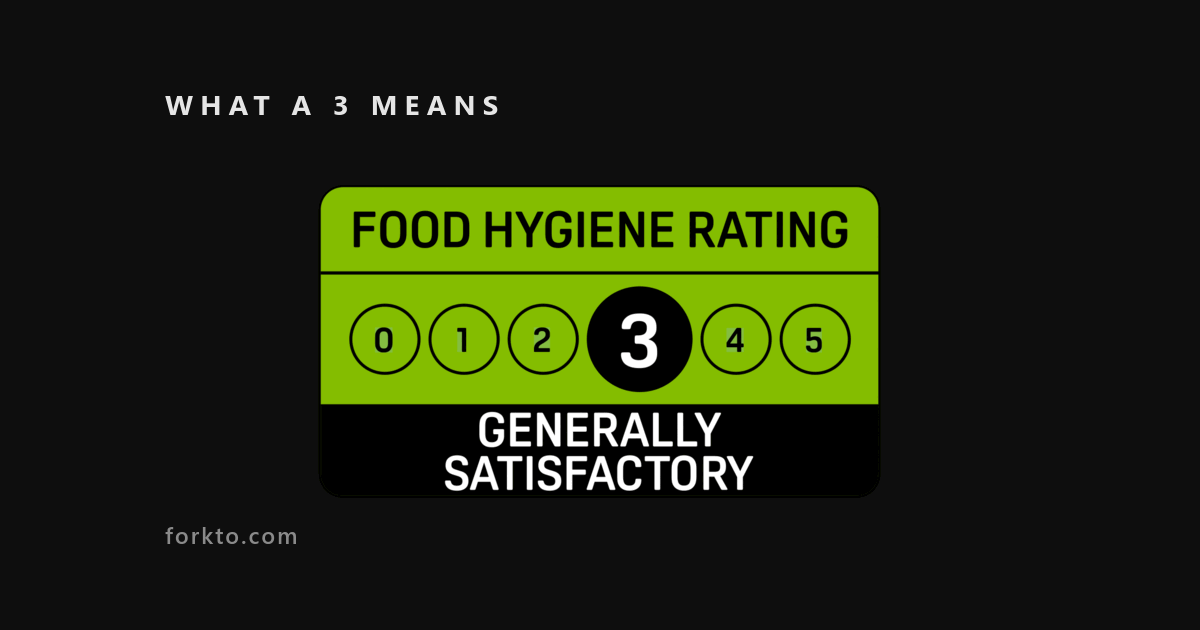
A food hygiene rating of 3 means hygiene standards are generally satisfactory — the official midpoint of the Food Hygiene Rating Scheme (FHRS) 0-to-5 scale (FSA, Food Hygiene Rating Scheme). Is it bad? Not in a legal sense: a 3 confirms you broadly comply with food hygiene law and the officer found nothing serious. But it sits below the 4 or 5 that most UK businesses hold, so customers often read it as a business with room to improve.
That tension — legally fine, but not reassuring — is why “is a 3 bad?” is one of the most-searched questions about the whole scheme. This guide gives an honest answer, explains how a 3 arises, and sets out how to move up. If you are a customer who has looked one up, the short version is at the end.
Is a food hygiene rating of 3 bad? An honest answer
Here is the straight version. A 3 is not a failing grade and not an enforcement rating. It means an environmental health officer judged your standards to be generally satisfactory — you meet the legal baseline, and there was nothing serious enough to drop you to a 2 or below.
But two things are also true:
- A 3 is below where most businesses sit. The clear majority of rated UK food businesses hold a 4 or 5, so a 3 is genuinely below average: 78.2% currently hold a 5 and only 3.0% sit below a 3 (see the latest UK food hygiene rating statistics). It is the point where a rating stops being a marketing asset and starts being something a cautious customer notices.
- A 3 is a “not quite” rating. You reached it because something kept you off a 4 — most often gaps in your records or minor non-compliance across more than one area, rather than a single serious failure.
So the fair summary is: acceptable, but with clear room to improve. If you are aiming to use your rating to win trade or reassure delivery customers, a 3 is not yet doing that job. In the FSA’s latest survey, only 25% of people who know the scheme named a 3 as the lowest rating they would usually accept, down from about 40% in 2020 (new FSA data on how customers use ratings). Every rating is published on ratings.food.gov.uk, so where you sit is public.
What a 3 means on the scale
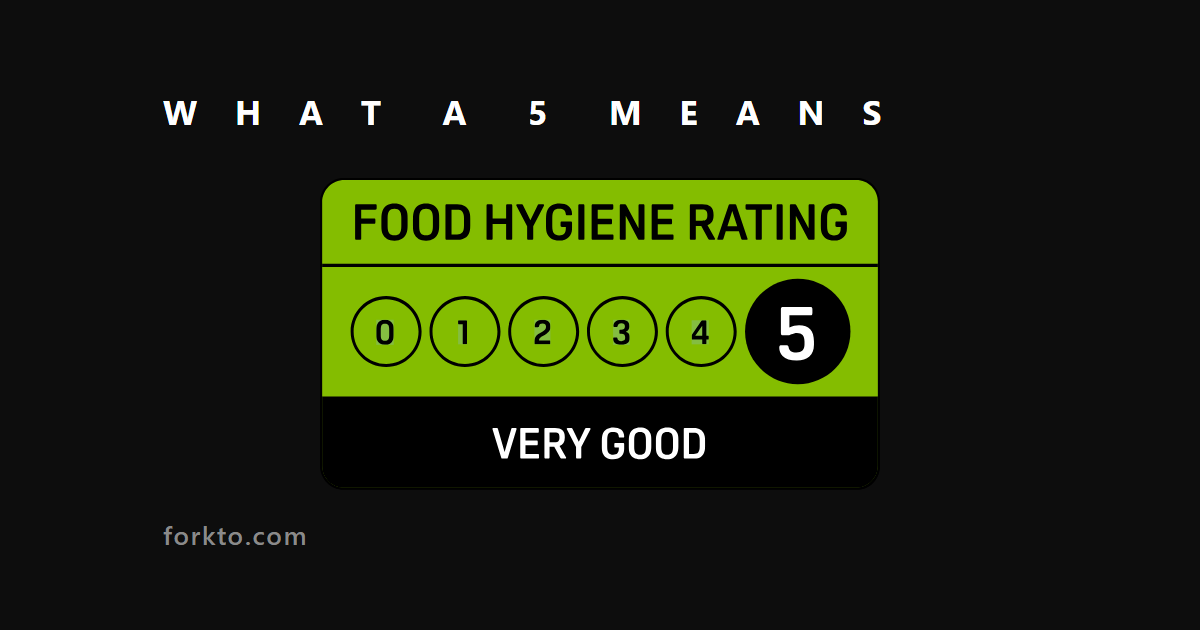
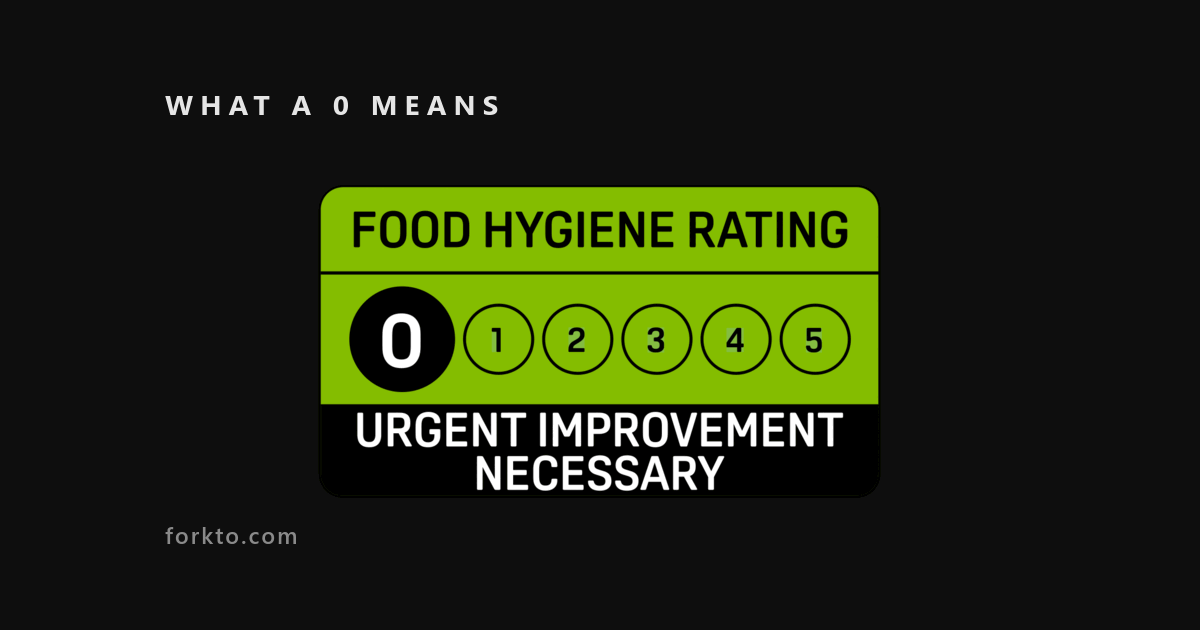
| Rating | What it means |
|---|---|
| 5 | Very good |
| 4 | Good |
| 3 | Generally satisfactory |
| 2 | Improvement necessary |
| 1 | Major improvement necessary |
| 0 | Urgent improvement necessary |
How a business ends up with a 3 — the scoring
Your rating combines three element scores, and a lower score is better: hygienic food handling, the structural condition of the premises, and confidence in management (systems, records and track record). The three scores are added, then checked against a total-score band and a cap on the highest single score (FSA FHRS Brand Standard).
| Rating | Total of the three scores | No single element above |
|---|---|---|
| 5 | 0–15 | 5 |
| 4 | 20 | 10 |
| 3 | 25–30 | 10 |
| 2 | 35–40 | 15 |
| 1 | 45–50 | 20 |
| 0 | above 50 | — |
A 3 requires a total of 25–30 with no single element above 10. What that describes in practice is a business with no major failing but a spread of minor ones — “some non-compliance not considered significant in terms of risk” across more than one area. For example, scores of 10 for hygiene, 10 for structure and 10 for confidence in management total 30 and land squarely on a 3.
That points straight at the fix. Because no element is above 10, you are not dealing with a serious problem — you are dealing with several small ones, and the one that most often sits at 10 is confidence in management (“a satisfactory record; understanding of significant hazards; a satisfactory food safety management system or making satisfactory progress”). Confidence in management is scored 0, 5, 10, 20 or 30, so the difference between a 10 and a 5 is largely about the completeness and reliability of your documented system and records. Tighten that, tidy the minor hygiene and structural points, and a 3 becomes a 4 or 5. The full mechanics are in our guide to how food hygiene ratings are scored, and the pivotal element has its own confidence in management explainer.
What a 3 means for your business
- Display obligations. In Wales (since 28 November 2013) and Northern Ireland (since 7 October 2016) you must display your rating at or near each customer entrance, with a £200 fixed penalty notice for non-display (FSA, Food Hygiene Rating Scheme). Display is voluntary in England; Scotland runs a separate scheme.
- Delivery platforms. A 3 clears every major platform’s threshold: it meets Just Eat’s minimum of 3 and comfortably clears Deliveroo and Uber Eats’ minimum of 2. This is the rung at which delivery access stops being a worry — see our delivery platform hygiene rating requirements guide.
- Customer trust and B2B. A 3 keeps you trading and on the apps, but it is often below the minimum of 4 or 5 that corporate clients, event organisers and local-authority contracts specify — so it can quietly cost you tenders.
Exactly what to do next
- Read the inspection report. The officer must notify you in writing, at the inspection or within 14 days (gov.uk, FHRS guidance for businesses). With a 3, the report is a list of small, closable gaps.
- Close the confidence-in-management gap first. For most businesses at a 3, the highest-value move is turning a “satisfactory” documented system into a reliable one: complete daily records, a working Safer Food, Better Business pack, the 4-weekly review actually done. Maintaining a HACCP-based procedure is a legal duty under Article 5 of Regulation (EC) 852/2004 (legislation.gov.uk).
- Tidy the minor hygiene and structural points the officer noted — the small repairs and habits that each shave points.
- Consider a right to reply while you improve — free and published next to your rating (gov.uk, FHRS guidance for businesses).
- Request a re-rating once the work is done. In England with no fee, not usually within the first three months and within six months of the original inspection; where a fee applies, and in Wales and Northern Ireland, within three months of your written request. The re-visit is unannounced and covers the whole business — and, importantly, it can go down as well as up, so only request it when you are genuinely inspection-ready every day.
Self-audit against the officer’s own criteria with our EHO inspection prep checklist, and follow the detailed sequence in our action plan for reaching a 5. Before requesting a re-visit, run the free EHO readiness score to find which of the three scored areas is holding you down. And since you’re rated 3, you qualify for Forkto free until you get your 5 — we only get paid when your rating goes up.
The path from 3 to 5
A 3 rarely needs heroics. It needs the small stuff done reliably and, crucially, provably. The businesses that turn a 3 into a 5 stop scrambling to reconstruct records before an inspection and start capturing them as the work happens. Forkto’s food safety software replaces paper diaries with time-stamped digital checks — every temperature reading, cleaning sign-off and opening routine logged at the point of the task — so the confidence-in-management evidence that keeps a good kitchen stuck at a 3 is already there when the officer returns.
Got a 3 and aiming higher? See exactly what a 4 requires, and why so many good businesses stall one point short of a 5. If your rating has slipped, our guides to a rating of 2, a rating of 1 and a rating of 0 cover those.
If you are a customer who found a 3
A 3 means the last inspection judged hygiene standards “generally satisfactory” — the business meets food hygiene law but is below the 4 or 5 most UK venues achieve. It is not a warning like a 0 or 1, but it is a notch below what a top-rated business offers. It reflects conditions on the inspection date, which can be up to two years old, so check the date and any right to reply on ratings.food.gov.uk.
Frequently asked questions
Is a food hygiene rating of 3 bad?
Not in a legal sense. A 3 means hygiene standards are generally satisfactory and confirms you broadly comply with food hygiene law. But it is below the 4 or 5 that most UK businesses hold, and below what many customers treat as a comfortable standard, so it is best read as acceptable with clear room to improve rather than good.
What does a food hygiene rating of 3 mean?
It is the middle of the 0-to-5 scale and means hygiene standards are generally satisfactory. The last inspection found nothing serious enough to push you lower, but enough to keep you off a 4 — usually gaps in records or minor non-compliance spread across more than one area.
How long does a food hygiene rating of 3 last?
Until your next inspection replaces it; there is no fixed expiry. How soon that comes depends on your risk category, which can range from roughly every six months for higher-risk businesses to around every two years for lower-risk ones.
Can a food hygiene rating of 3 be raised to a 5?
Yes. Fix the specific points in your inspection report, tighten your records so the confidence-in-management score improves, then request a re-rating once the work is genuinely done. A 3 is only two bands below the top, so the gap is usually about consistency and evidence rather than a major overhaul.
Does a rating of 3 meet delivery platform requirements?
Yes. A 3 meets Just Eat’s minimum of 3 and clears the minimum of 2 that Deliveroo and Uber Eats require, so a 3 keeps you listed on all three major delivery platforms.
Related Forkto software
Frequently asked questions
Is a food hygiene rating of 3 bad?
Not in a legal sense. A 3 means hygiene standards are generally satisfactory and confirms you broadly comply with food hygiene law. But it is below the 4 or 5 that most UK businesses hold, and below what many customers treat as a comfortable standard, so it is best read as acceptable with clear room to improve rather than good.
What does a food hygiene rating of 3 mean?
It is the middle of the 0-to-5 scale and means hygiene standards are generally satisfactory. The last inspection found nothing serious enough to push you lower, but enough to keep you off a 4 — usually gaps in records or minor non-compliance spread across more than one area.
How long does a food hygiene rating of 3 last?
Until your next inspection replaces it; there is no fixed expiry. How soon that comes depends on your risk category, which can range from roughly every six months for higher-risk businesses to around every two years for lower-risk ones.
Can a food hygiene rating of 3 be raised to a 5?
Yes. Fix the specific points in your inspection report, tighten your records so the confidence-in-management score improves, then request a re-rating once the work is genuinely done. A 3 is only two bands below the top, so the gap is usually about consistency and evidence rather than a major overhaul.
Does a rating of 3 meet delivery platform requirements?
Yes. A 3 meets Just Eat's minimum of 3 and clears the minimum of 2 that Deliveroo and Uber Eats require, so a 3 keeps you listed on all three major delivery platforms.
Safe hands, clear records
Stop running food safety on paper
Forkto turns daily checks, temperature logs, HACCP and audits into a few taps on a phone. Your team stays consistent and you're always ready for the EHO.
14-day free trial · No card required